
Last month, a project buyer sent me two quotes for a retail chain rollout. One quote was for hand-bent glass tubes, and the other was for LED neon flex. He asked me which option was cheaper for his glass neon vs LED neon sign project.
However, when we reviewed his spreadsheets, the two quotes did not include the same items at all. One quote was for a complete electrical sign, while the other only listed raw lighting reels without drivers or mounting channels. Recently, a contractor used our 16×16mm DMX512 RGBW silicone neon on a hotel facade project and praised how matching the full system upfront saved weeks of labor.
Quick Answer: Which One Fits Your Sign?
Neither option wins in every scenario. Choose traditional glass neon for heritage restoration, vintage storefronts, or exposed tube art where authentic gas glow matters most. Choose silicone LED neon flex for architectural facades, multi-site retail rollouts, dynamic color control, and locations prone to impact or vibration.
Always base your final decision on three project rules:
- Visual Goal: Decide between a 360-degree vintage gas glow and uniform, dot-free architectural lines.
- Fabrication Limits: Check your minimum bend radius, continuous run length, and freight fragility early.
- Power & Maintenance Scope: Determine who handles high-voltage permits versus low-voltage driver layout and future repairs.
Start With the Look You Need
Before you compare unit prices, you need to define the exact visual effect your client expects. Both technologies emit linear light, yet they behave very differently in real commercial spaces.
What glass neon does best

Traditional glass neon delivers an unmistakable, warm nostalgia. Because excited gas glows inside a clear or phosphor-coated glass tube, it creates a natural 360-degree halo against brick, stone, or dark metal backdrops.
Furthermore, hand-bent electrodes and visible glass supports are part of the aesthetic. For historic theater restorations, classic bars, or boutique interior art, authentic glass craftsmanship is often part of the brand story itself.
What LED neon flex does best
Modern commercial facades and corporate logos usually demand strict visual consistency. High-grade silicone LED neon lights use dense internal LEDs and optical-grade silicone diffusion to produce a crisp, dot-free line of light.
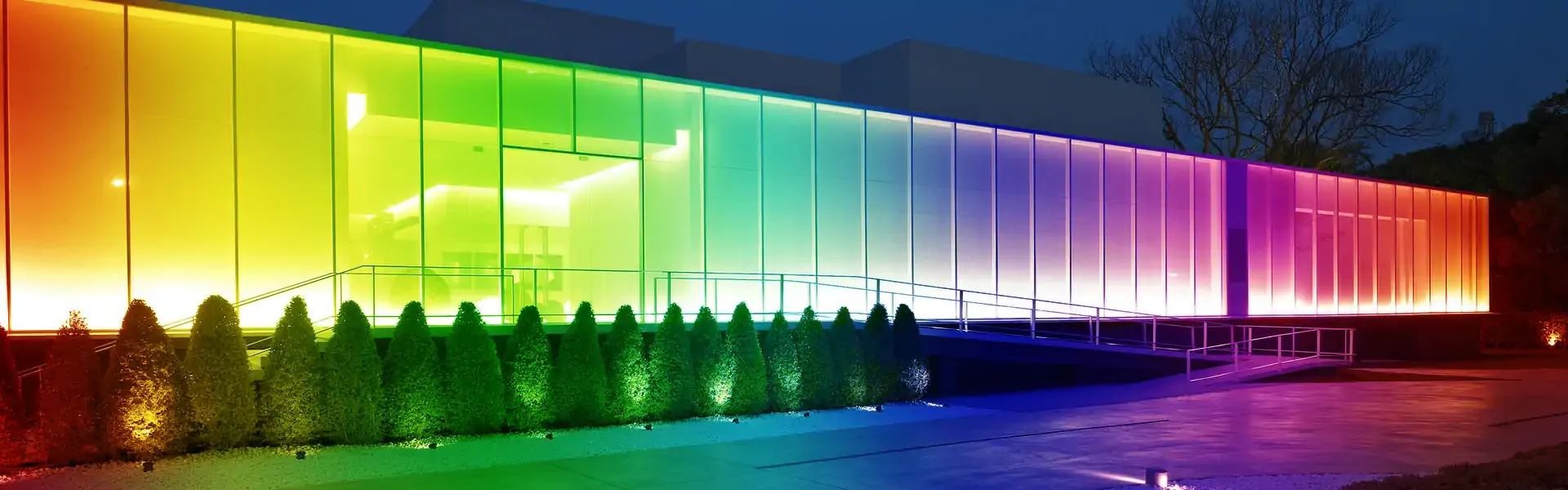
In addition, LED systems unlock dynamic lighting capabilities that glass simply cannot match. If your client wants smooth dimming, seasonal color shifts, or pixel-chasing effects across a building, you can integrate DMX512 RGBW LED neon directly into the building’s main control console.
When to ask for a side-by-side sample
Spec sheets never tell the whole story under real ambient light. If your sign sits in a sunlit atrium or at eye level in a luxury store, request a physical mockup of both options.
Test both samples at the exact viewing distance and background color of your job site. Check how the unlit housing looks during the day, as well as how the glow renders on camera.
Fabrication Limits to Check Early
In our factory, we review hundreds of CAD sign drawings every year. Many designers run into trouble because they design a sign for one medium and try to build it with the other.
Tight bends, letter strokes, and run lengths
When evaluating LED neon vs traditional neon, physical geometry is your first filter. A skilled glass bender can fold glass tubes into tight, overlapping loopbacks, though the electrodes still require kick-back space.
LED neon flex bends along a specific plane—either top-bend, side-bend, or 3D bend silicone neon flex for curved architectural contours. Each profile has a strict minimum bending diameter and specific cutting increments (such as every 50mm or 100mm) that dictate your smallest letter height.
Dimensional tolerances and shipping risks
Hand-blown glass is an artisan product, so slight variations between duplicate signs are normal. Conversely, extruded LED neon follows industrial tolerances, though installers must still account for thermal expansion and silicone cut-length tolerances in long channels.
Shipping is another major factor in glass neon vs LED neon signs. Glass tubes require heavy wooden crates and local couriers, whereas LED neon ships are coiled in compact cartons via standard air Cargo with virtually zero breakage.
Compare the Whole Power and Control System

A commercial sign is an electrical system, not just a glowing tube. You must evaluate the entire power architecture from the breaker panel to the mounting surface.
Glass neon: high-voltage secondary wiring
Traditional glass neon operates on high-voltage, low-current alternating current. According to the International Association of Electrical Inspectors (IAEI), neon secondary voltages typically range from 1,000V to 15,000V depending on tube length, diameter, and gas fill.
Because of this high secondary voltage, transformers must be placed carefully to minimize high-voltage cable runs. Moreover, installations in North America must follow strict physical protection and clearance rules under NEC Article 600, as outlined in EC&M’s guide to electric signs and outline lighting.
LED neon: low-voltage DC and voltage drop
Commercial LED neon typically runs on low-voltage 12V DC or 24V DC power supplies. For commercial signage and long architectural runs, we almost always recommend 24V DC over 12V DC because it reduces current draw and minimizes voltage drop across the circuit.
However, running on low-voltage DC does not exempt a commercial sign from electrical codes. As noted in EC&M’s overview of NEC rules for electric signs, electric signs and retrofit kits must still be listed, labeled, and installed per NEC 600.3 requirements.
Glass Neon vs LED Neon: System Comparison Table
To help your engineering and procurement teams compare both options side by side, review the full system parameters below.
| System Parameter | Traditional Glass Neon System | Commercial LED Neon Flex System |
|---|---|---|
| Light Source & Look | Gas discharge (Neon/Argon); 360° classic warm glow | SMD/COB LEDs in silicone housing; uniform directional glow |
| Color & Control | Fixed single color per tube; basic on/off or flasher | Static white, Tunable, RGB, or DMX512 pixel control |
| Power Architecture | High-voltage secondary (1,000V–15,000V AC) step-up transformer | Low-voltage (12V/24V DC) Class 2 or industrial LED drivers |
| Fabrication & Geometry | Hand-bent over gas burners; custom glass supports | Extruded profile; top/side/3D bend; cuttable at fixed marks |
| Freight & Handling | Fragile; requires crating and specialized freight | Impact-resistant; ships in rolls or pre-mounted trays |
| On-Site Installation | Requires specialized neon glass & high-voltage technicians | Standard electrical contractor; mounts via clips or channels |
| Lifespan Drivers | Electrode sputtering, gas purity, transformer stability | LED driver quality, thermal dissipation, UV jacket stability |
Plan Transport, Installation and Repair
From a factory perspective, the biggest hidden cost in commercial signage is not manufacturing—it is field labor and post-installation maintenance.
How installation differs on the job site
Installing exposed glass neon takes patience and specialized skill. Technicians must mount glass standoffs, secure fragile tubes without stressing the glass, wire high-voltage GTO cables, and pass local electrical inspections.
With LED neon flex, general electrical or sign contractors can install it with clips and channels directly onto the facade or sign tray. If you pre-assemble the channels or route the acrylic backing in the shop, on-site mounting time drops dramatically.
Neon sign maintenance comparison
In our after-sales records over the past five years, most commercial sign failures come down to environmental stress and power components, not the light emitters themselves. When a glass neon section cracks from hail, window washing, or birds, you cannot patch it on site.
Instead, a technician must remove the broken tube, take it back to a neon shop to bend a new glass piece, pump it on a manifold, and return with a lift truck. Worse yet, finding skilled local glass benders is getting harder every year in many cities.
With LED neon, roughly 80% of field service calls are caused by a flooded power supply or a loose waterproof connector. A local electrician can swap a 24V driver in 20 minutes, or unclip a damaged LED section and splice in a spare reel from the maintenance closet.
Choose a System With a Comparable Cost Scope
Never compare the per-meter price of raw LED neon strip against a turnkey glass neon sign quote. That is the #1 mistake we see procurement teams make.
To run an honest financial comparison, you must lock in your operating assumptions first—such as running the sign 12 hours a day, 365 days a year, at your local commercial electricity rate. Then, add up every line item in the table below:
| Cost Category | Glass Neon System Scope | LED Neon System Scope | Comparison Basis |
|---|---|---|---|
| 1. Light Emitting Units | Custom hand-bent glass tubes + electrodes | Silicone LED neon reels + end caps + leads | Total Linear Meters × Spec Rate |
| 2. Power & Control | High-voltage neon transformers + HV GTO wire | 24V DC waterproof drivers + DMX/dimmer controllers | Sum of Drivers/Transformers + Enclosures |
| 3. Mounting Hardware | Tube supports, bushings, backing pan | Aluminum profiles, clips, or routed backing | Track/Support Qty × Unit Price |
| 4. Packaging & Freight | Wooden crates + fragile freight insurance | Standard export cartons + air/sea freight | Shipping Fee + Breakage Risk Buffer |
| 5. Installation Labor | Certified neon installer + lift rental | General electrical crew + lift rental | Crew Hours × Hourly Rate + Lift Access |
| 6. 5-Year Energy & Repair | Annual kWh + custom tube/transformer service | Annual kWh + standard driver replacement | (kW × Hrs/Yr × 5 × Rate) + Service Calls |
Outdoor Facade Notes

When your signage moves from an indoor retail wall to an exterior building envelope, weather resistance becomes critical. Glass itself does not yellow under UV rays, but exposed outdoor electrodes and rubber boots still require regular weatherproofing checks.
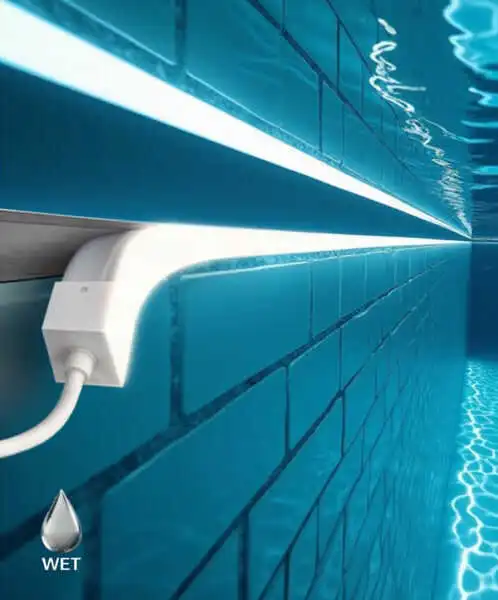
For LED systems, choosing the right outdoor LED neon flex for facade lighting means specifying UV-resistant silicone extrusion rather than cheap plastics that yellow and crack. Additionally, pay close attention to your ingress protection—matching IP65, IP67, or IP68 ratings with factory-molded end caps so rainwater never wicks into the PCB.
Decision Checklist
Still weighing your options for an upcoming bid? Match your project conditions to the right lighting system below:
| If Your Commercial Project Requires... | Recommended System | Why This System Fits Best |
|---|---|---|
| Historic landmark or vintage bar restoration | Traditional Glass Neon | Preserves authentic gas discharge physics, heritage look, and 360° tube glow. |
| Multi-location retail rollout (10+ stores) | LED Neon Flex | Repeatable color consistency (SDCM < 3), compact shipping, and easy local installation. |
| High-elevation hotel or commercial facade | LED Neon Flex | Eliminates glass breakage from wind/hail and simplifies crane/lift maintenance. |
| Color-changing, dimming, or DMX facade media | LED Neon Flex | Supports RGBW, pixel chasing, and seamless integration with building automation. |
| Eye-level storefront or high-traffic walkway | LED Neon Flex | Shatterproof silicone housing and low-voltage 24V DC operation reduce public liability. |
| Exposed art piece with tight overlapping bends | Traditional Glass Neon | Skilled glass benders can form acute three-dimensional overlaps in a single tube. |
How NPHIS Supports Commercial LED Neon Projects

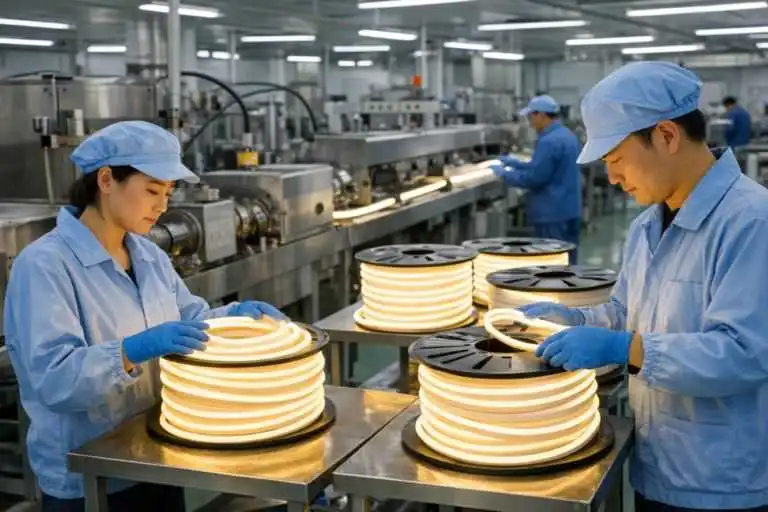
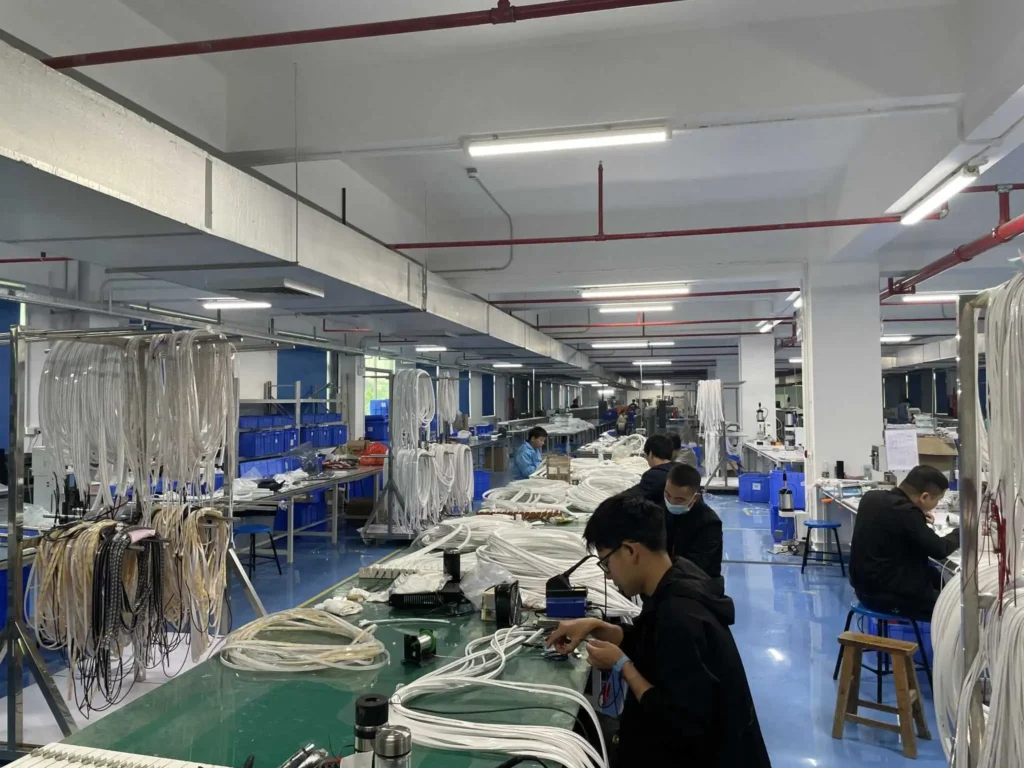
When your project points toward LED neon, buying loose strips from a trading company leaves you guessing on drivers, voltage drop, and waterproof connectors. At NPHIS LED, we operate as a direct manufacturer with in-house SMT lines and automated silicone co-extrusion lines.
Every commercial batch goes through integrating sphere testing to guarantee tight color consistency (SDCM < 3) and 100% 24-hour aging tests before shipment. All products comply with CE and RoHS standards, backed by our 3-year standard warranty and up to a 5-year warranty for custom OEM engineering projects
Frequently Asked Questions (FAQ)
❓️ Is LED neon better than glass neon for commercial signs?
Neither is universally better; it depends on your project goals. Glass neon is better for heritage restorations and exposed vintage art requiring a 360-degree gas glow, while LED neon is better for architectural facades, multi-store rollouts, dynamic DMX control, and shatterproof durability.
❓️ How long does glass neon last compared with LED neon?
Online lifespan claims vary wildly—from 10,000 to 75,000+ hours—because neither system fails from a single cause. Glass neon lifespan depends on electrode sputtering, gas purity, and transformer stability, while LED neon lifespan depends on LED driver quality, thermal dissipation, and UV resistance of the silicone jacket.
❓️ Is glass neon more expensive than LED neon?
Glass neon usually has a higher upfront fabrication, crating, and specialized installation cost. However, a true comparison requires quoting the same system scope: light emitters, transformers or 24V drivers, mounting channels, freight insurance, installation labor, and 5-year maintenance.
❓️ Does LED neon look as good as glass neon?
In close-up vintage signs where exposed clear glass tubes and electrodes are part of the design, glass neon has a unique depth. For architectural outlines, channel letters, and modern storefronts, optical-grade silicone LED neon provides a cleaner, dot-free, and more uniform line of light.
❓️ Can LED neon flex be used outdoors on building facades?
Yes, commercial-grade silicone LED neon flex with IP67 or IP68 waterproof ratings is widely used on exterior facades. Always specify UV-stabilized silicone (rather than PVC) and factory-molded waterproof end caps to prevent yellowing and moisture ingress.
❓️ Is glass neon dangerous in commercial spaces?
Glass neon is safe when installed and maintained to code, as it has been used for over a century. However, because its secondary circuit operates at 1,000V to 15,000V and uses fragile glass, it requires physical protection and strict compliance with electrical standards like NEC Article 600.
❓️ What is the maintenance difference between glass neon and LED neon?
In a neon sign maintenance comparison, broken glass neon tubes must be removed, re-bent at a neon glass shop, vacuum-pumped, and reinstalled. LED neon flex rarely breaks physically; most maintenance involves swapping a standard 24V DC power driver or replacing a modular strip section on site.
❓️ Can LED neon replace glass neon in an existing sign?
Yes, many commercial property owners retrofit older glass neon signs or architectural coves with LED neon flex. Keep in mind that removing high-voltage transformers and installing low-voltage LED retrofit kits must still follow local electrical code listing requirements (such as NEC 600.3).
Can’t find the asnwer you are looking for?
Write us a questionand we will be happy to answer it
Ready to Price Your Commercial Sign System?
Comparing quotes shouldn’t feel like guessing what is missing from the box. If you are bidding on an upcoming facade, retail rollout, or custom signage project, our engineering team can build a complete, apples-to-apples LED neon system specification for you.
Contact NPHIS LED Today: Send us your CAD drawings, linear lengths, installation environment (indoor/outdoor), and dimming or DMX control requirements. Within 24 hours, we will provide a complete factory quote—including custom cut lengths, matched 24V drivers, mounting profiles, and wiring diagrams.
References & Industry Standards Cited
- International Association of Electrical Inspectors (IAEI Magazine): Electric Signs and Outline Lighting – Understanding Neon Secondary Voltage (1,000V–15,000V). https://iaeimagazine.org/?p=8921
- Electrical Construction & Maintenance (EC&M): Understanding Requirements for Electric Signs and Outline Lighting (NEC Article 600 Scope & Physical Protection). https://www.ecmweb.com/national-electrical-code/code-basics/article/20903753/understanding-requirements-for-electric-signs-and-outline-lighting
- Electrical Construction & Maintenance (EC&M): NEC Rules for Electric Signs and Outline Lighting (Listing & Installation Requirements 600.3). https://www.ecmweb.com/national-electrical-code/code-basics/article/20897382/nec-rules-for-electric-signs-and-outline-lighting