

I have spent ten years on silicone extrusion lines. First as a workshop supervisor, now as a product manager and CEO at NPHIS LED. In that time, I have talked with hundreds of lighting brands from Germany, the Netherlands, the UK, Canada and the US. Almost none of them lack customers. What they lack is a factory that will produce private label LED neon flex at a sane MOQ, in a box that carries their name, with a label that passes customs.
That is the real pain point. Not demand. Supply.
So here is what I hear every week: “Your competitor wants 3,000 meters per color.” “The reels arrived in blank white boxes with a Chinese sticker.” “The CE mark was printed, but there was no DoC, no importer address, nothing.” If any of that sounds familiar, this guide is for you. I will show you how a real OEM silicone LED neon flex factory thinks about private labeling, and what it actually costs us to do it right.
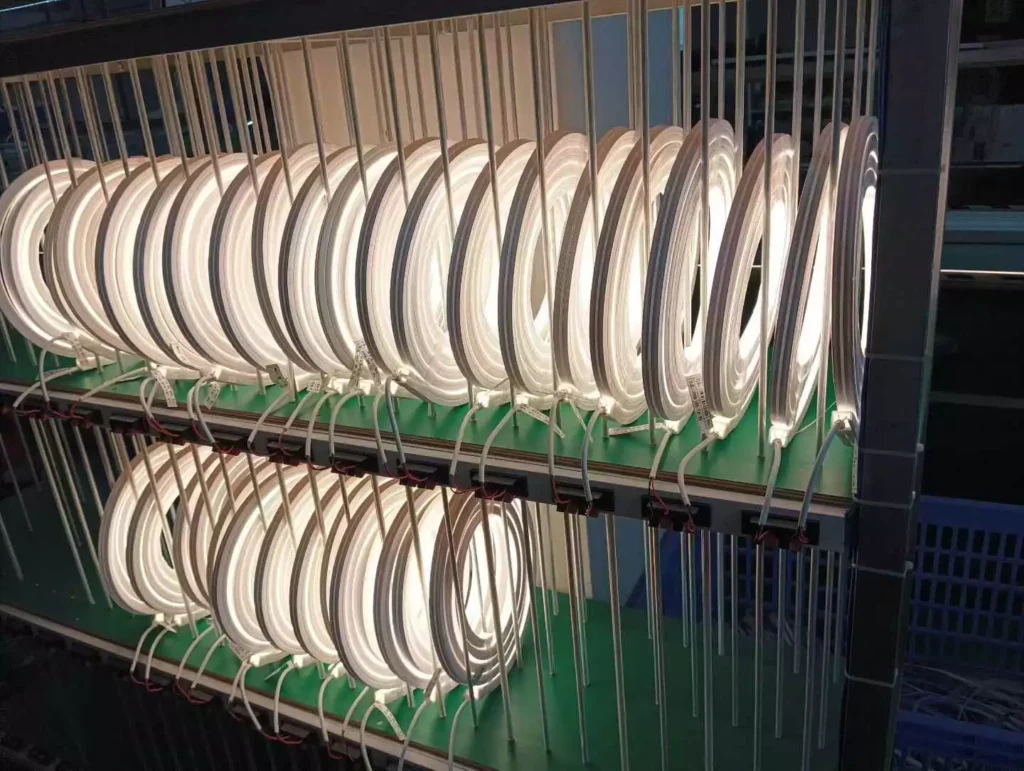
Table of Contents
Private Label vs. White Label vs. Standard OEM: What Lighting Buyers Must Know
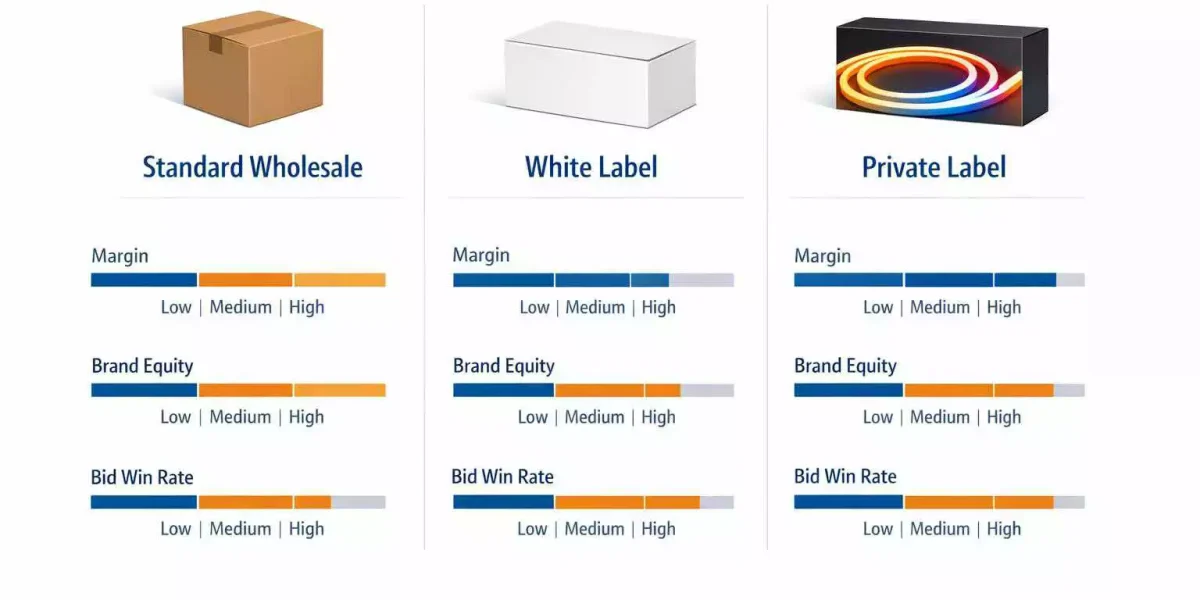
Buyers often use these three terms as if they were the same thing. On the factory floor, they are three very different jobs. The table below is how we explain it to new partners.
| Model | Who Owns the Spec | Packaging | Compliance Labels | Margin Room | Best For |
|---|---|---|---|---|---|
| Standard Wholesale | Factory | Plain carton, factory reel | Generic CE/RoHS only | Low (price-driven) | Traders, fast resale |
| White Label LED Strip Lights | Factory (unbranded) | Blank white box, you add a sticker | Generic, no importer data | Medium | Small online sellers |
| Private Label LED Neon Flex | You (custom spec + brand) | Branded reel, full-color box, laser marking | Your brand, your EAN, your compliant label | High (brand + project premium) | Lighting brands, distributors, contractors |
Why Private Label Wins on Three Fronts
Pricing power. A white-box reel is compared on Amazon in ten seconds. A branded reel with your spec sheet is compared against your warranty and your service. Those are two different price conversations.
Project bidding. Architects and general contractors want a named product with a datasheet, a DoC, and a traceable batch number. “Generic neon flex, China” does not pass a spec review. Your brand does.
Brand premium. Once your logo is laser-marked on the silicone jacket, the installer sees it every day. The end client sees it at handover. That is free marketing for the next ten years of the product’s life.
Custom Specifications: Tailoring Engineering for High-End Projects
This is where private label becomes real engineering, not just a sticker. Below are the parameters we tune most often for European and North American brands. If you want the deeper OEM background, we covered it in our earlier article on how custom silicone LED neon flex OEM customization works.
Silicone Extrusion Types
- Top-bend (front emitting): Bends up and down. The default for building outlines, ceiling coves and signage letters. Profiles from 6×12 mm up to 30×20 mm.
- Side-bend (edge emitting): Bends left and right. Ideal for channel letters and tight logo work. Minimum bend radius is usually 50–80 mm, depending on width.
- 360° Round: Emits in all directions. Used for hanging installations, handrails and art pieces. Requires a dedicated round die and a different PCB layout.
On our lines, each type uses a separate extrusion die and a separate PCB carrier. That matters later when we talk about MOQ.
Electrical & Optical Customization
- CRI >90 or >95: Hospitality, retail and museum projects almost always specify Ra90+. We stock 2835 and COB chips at Ra95–97 for luxury interiors.
- SDCM <3 color tolerance: We bin by 3-step MacAdam ellipses. This keeps every reel in a 200-meter facade job visually identical. See ANSI/IES chromaticity standards for the reference method: ANSI C78.377 (IES).
- Custom CCT: 1800K “candle” for restaurants, 2200K for heritage facades, 6500K for cold-storage signage. Anything from 1800K to 6500K is available.
- Voltage: 12V for short runs, 24V as the standard, and 48V for single-feed runs of 20–30 m without visible voltage drop.
Control Protocols for Smart Lighting Projects
Smart buildings do not tolerate stand-alone lighting. We build neon flex to plug into whatever the project already runs:
- DALI-2 / 0-10V: For dimmable white and tunable white in offices, hotels and healthcare. We match constant-voltage DALI-2 drivers certified by the DALI Alliance.
- DMX512 / RDM: For facades, stages and hospitality. The DMX512 protocol is maintained as ANSI E1.11 by ESTA, which is why we use compliant UCS512-series ICs.
- Pixel (SPI): For budget-friendly chasing effects in retail and signage.
For a real example, our private label DMX512 RGBW LED neon flex uses a 16×16 mm IP68 integral extrusion, SMD5050/3535 RGBW chips and a UCS512C1L IC. Several European distributors carry it under their own name with a different jacket color and a laser-marked model number.
OEM Packaging & Branding Solutions That Drive Margin Up
Let me be blunt. A blank white box costs us about the same as a branded one. The difference is whether we bother. Below is what a proper private label package looks like, and why it pushes retail or project margins up by 30% or more.
Custom Reels & Boxes
- Branded plastic reels (5 m, 10 m, 20 m or 50 m) with your logo molded or printed.
- Full-color printed boxes with spec panel, QR code to your datasheet, and your warranty statement.
- Anti-static, vacuum-sealed inner bags to protect the silicone surface from dust and moisture.
- Master cartons with your SKU, quantity, batch number and pallet labels.
Laser Marking
- Your brand logo and model number laser-etched directly on the silicone jacket every 1 m.
- CE, UKCA, RoHS or UL/ETL marks etched on the base, not printed on a sticker that peels off.
- Optional “cut here” marks and polarity indicators in your brand language.
Documentation & Barcoding
- Custom installation guide (EN/DE/FR/ES/NL) with your branding and support hotline.
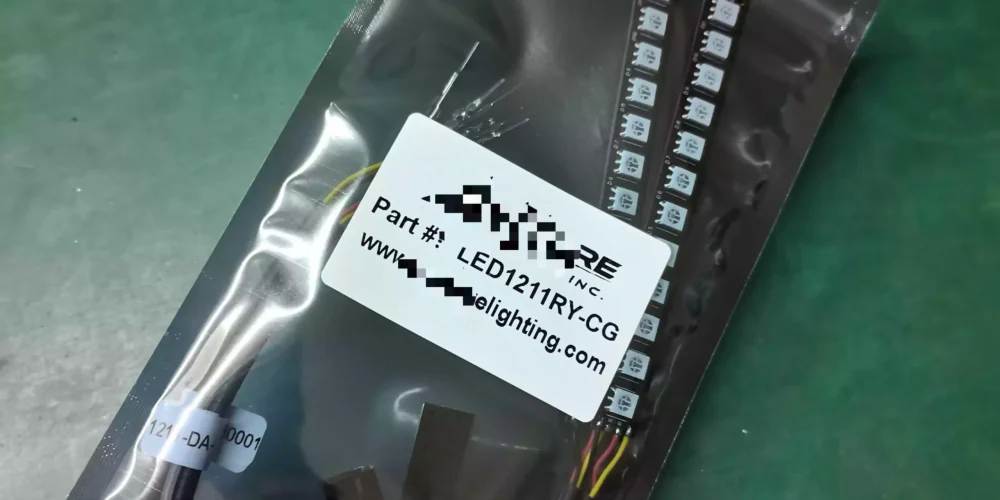
- EAN-13 or UPC-A barcodes assigned by you, printed on every retail box.
- Compliant labels with importer name, address and EU/UK Responsible Person, as required by the EU CE marking rules.
- Batch-level test reports (lumen, CCT, IP68) for your project files.
Transparent MOQ Strategies: How We Support Growing Lighting Brands
Most factories hide behind “MOQ 1,000 meters”. I would rather explain where that number comes from. Then you can decide what is worth paying for.
The Real Cost Structure of a Silicone Extrusion Line
Every time we change the silicone color or swap the extrusion die, the line must be purged. The first 30–60 meters that come out are a mixed-color mess. That is setup waste, and it is physically unavoidable.
On top of that, each new die costs several thousand dollars to machine. Each new CCT requires a new LED bin reservation. And each new PCB layout needs a new SMT stencil and a first-article inspection.
So the honest formula for a fully custom run looks like this:
At 100 meters, the fixed part dominates. At 1,000 meters, it almost disappears. That is the whole story behind MOQ.
Our Tiered MOQ Support
| Tier | Order Size | What Is Custom | What Stays Standard | Lead Time |
|---|---|---|---|---|
| Trial Order / Small Batch | 100 m – 300 m | Branded packaging, laser marking, labels, documentation | Jacket profile, standard CCT (2700K–6500K), standard chip layout | 7–10 working days |
| Full Customization | 500 m – 1,000 m+ | Specific CCT, custom chip arrangement, special extrusion die, jacket color, cable outlet | — | 15–25 working days (plus die lead time if new) |