

Every week, our inbox at NPHIS fills up with the same kind of message. A contractor in Germany. A wholesaler in Florida. A lighting designer in Dubai. They all describe the same problem: their building outline project looks great in the render, but the finished result is wavy, dim at the far end, or dead within a year. In almost every case, the root cause is the same — they ordered the wrong type of neon flex, or they ordered the right product from the wrong supplier.
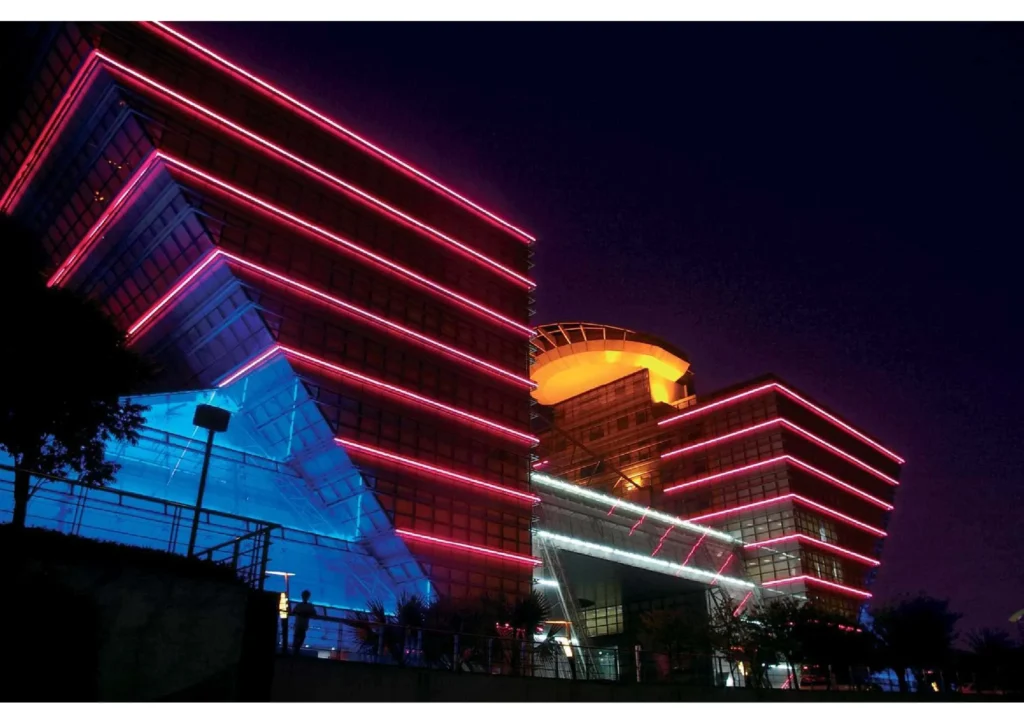
Table of Contents
If you’re specifying or sourcing top bend LED neon flex for a building outline project, this article is written directly for you. No market reports. No fluff. Just factory-floor knowledge from a team that has shipped millions of meters of silicone neon flex to contractors and wholesalers across Europe, North America, and the Middle East.
What Exactly Is Top Bend LED Neon Flex? (And Why You Should Care)
the Simple Explanation
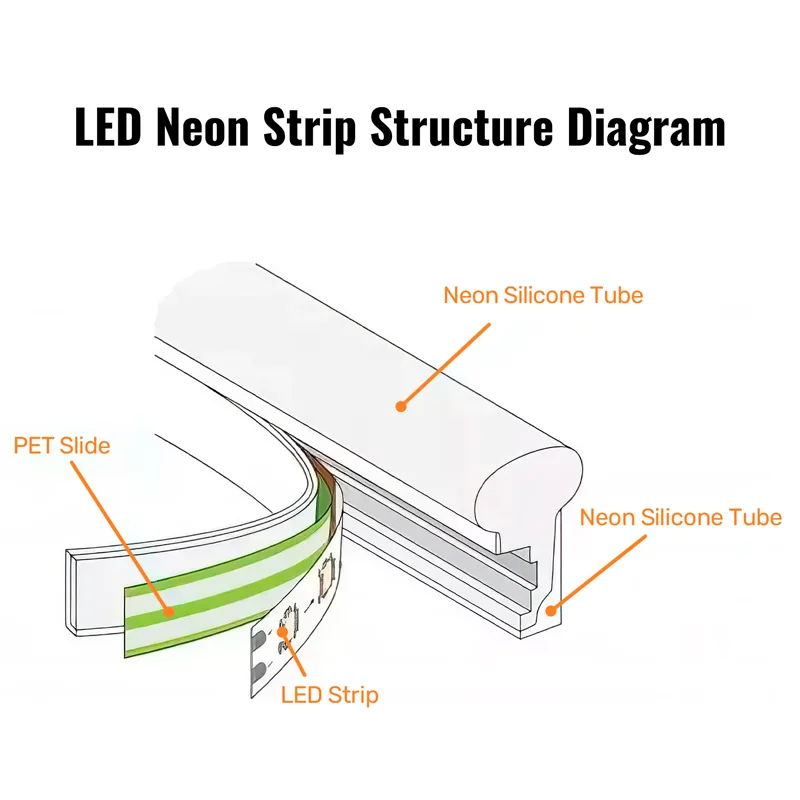
LED neon flex comes in two primary bending orientations: side bend and top bend (also called vertical bend LED neon flex).
- Side bend flexes left and right — like a garden hose lying flat on a table. It’s designed for curves, logos, and channel letters.
- Top bend flexes up and down — it bends on the vertical axis, perpendicular to the mounting surface.
That single structural difference changes everything for building outlines.
Why Bending Direction Is Not Optional
When you mount a side-bend product on a flat wall to run a straight horizontal line, the silicone body wants to twist. You end up fighting the product. The result: a wavy, uneven line that no amount of clips will fully fix.
Top bend is engineered specifically to lie flat against a wall and follow a perfectly straight horizontal path. The internal LED chip layout and the silicone extrusion geometry are both oriented to support this. The light emits from the front face, giving you a clean, uniform line of light — exactly what architectural contour lighting demands.
Bottom line: If your project is a straight building outline, roofline, or facade edge, top bend is the only correct choice. Side bend is for curves and logos. Full stop.
Why Top Bend Is the Go-To Choice for Architectural Contour Lighting
Dot-Free Linear Lighting: The Visual Standard Has Changed
Five years ago, contractors accepted a slightly dotted look from neon flex. Today’s clients — hotel owners, mall developers, commercial property managers — do not. They’ve seen the renders. They expect a smooth, continuous glow.
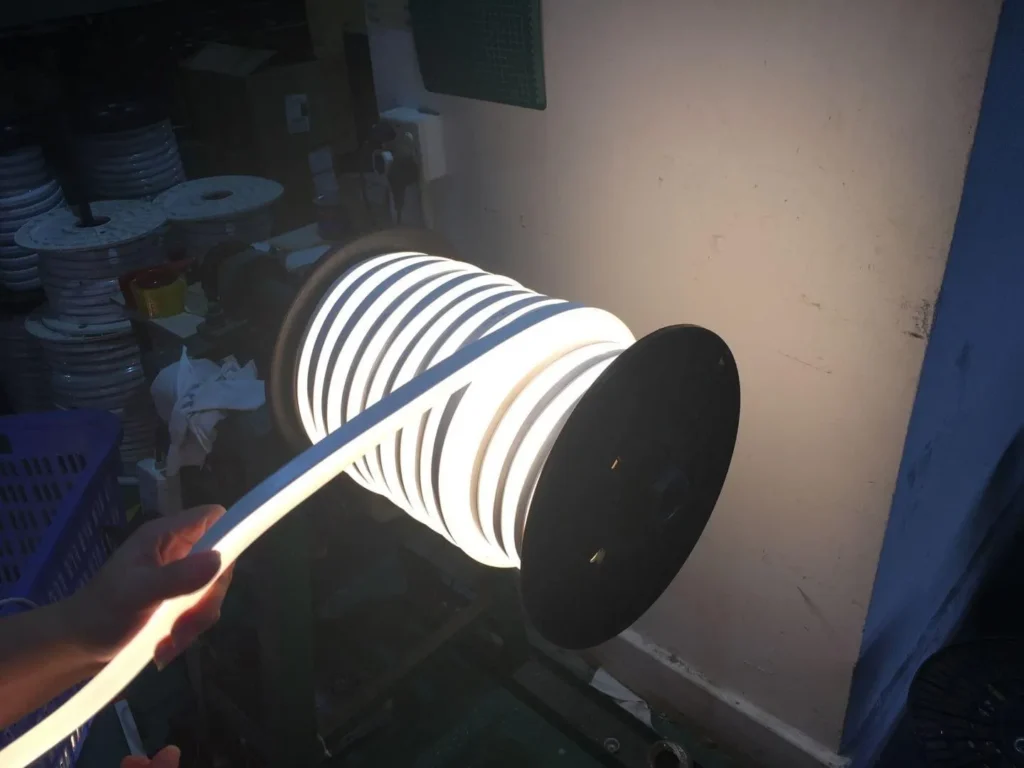
Our top bend silicone neon flex achieves dot-free linear lighting solutions through high-density LED placement (typically 120 LEDs per meter) combined with a precision-extruded milky silicone diffuser. The diffuser scatters the point sources so completely that the finished line looks like a single continuous light element, not a string of individual chips.
This is what makes it the preferred choice for architectural contour lighting LED applications on premium commercial buildings.
IP67 Silicone: Built for Real Outdoor Conditions
For any exterior facade project, the housing material is not a cosmetic choice — it’s a structural one.
Our IP67 silicone neon flex for outdoors is produced using a three-color integrated extrusion process. The silicone body is:
- UV-resistant — tested to maintain clarity and color stability for 5+ years of direct sun exposure
- Temperature-stable from -40°C to +80°C (-40°F to +176°F)
- Anti-yellowing — the silicone does not contain plasticizers that leach and discolor under UV load (unlike PVC, which typically yellows within 1–3 years outdoors)
- Flame-retardant and salt-spray resistant — critical for coastal projects
We’ve seen PVC neon flex on a hotel facade in the UAE turn yellow in under 18 months. The client had to replace the entire outline — bucket trucks, labor, materials, the works. The cost of “saving money” on PVC was three times the original price of silicone.
For a detailed material comparison, see our guide: Silicone vs PVC LED Flexible Neon Lights: Which One Is Superior?
Voltage Drop Realities: Why 24V or 48V Is Mandatory for Long Runs
This is the spec decision that kills more building outline projects than any other. We see it constantly.
A contractor wins a bid on a 200-meter hotel roofline. They order 12V neon flex because it’s cheaper. By the time the install is done, the far end of every run is visibly dimmer than the feed end. The client refuses final payment. The contractor calls us in a panic.
Here is the voltage reality from our production data:
- 12V: Brightness drops noticeably after just 5 meters (16.4 ft) from the power feed. Full stop. It is not suitable for any building outline run.
- 24V: Can sustain a clean, even run of 10–15 meters (32–49 ft) from a single power feed on standard copper PCB.
- 48V: The right choice for large buildings. Supports 20–30 meters (65–98 ft) of continuous, even illumination from a single feed point — with almost zero perceptible drop.
For the full technical breakdown with wire gauge calculations, read our dedicated guide: How to Calculate Voltage Drop for Long Run LED Strip Installations
The Real Cost Saving Nobody Talks About
Switching from 12V to 48V on a large facade project doesn’t just fix the dimming problem. It cuts your wiring and power supply costs by up to 40%.
Here’s why: at higher voltage, you need fewer power injection points. Fewer injection points means less cable runs, fewer junction boxes, fewer power supplies, and dramatically less labor time on a bucket truck or scaffolding.
On a recent 300-meter commercial complex project we supplied in Southeast Asia, the electrical contractor switched from a 12V spec to our 48V top bend silicone neon flex mid-project. They eliminated 11 power injection points from the original wiring plan. The material and labor savings covered the cost difference of the higher-spec product — and then some.
Quick Voltage Selection Guide
| Voltage | Max Single-Feed Run | Best For | Wiring Cost |
|---|---|---|---|
| 12V DC | ~5m (16.4 ft) | Short indoor accents only | High (many feed points) |
| 24V DC | 10–15m (32–49 ft) | Mid-size facades, storefronts | Medium |
| 48V DC | 20–30m (65–98 ft) | Large buildings, hotels, malls | Low (up to 40% savings) |
Beating the "Wavy Line" Effect: Mounting Solutions for Flawless Facades
Let me be direct about something we see in warranty claims every quarter.
A contractor in the Netherlands ordered 800 meters of our top bend neon flex for a logistics center roofline. Good product. But they sourced the mounting hardware locally — cheap plastic clips spaced every 50cm. Six months later, the client sent photos. The roofline looked like a sine wave.
The product was fine. The mounting method was wrong.
Why Plastic Clips Fail on Straight Facades
Plastic clips spaced at 50cm intervals leave the silicone body unsupported between fixing points. Gravity, wind load, and thermal expansion cause the tube to sag and bow between each clip. On a long straight run, this creates a visually unacceptable wavy line — especially visible at night when the light is on.
The Only Correct Solution: Continuous Aluminum U-Profile
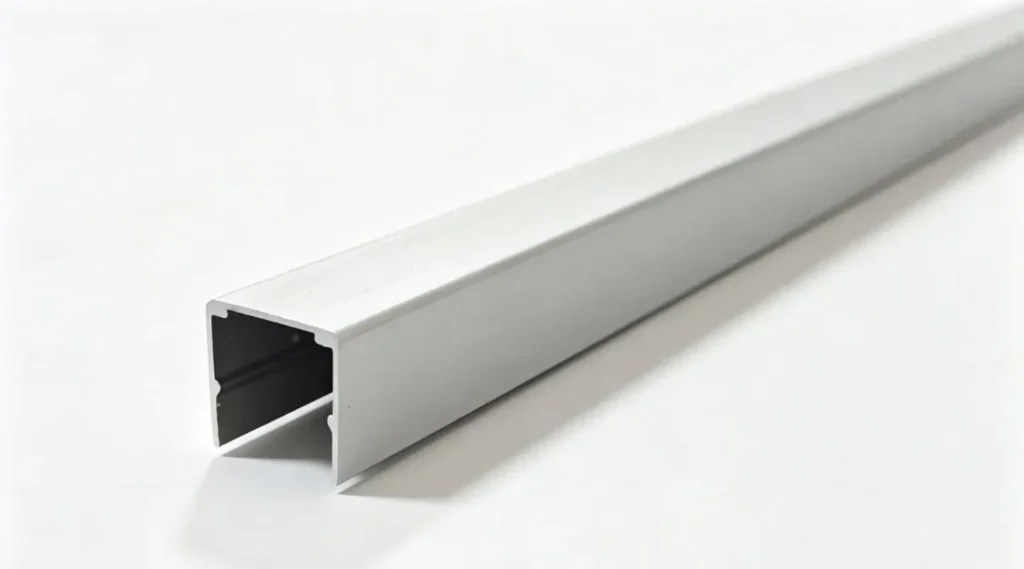
For top bend neon flex on any straight facade, roofline, or linear architectural element, continuous U-shape aluminum profiles are mandatory. Not optional. Mandatory.
Here is what a continuous aluminum channel delivers that plastic clips cannot:
- ✅ 100% straight line — the rigid aluminum channel physically constrains the silicone body along its entire length, eliminating any sag or bow
- ✅ Acts as a heat sink — aluminum conducts heat away from the PCB, dropping operating temperatures by 5–8°C (9–14°F)
- ✅ Extends LED lifespan by 15–20% — this is consistent with the thermal data published by LED heat sink specialists: a 10°C drop in junction temperature can double LED operational life (Hi-Hyperlite, 2026)
- ✅ Protects the silicone body from mechanical impact, UV reflection off the wall, and wind abrasion
- ✅ Cleaner, more professional finish — the aluminum channel gives the installation a premium, architectural look
Factory tip: Specify anodized aluminum U-profiles in the same width as your neon flex cross-section (e.g., 16mm wide for a 16mm neon flex body). Pre-drill and anchor the channel first, then press the neon flex in. No clips. No sag. No callbacks.
Cutting, Sealing, and Hidden Labor Costs
Here’s a cost nobody puts in their project budget until it’s too late: the cost of water ingress callbacks.
Cutting Units and Field Sealing
Our standard top bend silicone neon flex has a cut interval of every 50mm (2 inches). This gives contractors precise control over final run lengths without wasting product.
The cut itself is straightforward — a clean, perpendicular cut with sharp scissors or a utility knife at the marked cut line. But what happens after the cut is where most field failures originate.
DIY Silicone Glue vs. Factory Injection-Molded End Caps
In the field, many installers seal cut ends with a blob of clear silicone adhesive from a tube. It looks fine on day one. But:
- Silicone adhesive applied in the field is rarely applied at consistent depth or coverage
- It doesn’t bond to the silicone housing with the same molecular adhesion as factory-applied material
- In outdoor conditions — rain, thermal cycling, wind pressure — field-applied glue can delaminate within months
Our factory injection-molded end caps are a different product entirely. They are:
- Precision-molded to match the exact cross-section of each neon flex profile
- Bonded using the same silicone compound as the housing itself
- Tested to IP67 standard after fitting — not just the flex body, but the complete assembly including end caps and cable outlet
The Failure Rate Data
The difference in outcome is not marginal. Based on our warranty claim analysis over the past three years:
| Sealing Method | Outdoor Water Ingress Failure Rate | Typical Failure Timeline |
|---|---|---|
| DIY field silicone glue | ~15% | 6–18 months post-install |
| Factory injection-molded end caps | <1% | Rarely fails within warranty period |
A 15% failure rate on a 500-meter building outline project means roughly 75 meters of dead neon flex that needs to be diagnosed, accessed by bucket truck, and replaced. At $150–$300 per bucket truck hour in North America or Northern Europe, a single callback visit can cost more than the original product.
Always specify factory-sealed end caps and factory-fitted waterproof cable outlets when ordering for outdoor use. We include them as standard on all outdoor-rated orders. Just confirm it when you place your inquiry.
Common Applications: Where Does Top Bend Work Best?
Based on the projects we supply every month, here are the scenarios where top bend silicone neon flex genuinely excels — and one where it doesn’t.
✅ Where It Excels
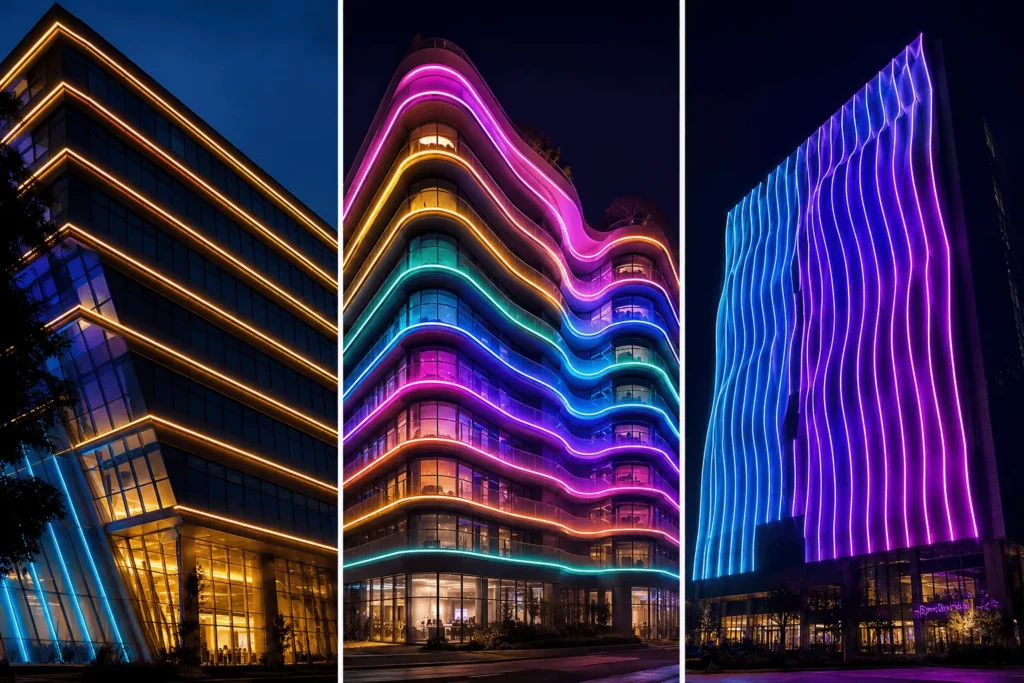
1. Building Facade Outlines Rooflines, floor-level base lighting, window surrounds, parapet edges. Any straight horizontal or vertical line on a building exterior. This is the primary use case and where top bend delivers its cleanest results.
2. Straight Linear Lighting in Commercial Interiors Ceiling coves, wall base lighting, under-counter linear accents in hotels, restaurants, retail stores, and office lobbies. Anywhere a long, straight, dot-free line of light is specified.
3. Architectural Canopy and Soffit Lighting The underside of canopies, entrance overhangs, and covered walkways. Top bend sits flat against the surface and delivers a uniform wash of light downward.
4. Bridge and Infrastructure Outline Lighting Straight bridge railings, tunnel entrance outlines, underpass lighting. The IP67 rating and temperature range handle the exposure conditions.
5. Retail Shelf Edge and Display Lighting Long straight shelf edges in supermarkets, showrooms, and display environments where a clean linear light line is needed at eye level.
❌ Where It Does NOT Work
Complex logos, curved lettering, tight-radius shapes.
If your project involves script lettering, brand logos with curves, circular elements, or any shape that requires the neon flex to bend left and right in the horizontal plane — that is a side bend application, not top bend.
Using top bend for curves forces the silicone body to twist, which stresses the PCB, creates uneven light output, and risks cracking the housing at tight bends.
For curved signage and logo applications, see our Side Bend Silicone LED Neon Flex guide for the correct product specification
Sourcing Low-Voltage Neon Flex: A Factory's Advice for Wholesalers
If you’re a distributor or importer sourcing low-voltage neon flex wholesale for the first time — or switching suppliers after a bad experience — here is what we tell every new buyer who contacts us.
Lead Times: What’s Realistic
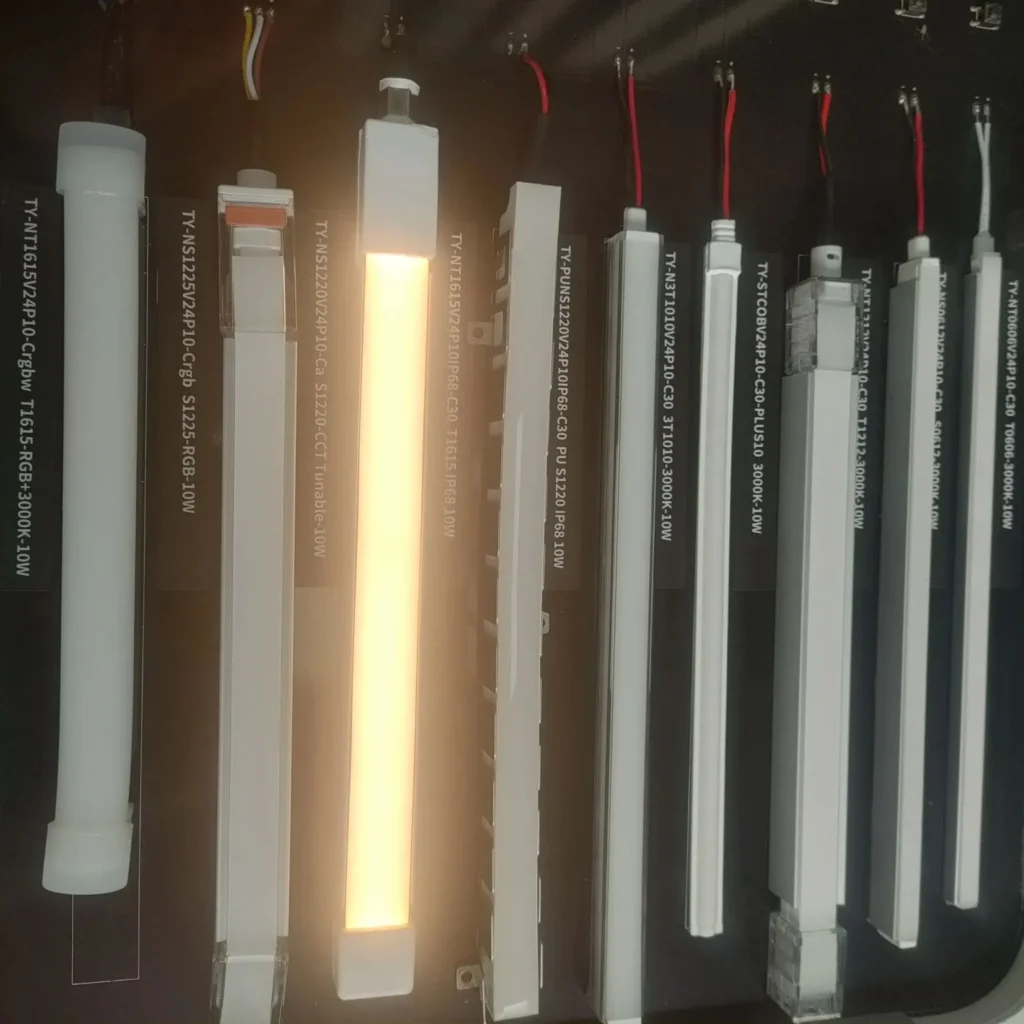
Standard in-stock profiles (our most common 16x16mm and 8x16mm top bend in single white colors) can ship within 5–7 working days for orders under 500 meters.
Custom orders — non-standard cross-sections, custom CCT blends, branded packaging, specific cable outlet positions — typically require 10–15 working days after sample approval.
For large project orders above 2,000 meters, plan for 15–20 working days and request a production schedule confirmation in writing.
Customization: More Is Possible Than You Think
Most wholesalers don’t realize how far factory-level customization goes. At NPHIS, we regularly handle:
- Custom cross-section sizes — width, height, and diffuser thickness to match your existing channel hardware
- Custom CCT — not just 3000K/4000K/6000K, but specific Kelvin targets like 2700K or 5500K for brand consistency
- Custom cable outlet position — left, right, bottom, or rear exit to suit your installation method
- White-label packaging — your brand, your SKU codes, your spec sheets
- Custom reel lengths — 25m, 50m, or cut-to-order lengths to reduce field waste
What to Ask Before You Order
Before placing any wholesale order for top bend LED neon flex, ask your supplier these five questions:
- What is the actual silicone grade? (Food-grade silicone vs. industrial-grade makes a real UV resistance difference)
- What is the copper weight on the PCB? (1oz, 2oz, or 3oz — this directly affects voltage drop performance on long runs)
- Are end caps injection-molded or field-applied? (See the failure rate data above)
- What certifications cover the complete assembly? (CE and RoHS should cover the full product, not just the LED chip)
- Can you provide a pre-shipment QC report? (Integrating sphere data, SDCM color consistency, and aging test results)
If a supplier can’t answer all five clearly and quickly, that tells you something important.
For a full breakdown of what certifications to require for EU and US market imports, read our guide: LED Neon Flex Certifications for Global Buyers: CE, RoHS, IP Rating and Testing
Conclusion: The Right Product, Specified Correctly, Lasts for Years
Building outline lighting is one of the most visible lighting applications in commercial construction. When it’s done right, it defines the building’s identity at night for years. When it’s done wrong, it becomes an expensive, embarrassing maintenance problem within months.
The formula for getting it right is not complicated:
- ✅ Top bend silicone neon flex — not side bend, not PVC
- ✅ IP67 rated with factory-sealed end caps — not field-glued
- ✅ 24V or 48V depending on run length — never 12V for facades
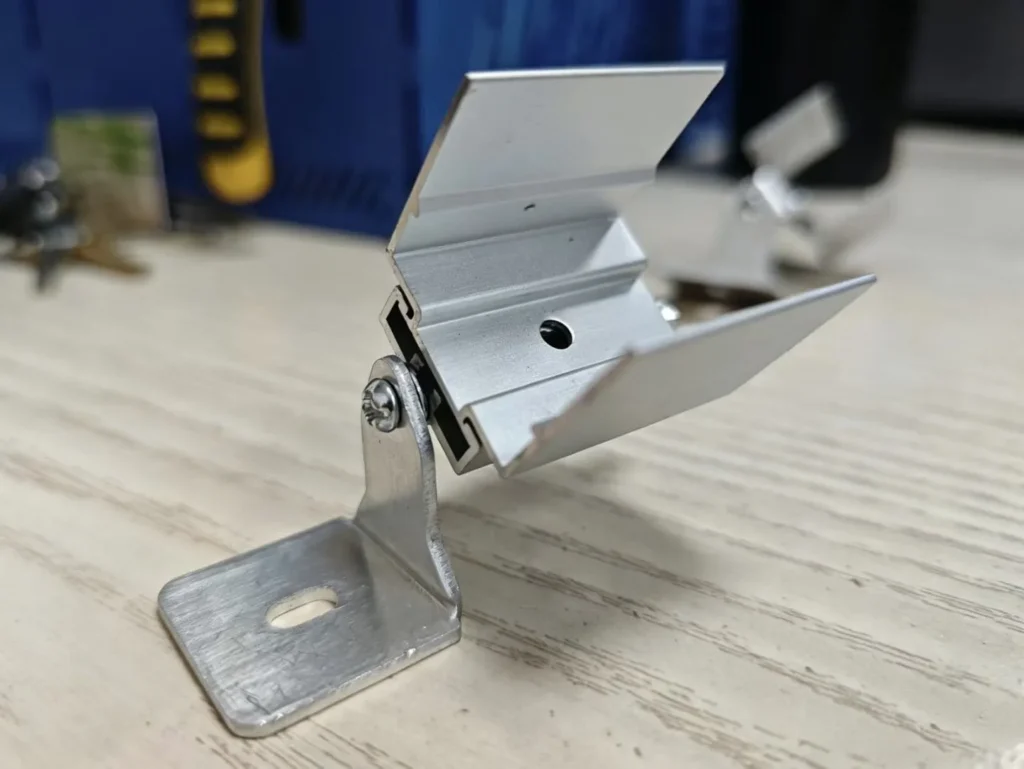
- ✅ Continuous aluminum U-profiles — not plastic clips
- ✅ Factory-direct sourcing with verified certifications and QC documentation
We’ve been manufacturing and exporting silicone neon flex from our factory for over a decade. We supply contractors, distributors, and lighting brands across Europe, North America, the Middle East, and Australia. Every meter that leaves our production line is tested, thermally aged, and inspected before it ships.
📩 Ready to Specify or Source?
Whether you need samples for a specific project, a wholesale price list, or OEM customization for your brand — our team responds within 12 hours.
Request a Free Sample or Project Quote →
Or browse our full range of silicone neon flex options at nphis-led.com/silicone-led-neon-flex.
FAQs: Top Bend LED Neon Flex for Building Outlines
Based on the questions we receive most frequently from contractors and wholesalers worldwide.
❓️ What is the difference between top bend and side bend LED neon flex?
Top bend (vertical bend) neon flex bends up and down — on the vertical axis perpendicular to the mounting surface. It is designed to lie flat against a wall and follow straight horizontal or vertical lines. Side bend neon flex bends left and right in the horizontal plane, making it suitable for curves, logos, and channel letters. Using the wrong bending type for a straight facade causes the silicone body to twist, resulting in a wavy, uneven light line.
❓️ Can I use 12V top bend neon flex for a building outline project?
We strongly advise against it. At 12V, voltage drop becomes visible after just 5 meters (16.4 ft) from the power feed point. For any building outline run longer than 5 meters, you will see a noticeable brightness gradient from the feed end to the far end. Use 24V for runs up to 15 meters, and 48V for runs up to 30 meters from a single power feed.
❓️ How do I prevent the "wavy line" effect on a straight building facade?
The cause is almost always inadequate mounting — typically plastic clips spaced too far apart. The correct solution is continuous aluminum U-channel profiles that support the neon flex along its entire length. This physically constrains the silicone body, eliminates sag between fixing points, and delivers a perfectly straight line. As a bonus, the aluminum acts as a heat sink, reducing operating temperature by 5–8°C and extending LED lifespan by 15–20%.
❓️ What IP rating do I need for outdoor building facade lighting?
For any exposed exterior application — facades, rooflines, canopies, bridges — specify a minimum of IP67. IP67 means the product is dust-tight and can withstand temporary immersion in water up to 1 meter for 30 minutes. This covers rain, pressure washing, and water runoff. For submerged or underwater applications (fountains, pools), you need IP68. IP65 is not sufficient for direct rain exposure on a building facade.
❓️ How often can I cut top bend silicone neon flex, and how do I seal the cut ends?
Standard cut intervals are every 50mm (2 inches). Always cut at the marked cut line using a clean, perpendicular cut. For outdoor installations, always use factory injection-molded end caps — not field-applied silicone glue. Factory-sealed ends reduce outdoor water ingress failure rates from approximately 15% (field-glued) to under 1%. This is the single most important installation detail for long-term outdoor reliability.
❓️ What is the lifespan of IP67 silicone neon flex on a building facade?
With correct product specification, proper mounting, and factory-sealed end caps, a quality silicone neon flex installation should deliver 50,000+ hours of LED operational life — equivalent to over 17 years at 8 hours per day. The silicone housing itself is rated for UV stability and anti-yellowing performance for 5+ years of direct outdoor exposure. PVC neon flex typically shows yellowing and cracking within 1–3 years outdoors.
❓️ How much does switching from 12V to 48V actually save on a large project?
On large facade projects, switching from 12V to 48V can reduce wiring and power supply costs by up to 40%. The saving comes from fewer power injection points, shorter cable runs, fewer junction boxes, and less installation labor time. On a 300-meter project, this can mean eliminating 10+ power injection points — a significant saving in both materials and scaffolding/bucket truck time.
❓️ Can I get custom colors or CCT for top bend neon flex?
Yes. We support custom CCT targets (not just standard 3000K/4000K/6000K), custom cross-section sizes, RGB/RGBW/dynamic white options, and DMX-controllable versions of top bend neon flex. Custom orders typically require 10–15 working days after sample approval. Minimum order quantities for custom specifications vary — contact our team for a specific project quote.
❓️ What certifications should I require when importing LED neon flex into Europe or the USA?
For the EU market, require CE marking (covering LVD and EMC directives) and RoHS compliance. For the USA/Canada, look for ETL or UL listing for the complete assembly. Always verify that the IP rating (e.g., IP67) is tested to IEC 60529 standard and that the certification covers the complete product assembly — including end caps and cable outlets — not just the LED strip component. See our full certification guide here.
❓️ What is the minimum order quantity for wholesale top bend LED neon flex?
For standard in-stock profiles, our minimum order quantity starts at 100 meters. For custom specifications (cross-section, CCT, packaging), MOQ is typically 500 meters. We support sample orders of 5–10 meters before full production commitment. Contact our B2B team for current pricing tiers and lead time confirmation for your specific project volume.
References & Sources
- Hi-Hyperlite: Why a 10°C Drop in Temperature Can Double Your LED Lifespan — hi-hyperlite.com
- SignLite LED: Best Aluminum Profiles for LED Strip Lights — signliteled.com
- UK LED Lights: 48V Single Colour Neon Flex: Ultra-Long Professional LED Lighting — ukledlights.co.uk
- NPHIS LED: How to Calculate Voltage Drop for Long Run LED Strip Installations — nphis-led.com
- NPHIS LED: Outdoor LED Neon Flex for Building Facade Lighting — nphis-led.com
- NPHIS LED: LED Neon Flex Certifications for Global Buyers — nphis-led.com
- IEC 60529: Degrees of Protection Provided by Enclosures (IP Code) — International Electrotechnical Commission
WHY I WRITE THIS
About my business
Our company’s main products include LED flexible light strips, rigid light strips, and linear light fixtures, all of which are manufactured in our own factory or in factories we have been cooperating with for many years.
Our services
Our products are primarily mid-to-high-end, exported to Europe and America. We accept OEM & ODM small-batch orders, and also provide sourcing services in China to help our international clients solve problems. Please contact us if you need our assistance with sourcing.
Contact Profile
Name Ted Lau
Brand Name NPHIS
Country China
Model B2B Wholesale only
Email ted@nphis-led.com
Related Posts
Explore essential insights on material durability, IP ratings, and installation for our Silicone LED Neon Flex. Designed for lighting professionals, this guide helps you make informed purchasing decisions for commercial and architectural applications.
Client Endorsements
Here,we proudly display the brands we have partnered with.






Request a free quote
If you have questions or suggestions,please leave us a message,we will reply you as soon as we can!