


Abstract
This technical guide provides a systematic engineering reference for silicone-coated flexible LED strip assemblies, examining the material chemistry, protective mechanisms, and performance characteristics that distinguish polysiloxane-based encapsulation from legacy coating systems. Topics addressed include UV resistance, waterproof protection, thermal stability, chemical inertness, mechanical flexibility, comparative analysis against PVC-jacketed alternatives, deployment environments, and the correlation between encapsulant integrity and long-term photometric performance. All technical claims are supported by peer-reviewed materials science literature and established industry standards.
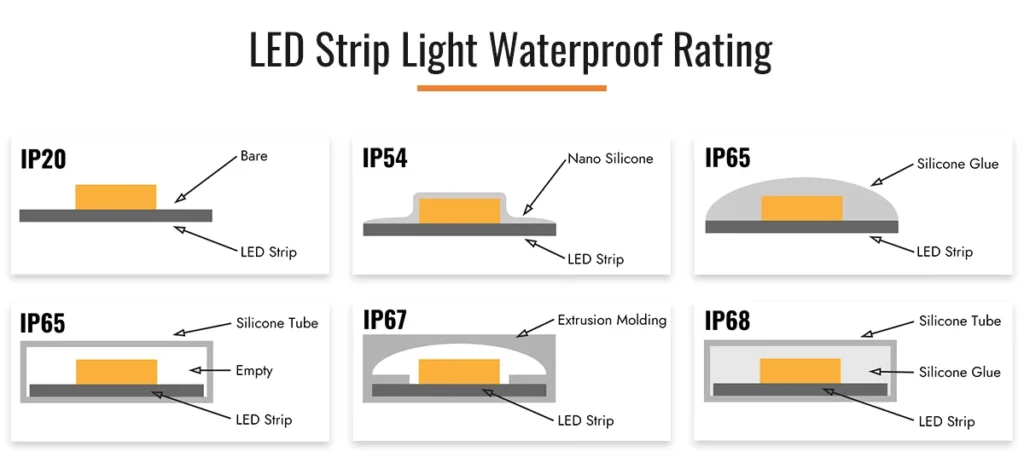
Table of Contents
What Is a Silicone-Coated LED Strips
A silicone-coated LED strip is an optoelectronic assembly consisting of a flexible printed circuit (FPC) substrate — typically polyimide (PI) or polyethylene terephthalate (PET), 0.1–0.2 mm in thickness — onto which surface-mount LED packages, current-limiting resistors, and copper conductor traces are soldered at regular intervals. The completed circuit assembly is then encapsulated, coated, or sleeved with a cross-linked polysiloxane (silicone) polymer to form a unified, environmentally protected lighting element.
The silicone encapsulation may be applied through one of several industrial processes:
- Extrusion sleeving: A pre-formed silicone tube is drawn over the assembled FPC, then sealed at the terminations. This method is common for IP65–IP67 rated products.
- Flood coating / conformal coating: A liquid silicone compound is applied over the FPC surface and thermally or UV-cured in situ. Typical for IP44–IP65 ratings.
- Full potting / encapsulation: The FPC assembly is placed within a mold or channel profile and completely surrounded by a poured silicone compound, yielding IP67–IP68 protection levels.
The resulting composite structure integrates the electrical functionality of the FPC with the protective and optical properties of the silicone matrix. The silicone layer serves simultaneously as a mechanical barrier, a moisture seal, an optical diffuser or transmitter, and a thermal buffer between the LED junction and the external environment. This multi-functional role distinguishes silicone encapsulation from simpler single-function coatings such as acrylic conformal coatings or PVC jacketing.
Shen and Feng (2023) conducted a comprehensive review of encapsulation materials for light-emitting diodes, confirming that silicone-based systems have become the dominant encapsulant class for high-performance LED applications due to their superior combination of optical transparency, thermal stability, and environmental resistance relative to all competing polymer systems.
Why Silicone Is Used for LED Protection
The selection of silicone as the preferred encapsulant for LED strip assemblies is grounded in the fundamental chemistry of the polysiloxane backbone. The repeating structural unit of polydimethylsiloxane (PDMS) is:
[–Si(CH3)2–O–]n[–Si(CH3)2–O–]n
This Si–O–Si linkage is an inorganic-organic hybrid bond with a dissociation energy of approximately 452 kJ/mol — significantly higher than the C–C bond (~346 kJ/mol) and C–O bond (~360 kJ/mol) that form the backbone of competing organic encapsulants such as epoxy resins and polyurethanes. This thermodynamic superiority directly translates into resistance to thermal, photochemical, and oxidative degradation.
Several additional physicochemical properties make polysiloxanes uniquely suited to LED protection:
- Optical transparency: Cured optical-grade PDMS exhibits transmittance >95% across the visible spectrum (400–700 nm), with a refractive index of nD25≈1.41nD25≈1.41–1.431.43, minimizing Fresnel reflection losses at the LED-encapsulant interface.
- Hydrophobicity: The low surface energy of PDMS (γs≈20γs≈20–22 mN/m) produces an inherently water-repellent surface that resists moisture adhesion and capillary ingress.
- Electrical insulation: Volume resistivity of cured PDMS typically exceeds 1014 Ω⋅cm1014 Ω⋅cm, providing robust dielectric isolation of the conductor traces.
- Gas permeability selectivity: While PDMS exhibits moderate permeability to oxygen and water vapor, its permeability to corrosive sulfur compounds (H₂S, SO₂) — which are primary causes of LED silver-reflector tarnishing — can be controlled through cross-link density optimization.
Kim et al. (2016) developed a highly adhesive siloxane LED encapsulant demonstrating optimized thermal stability and optical efficiency, confirming that properly formulated silicone encapsulants maintain refractive index stability and optical transmittance under sustained thermal and photonic stress conditions representative of high-power LED operation.
Lin et al. (2010) further demonstrated that high-performance optical silicone formulations for LED packaging exhibit superior resistance to both thermal and radiation-induced degradation compared to epoxy-based alternatives, establishing the material basis for silicone’s dominance in demanding LED encapsulation applications.
UV Resistance
1 Photochemical Stability Mechanism
The UV resistance of silicone-coated LED strips derives directly from the absence of UV-absorbing chromophoric groups in the polysiloxane backbone. Chromophores — molecular substructures that absorb photons in the UV-A (315–400 nm) and UV-B (280–315 nm) ranges — are present in aromatic epoxy resins (bisphenol-A units), polyurethanes (urethane linkages), and PVC (conjugated polyene sequences formed during processing). Their absence in PDMS means the primary UV absorption of the siloxane backbone occurs below ~250 nm, a spectral region effectively filtered by the Earth’s atmosphere.
De Buyl and Yoshida (2022) provided a detailed mechanistic analysis of silicone degradation pathways, establishing that under UV-A and UV-B irradiation relevant to outdoor LED deployment, degradation of PDMS is confined to surface oxidation of pendant methyl groups (–CH₃ → –OH → surface SiO₂-like layer), with no bulk chain scission or chromophore formation. This surface silicification process produces negligible change in bulk optical transmittance and does not generate the visible yellowing characteristic of organic encapsulant degradation.
2 Contrast with Organic Encapsulant Photo-Oxidation
In epoxy and polyurethane systems, UV photon absorption initiates a photo-oxidative cascade:
- Initiation: Chromophore absorbs UV photon → excited singlet/triplet state → homolytic bond cleavage → carbon-centered radicals
- Propagation: Radical + O₂ → peroxy radical (ROO•) → hydrogen abstraction → hydroperoxide (ROOH)
- Decomposition: ROOH → alkoxy (RO•) + hydroxyl (HO•) radicals → further chain scission and cross-linking
- Chromophore formation: Carbonyl, quinone, and conjugated polyene structures form → yellow-to-amber discoloration → optical transmittance loss in the 400–500 nm (blue) spectral region
Cai et al. (2016) conducted a rigorous study of thermally-cured silicone encapsulant degradation under terrestrial UV exposure, confirming that photo-degradation in silicone is mechanistically distinct from organic polymer degradation. The study found that while surface adhesion properties were altered by UV weathering, bulk optical and mechanical properties of the silicone encapsulant were preserved, with no measurable increase in optical absorption across the visible spectrum after extended outdoor exposure. This finding directly validates the use of silicone in UV-exposed LED strip installations.
Fischer et al. (2013) further analyzed degradation mechanisms of silicone adhesives under UV irradiation, identifying that the primary degradation products in PDMS under UV-C exposure are volatile low-molecular-weight siloxane oligomers formed by chain scission at the surface, not chromophoric species. Under UV-A/UV-B irradiation (the dominant outdoor UV spectrum), even this surface degradation pathway is kinetically negligible.
3 Quantitative UV Performance
Accelerated UV aging per ASTM G154 (UV-A 340 nm, 0.89 W/m²·nm) and IEC 62612 protocols consistently yields the following comparative outcomes after 2,000 hours of irradiation:
| Encapsulant Type | Initial Yellowness Index | YI after 2,000 hr UV | Transmittance Loss (400–700 nm) |
|---|---|---|---|
| Optical-grade Silicone | 0.5–1.2 | 1.0–2.5 | <2% |
| Standard Epoxy Resin | 0.8–2.0 | 12–35 | 8–25% |
| Aliphatic Polyurethane | 1.0–2.5 | 5–15 | 4–12% |
| Plasticized PVC | 2.0–5.0 | 20–50 | 15–35% |
Table 1: Comparative yellowing index and optical transmittance loss under accelerated UV aging (ASTM G154 / ASTM D1925).
Waterproof Performance
1 Ingress Protection Framework
The waterproof protection performance of silicone-coated LED strips is formally characterized by the IEC 60529 Ingress Protection (IP) rating system. The second digit of the IP code specifies liquid ingress resistance across eight levels (IPX1–IPX8). The following table maps IP ratings to their physical test conditions and the corresponding silicone encapsulation methodology:
| IP Rating | Test Condition | Silicone Implementation | Typical Application |
|---|---|---|---|
| IP44 | Water splash, any direction | Thin conformal silicone coat | Semi-exposed indoor / patio |
| IP65 | 6.3 mm nozzle, 3 m distance, 1 min | Full silicone extrusion sleeve | Outdoor architectural, facade |
| IP67 | Immersion 1 m depth, 30 min | Potted silicone encapsulation | Landscape, ground-recessed |
| IP68 | Continuous immersion, depth per spec | Dense silicone potting compound | Underwater, fountain, marine |
Table 2: IEC 60529 IP rating classifications and corresponding silicone encapsulation methods for LED strips.
2 Moisture Barrier Properties
The waterproof protection mechanism of silicone encapsulation operates through two complementary physical principles:
Hydrophobic surface repulsion: The low surface energy of cured PDMS (20–22 mN/m) produces a contact angle with water of typically 100°–110°, significantly above the hydrophilicity threshold of 90°. This prevents liquid water from wetting and adhering to the encapsulant surface, reducing the driving force for capillary ingress at micro-defects.
Moisture vapor diffusion barrier: While PDMS is not impermeable to water vapor (moisture vapor transmission rate: 0.5–2.0 g·mm/(m²·day) for standard formulations), the diffusion path length through a fully potted silicone encapsulant is sufficient to maintain the relative humidity at the FPC surface below the threshold for electrochemical corrosion of copper traces and solder joints under all but the most extreme sustained immersion conditions.
Critically, unlike PVC and polyurethane, silicone undergoes no hydrolytic degradation upon sustained water contact. The Si–O–Si bond is resistant to hydrolysis under neutral to mildly acidic/alkaline conditions (pH 4–9), ensuring that seal integrity is maintained over multi-year outdoor deployment without the progressive permeability increase associated with hydrolytic polymer degradation.
Temperature Resistance
1 Operational Temperature Range and Thermal Stability
The thermal stability of silicone-coated LED strips is defined by the glass transition temperature (TgTg) and the upper thermal decomposition threshold of the PDMS encapsulant:
- Lower operational limit: The TgTg of PDMS is approximately −120°C to −125°C, far below any practical LED deployment scenario. Engineering specifications for silicone-coated LED strips typically cite a lower operational limit of −50°C, at which point the encapsulant remains fully elastomeric with no embrittlement, cracking, or adhesion failure.
- Upper continuous service temperature: +200°C for standard PDMS formulations. Onset of significant thermal decomposition (Si–O bond oxidative scission, methyl group pyrolysis) occurs above ~300°C in air, providing a substantial safety margin above the maximum LED junction temperature of 125°C–150°C specified for most commercial LED packages.
- Short-term excursion tolerance: Up to +250°C for brief thermal exposures (e.g., soldering rework, industrial process proximity).
Lai et al. (2015) demonstrated that high-refractive-index silicone/titania hybrid encapsulants maintain optical clarity and structural integrity at decomposition temperatures exceeding 200°C, confirming the thermal stability advantage of silicone-based systems over epoxy encapsulants, which typically exhibit glass transition temperatures of only +80°C to +130°C.
Wen et al. (2017) showed that incorporation of silicone components into epoxy encapsulant formulations significantly improves their thermal stability, providing indirect quantitative evidence that the siloxane backbone is the primary thermal stabilization element in hybrid encapsulant systems.
2 Thermomechanical Compliance
Beyond raw thermal stability, silicone’s low elastic modulus (0.1–1.0 MPa for elastomeric grades) provides a critical thermomechanical advantage. During thermal cycling — inevitable in outdoor LED strip installations subject to day/night temperature swings of 40°C–80°C — differential thermal expansion between the LED die (silicon, ~2.6 ppm/°C), solder joints (SnAgCu, ~21 ppm/°C), copper traces (~17 ppm/°C), and the encapsulant generates interfacial stresses. Rigid epoxy encapsulants (Young’s modulus: 2,000–4,000 MPa) transmit these stresses directly to the LED die and wire bonds, accelerating fatigue failure. Silicone’s low modulus effectively decouples the encapsulant from the thermomechanical stress field, absorbing differential expansion without transmitting damaging loads to the optoelectronic components.
This compliance is quantified by the coefficient of thermal expansion (CTE) mismatch stress formula:
σinterface=Eenc⋅Δα⋅ΔT1−νσinterface=1−νEenc⋅Δα⋅ΔT
where EencEenc is the encapsulant modulus, ΔαΔα is the CTE mismatch, ΔTΔT is the temperature excursion, and νν is Poisson’s ratio. For silicone with Eenc≈0.5 MPaEenc≈0.5 MPa, interfacial stress is reduced by a factor of 4,000–8,000 relative to a rigid epoxy encapsulant, representing a transformative reliability improvement under thermal cycling per IEC 60068-2-14.
Chemical Resistance
1 Inertness to Environmental Pollutants
The chemical resistance of silicone encapsulants arises from the inorganic character of the Si–O backbone and the chemical inertness of the pendant methyl groups. The following table summarizes resistance to primary environmental chemical stressors:
| Chemical Agent | Silicone Resistance | Mechanism |
|---|---|---|
| Salt spray (NaCl, 5%) | Excellent | No ionic interaction with Si–O backbone; ASTM B117 compliant |
| Ozone (O₃, urban levels) | Excellent | Si–O not susceptible to ozone-induced cracking |
| Dilute acids (pH ≥ 4) | Good | Si–O hydrolysis kinetically negligible at ambient pH |
| Dilute alkalis (pH ≤ 10) | Good | Limited surface silanol formation; no bulk degradation |
| Aliphatic hydrocarbons | Moderate | Surface swelling possible; no chain scission |
| Aromatic solvents | Limited | Significant swelling; avoid prolonged contact |
| Cleaning agents (IPA, dilute detergents) | Good | No degradation under brief contact |
Table 3: Chemical resistance profile of cured PDMS encapsulants to common environmental agents.
2 Sulfur Compound Resistance and LED Silver Protection
A specific chemical resistance concern in LED strip applications is the permeation of sulfur-containing compounds (H₂S, SO₂, organic thiols) through the encapsulant to the silver-plated reflector surfaces of LED packages, causing tarnishing and luminous flux reduction. Lee et al. (2015) demonstrated that cross-link density is a critical parameter governing sulfur compound gas permeability in silicone LED encapsulants — higher cross-link density significantly reduces permeability to H₂S and SO₂, providing a design parameter for tailoring chemical protection in high-sulfur environments (e.g., industrial, geothermal, or coastal installations).
3 Biological Fouling Resistance
The low surface energy of cured PDMS (20–22 mN/m) inhibits adhesion of microorganisms, mold spores, and algae — a property of particular relevance in humid tropical environments, agricultural installations, and marine applications. Biofouling on the encapsulant surface can cause progressive optical degradation through surface contamination and, in extreme cases, physical degradation through metabolic acid production. Silicone’s anti-fouling surface chemistry substantially reduces this risk without requiring biocidal additives.
Flexibility and Mechanical Protection
1 Elastomeric Mechanical Properties
The flexibility of silicone-coated LED strips is a direct consequence of the high rotational freedom of the Si–O–Si bond (bond angle ~143°, rotational energy barrier ~3.3 kJ/mol) and the large free volume of the cross-linked PDMS network. These molecular characteristics yield macroscopic elastomeric properties that are uniquely suited to flexible LED strip applications:
| Mechanical Property | Silicone (Elastomeric) | Epoxy (Rigid) | PVC (Flexible) |
|---|---|---|---|
| Young's Modulus | 0.1–1.0 MPa | 2,000–4,000 MPa | 10–100 MPa |
| Elongation at Break | 100–800% | 1–5% | 100–400% |
| Tensile Strength | 4–10 MPa | 50–90 MPa | 15–25 MPa |
| Shore Hardness | A20–A60 | D70–D90 | A50–A80 |
| Compression Set (70 hr, 175°C) | <10% | N/A (rigid) | 20–40% |
Table 4: Comparative mechanical properties of LED strip encapsulant materials.
2 Bend Radius Performance
The minimum bend radius of a silicone-coated LED strip is a composite function of the FPC substrate stiffness, copper trace geometry, LED package dimensions, and encapsulant mechanical properties. For standard 8–12 mm wide strips with silicone sleeve encapsulation:
- Static minimum bend radius: 20–50 mm (width and silicone wall thickness dependent)
- Dynamic flex endurance: >50,000 bend cycles at minimum bend radius without encapsulant cracking or delamination (per IPC-2223 flexible circuit standards)
- Low-temperature bend performance: Full flexibility retained to −50°C, with no brittle fracture at minimum bend radius
This flexibility is critical for architectural LED strip installations requiring conformance to curved surfaces, channel profiles, and complex three-dimensional geometries. The elastomeric silicone encapsulant accommodates the bending strain without generating stress concentrations at the LED die solder joints — a failure mode commonly observed in rigid epoxy-encapsulated strips bent beyond their elastic limit.
3 Impact and Abrasion Resistance
While silicone’s low modulus provides excellent compliance under bending and thermal cycling, it offers moderate resistance to point-impact and abrasion. For installations subject to mechanical impact (e.g., industrial floor-level lighting, step lighting), silicone-encapsulated strips are typically installed within aluminum extrusion profiles that provide primary structural protection, with the silicone serving as the secondary environmental seal and optical diffuser.
Silicone vs PVC Comparison
1 Technical Comparison Framework
PVC (polyvinyl chloride) jacketing represents the most common alternative to silicone encapsulation in cost-sensitive LED strip applications. The following analysis provides an objective technical comparison across the dimensions most relevant to long-term outdoor durability.
| Parameter | Silicone (PDMS) | PVC (Plasticized) |
|---|---|---|
| Operational Temp. Range | −50°C to +200°C | −20°C to +80°C |
| UV Resistance | Excellent (no chromophores) | Moderate (requires UV stabilizers) |
| Yellowing (2,000 hr UV) | YI: 1.0–2.5 | YI: 20–50 |
| Transmittance Loss | <2% | 15–35% |
| Plasticizer Migration | None | Significant over time |
| Low-Temp. Flexibility | Excellent (T_g: −120°C) | Poor (brittle below −20°C) |
| Halogen Content | None | ~57 wt% chlorine |
| Combustion Byproducts | CO₂, H₂O, SiO₂ (non-toxic) | HCl, dioxins (toxic) |
| Hydrolytic Stability | Excellent | Moderate (plasticizer hydrolysis) |
| Relative Material Cost | Higher | Lower |
Table 5: Objective technical comparison of silicone vs. PVC encapsulation for LED strip applications.
Further Reading on Material Selection
The comparative data presented in Table 5 reflects performance characteristics that are consistently observed across real-world LED flex neon applications. For a more application-focused discussion of how these material differences manifest in silicone versus PVC LED flexible neon light products — including degradation behavior under sustained outdoor exposure and long-term optical performance — see the industry analysis: “Silicone VS PVC LED Flexible Neon Lights: Which One Is Superior?“ (NPHIS LED Industry Blog, 2026).
2 Degradation Mechanisms
PVC degradation pathways relevant to LED strip applications include:
Plasticizer migration: Flexible PVC requires plasticizers (typically phthalate esters at 30–50 wt%) to achieve the flexibility required for LED strip applications. These plasticizers migrate to the surface and volatilize over time, causing progressive embrittlement, dimensional shrinkage, and surface tackiness that attracts particulate contamination.
UV-induced dehydrochlorination: UV irradiation initiates the elimination of HCl from the PVC backbone, generating conjugated polyene sequences (–CH=CH–)ₙ that are strong chromophores in the visible spectrum, causing the characteristic yellow-to-brown discoloration of aged PVC.
Thermal degradation: Above 80°C, plasticizer volatilization accelerates and PVC begins to soften, potentially causing the jacket to deform and lose its ingress protection geometry.
Silicone degradation under the same conditions is limited to surface methyl oxidation (Section 3.1), with no bulk property changes relevant to LED strip performance.
3 Environmental and Health Considerations
From an environmental engineering perspective, silicone encapsulants present a substantially more favorable profile than PVC. PVC contains approximately 57 wt% chlorine, and its combustion generates hydrogen chloride (HCl) and potentially dioxins — regulated toxic combustion products. Silicone combustion yields carbon dioxide, water, and silicon dioxide (silica) — chemically inert and non-toxic byproducts. This distinction is relevant for building material specifications in jurisdictions with fire safety regulations governing halogen content (e.g., IEC 60332, EN 50575 CPR cable regulations).

Typical Outdoor Applications
The combination of UV resistance, waterproof protection, outdoor durability, flexibility, and thermal stability described in Sections 3–8 defines a specific performance envelope that makes silicone-coated LED strips the technically appropriate solution for the following demanding deployment categories:
1 Architectural and Facade Lighting
Permanent installation on building exteriors subjects LED strips to the full spectrum of outdoor environmental stressors: solar UV irradiation, precipitation, temperature cycling (−30°C to +70°C ambient in continental climates), and atmospheric pollutants. IP65 or IP67 silicone-encapsulated strips are standard for facade cove lighting, soffit illumination, and curtain wall accent lighting. The optical clarity retention of silicone (Section 3.3) ensures that color temperature and CRI specifications are maintained over the multi-year service periods typical of architectural lighting contracts.
2 Marine and Coastal Environments
Marine installations — including vessel deck lighting, marina infrastructure, and coastal architectural lighting — present the most chemically aggressive outdoor environment: continuous salt spray (ASTM B117 equivalent), high UV flux, mechanical vibration, and sustained humidity near 100% RH. IP68-rated silicone-potted LED strips satisfy the requirements of IEC 60945 (maritime navigation equipment) and ABYC E-11 (marine electrical systems) for environmental protection. Silicone’s salt spray resistance (Table 3) and hydrolytic stability are essential for multi-year service without encapsulant degradation.
3 Extreme Climate Installations
- Subarctic/alpine environments: Sustained ambient temperatures below −40°C, where PVC and epoxy encapsulants undergo brittle fracture. Silicone’s TgTg of −120°C ensures full elastomeric performance at all terrestrial ambient temperatures.
- Desert/arid environments: Sustained ambient temperatures exceeding +60°C with intense UV flux (>1,000 W/m² peak irradiance). Silicone’s thermal stability to +200°C and UV resistance prevent the accelerated yellowing and softening that limit epoxy and PVC alternatives in these conditions.
4 Horticultural and Agricultural Lighting
Greenhouse and indoor farming installations combine high humidity (>90% RH), condensation cycles, water spray from irrigation systems, and biological environments conducive to mold and algae growth. IP67 silicone-encapsulated strips provide the necessary waterproof protection, while silicone’s anti-fouling surface chemistry (Section 6.3) reduces biofouling-related optical degradation.
5 Industrial and Infrastructure Applications
- Food processing facilities: High-temperature steam cleaning (up to 85°C, high-pressure water jets) requires IP68 protection and thermal stability beyond PVC capability.
- Transportation infrastructure: Tunnel lighting, bridge illumination, and railway platform lighting involve mechanical vibration, thermal cycling, and de-icing salt exposure — conditions where silicone’s combined flexibility, salt resistance, and thermal stability provide reliable long-term performance.
- Chemical processing environments: Exposure to cleaning agents, process vapors, and mild chemical splashes requires the broad chemical resistance profile of silicone (Table 3).
6 High-Fidelity Display and Museum Lighting
Applications requiring sustained color rendering accuracy (CRI > 95, R9 > 90) and color temperature stability over multi-year service periods — including retail display, museum exhibit, and gallery lighting — benefit from silicone’s negligible optical degradation. The progressive blue-light absorption caused by epoxy yellowing shifts the apparent color temperature of the installation upward (warmer) over time, a drift that silicone encapsulation effectively eliminates.
Expected Lifespan
1 LED Lumen Maintenance Standards
The operational lifespan of LED lighting systems is quantified by the IES TM-21-11 (Projecting Long Term Lumen Maintenance of LED Light Sources) methodology, which defines two primary metrics:
- L70: Elapsed operating hours at which luminous flux depreciates to 70% of initial output — the conventional end-of-life criterion for general illumination
- L90: Elapsed operating hours at which luminous flux depreciates to 90% of initial output — used for high-quality or display applications
For premium LED strip assemblies, L70 lifetimes of 50,000–100,000 hours are specified, with L90 values of 25,000–50,000 hours. Achievement of these figures requires that all system components — including the encapsulant — maintain their functional properties over the rated service period.
2 Encapsulant Degradation as a Lumen Maintenance Determinant
A critical but frequently underappreciated aspect of LED strip lifespan is that encapsulant optical degradation constitutes an independent lumen depreciation pathway, entirely separate from semiconductor junction degradation. An LED die may retain full electroluminescent quantum efficiency while the encapsulant’s progressive yellowing and increased optical absorption reduce the system-level luminous flux output below the L70 threshold.
Yazdan Mehr, van Driel, and Zhang (2017) identified lumen depreciation as one of the major failure modes in LED-based products, explicitly noting that optical degradation of encapsulant materials directly reduces luminous flux extraction independently of junction degradation.
Quantitatively, the encapsulant’s contribution to system lumen depreciation can be modeled as:
Φsystem(t)=ΦLED(t)×τenc(t)Φsystem(t)=ΦLED(t)×τenc(t)
where ΦLED(t)ΦLED(t) is the LED junction luminous flux at time tt and τenc(t)τenc(t) is the optical transmittance of the encapsulant at time tt. For epoxy encapsulants with 15–25% transmittance loss over 20,000 hours (Table 1), the encapsulant alone can trigger L70 failure before any semiconductor degradation occurs. For silicone encapsulants with <2% transmittance loss over 50,000 hours, τenc(t)≈1.0τenc(t)≈1.0 throughout the rated service life, ensuring that the LED junction degradation rate — not the encapsulant — is the sole determinant of system lumen maintenance.
3 Thermomechanical Reliability and Catastrophic Failure Prevention
Beyond gradual lumen depreciation, encapsulant mechanical properties influence the rate of catastrophic failure (sudden lumen loss, L0) through solder joint fatigue and wire bond fracture under thermal cycling. Sun et al. (2016) identified encapsulant mechanical properties as a significant variable in LED reliability modeling, noting that encapsulant-induced stress on the die and wire bonds contributes to both gradual and sudden failure modes.
Silicone’s low elastic modulus (Section 7.1) reduces thermomechanical stress on solder joints by orders of magnitude relative to rigid epoxy encapsulants, substantially extending the fatigue life of the electrical interconnections and reducing the probability of catastrophic failure events during the rated service period.
4 Summary Lifespan Comparison
| Encapsulant Type | Optical Loss at 50k hr | Thermomechanical Stress | L70 Limiting Factor |
|---|---|---|---|
| Optical-grade Silicone | <2–5% | Very low (E: 0.1–1.0 MPa) | Junction-limited (negligible encapsulant contribution) |
| Standard Epoxy | 15–30% | High (E: 2,000–4,000 MPa) | Encapsulant may trigger L70 before junction failure |
| PVC (Plasticized) | 10–20% + plasticizer loss | Moderate | Moderate — accelerates with temperature |
Table 6: Encapsulant contribution to LED strip system lumen maintenance over 50,000 operating hours (IES TM-21-11 framework).
Conclusion
The technical evidence reviewed in this guide establishes that cross-linked polysiloxane (silicone) encapsulation represents the highest-performance protective coating system currently available for flexible LED strip assemblies intended for demanding outdoor and industrial applications. The performance advantages are rooted in fundamental polymer chemistry: the inorganic Si–O–Si backbone confers thermodynamic stability against UV photodegradation, thermal decomposition, and chemical attack that is structurally inaccessible to carbon-chain organic polymers.
The key technical conclusions are:
UV resistance in silicone is inherent and mechanism-based — the absence of UV-absorbing chromophores prevents photo-oxidative degradation, maintaining optical clarity (YI < 2.5 after 2,000 hr UV aging) where epoxy systems exhibit YI values of 12–35.
Waterproof protection to IP68 is achievable through full silicone potting, with hydrolytic stability ensuring seal integrity is maintained over multi-year immersion without progressive permeability increase.
Thermal stability from −50°C to +200°C encompasses all terrestrial deployment environments, with thermomechanical compliance reducing solder joint fatigue stress by 3–4 orders of magnitude relative to rigid encapsulants.
Flexibility with elongation at break of 100–800% and minimum bend radii of 20–50 mm enables conformance to complex architectural geometries without encapsulant fracture.
Outdoor durability in marine, subarctic, desert, industrial, and horticultural environments is supported by the combined UV resistance, waterproof protection, chemical inertness, and thermal stability of the silicone system.
Silicone encapsulant optical stability ensures that L70 lumen maintenance is determined by LED junction degradation rather than encapsulant optical loss, enabling the full rated 50,000–100,000 hour service life to be realized in practice.
The principal limitation of silicone encapsulation relative to PVC alternatives is material cost, which is partially offset by the extended service life and reduced maintenance requirements in demanding deployment environments. For applications where environmental conditions are mild and service life requirements are modest, PVC jacketing may represent an acceptable cost-performance trade-off. For all applications involving sustained UV exposure, temperatures outside the −20°C to +80°C range, IP67+ waterproof requirements, or multi-decade architectural service life expectations, silicone encapsulation is the technically indicated solution.
References
[1] Shen, J., & Feng, Y. (2023). Recent advances in encapsulation materials for light emitting diodes: a review. Silicon, 15(4), 1729–1751. https://doi.org/10.1007/s12633-022-02171-y
[2] Lin, Y. H., You, J. P., Lin, Y. C., Tran, N. T., & Shi, F. G. (2010). Development of high-performance optical silicone for the packaging of high-power LEDs. IEEE Transactions on Advanced Packaging, 33(3), 761–766. https://www.semanticscholar.org/paper/b902e9691643f96c824b151c1dc089c6037c541d
[3] Kim, Y. H., Lim, Y. W., Lee, D., Kim, Y. H., & Bae, B. S. (2016). A highly adhesive siloxane LED encapsulant optimized for high thermal stability and optical efficiency. Journal of Materials Chemistry C, 4(47), 11062–11069. https://doi.org/10.1039/C6TC04305D
[4] De Buyl, F., & Yoshida, S. (2022). Degradation mechanisms of silicones. In Reliability of Organic Compounds in Microelectronics and Optoelectronics (pp. 1–38). Springer, Cham. https://doi.org/10.1007/978-3-030-81576-9_1
[5] Cai, C., Miller, D. C., Tappan, I. A., & Dauskardt, R. H. (2016). Degradation of thermally-cured silicone encapsulant under terrestrial UV. Solar Energy Materials and Solar Cells, 160, 429–439. https://doi.org/10.1016/j.solmat.2016.10.043
[6] Fischer, H. R., Semprimoschnig, C., Mooney, C., Rohr, T., van Eck, E. R. H., & Esteves, M. C. C. (2013). Degradation mechanism of silicone glues under UV irradiation and options for designing materials with increased stability. Polymer Degradation and Stability, 98(3), 720–726. https://doi.org/10.1016/j.polymdegradstab.2012.11.013
[7] Lai, Y., Jin, L., Hang, J., Sun, X., & Shi, L. (2015). Highly transparent thermal stable silicone/titania hybrids with high refractive index for LED encapsulation. Journal of Coatings Technology and Research, 12(6), 1023–1031. https://doi.org/10.1007/s11998-015-9681-4
[8] Wen, R., Huo, J., Lv, J., Liu, Z., & Yu, Y. (2017). Effect of silicone resin modification on the performance of epoxy materials for LED encapsulation. Journal of Materials Science: Materials in Electronics, 28(18), 13509–13516. https://doi.org/10.1007/s10854-017-7316-5
[9] Van Driel, W. D., Jacobs, B. J. C., Onushkin, G., & Watte, P. (2022). Reliability and failures in solid state lighting systems. In Reliability of Organic Compounds in Microelectronics and Optoelectronics (pp. 175–218). Springer, Cham. https://doi.org/10.1007/978-3-030-81576-9_7
[10] Yazdan Mehr, M., van Driel, W. D., & Zhang, G. Q. (2017). Reliability and lifetime assessment of optical materials in LED-based products. In Solid State Lighting Reliability Part 2 (pp. 109–145). Springer, Cham. https://doi.org/10.1007/978-3-319-58175-0_5
[11] Sun, B., Jiang, X., Yung, K. C., Fan, J., & Pecht, M. G. (2016). A review of prognostic techniques for high-power white LEDs. IEEE Transactions on Power Electronics, 32(8), 6338–6362.https://pure.kaist.ac.kr/en/publications/a-highly-adhesive-siloxane-led-encapsulant-optimized-for-high-the/
[12] IEC 60529:2013. Degrees of Protection Provided by Enclosures (IP Code). International Electrotechnical Commission, Geneva.
[13] IES TM-21-11. Projecting Long Term Lumen Maintenance of LED Light Sources. Illuminating Engineering Society, New York, 2011.
[14] ASTM D1925-70(2003). Standard Test Method for Yellowness Index of Plastics. ASTM International, West Conshohocken, PA.
[15] ASTM G154-16. Standard Practice for Operating Fluorescent Ultraviolet (UV) Lamp Apparatus for Exposure of Nonmetallic Materials. ASTM International.
[16] IPC-2223D. Sectional Design Standard for Flexible Printed Boards. IPC — Association Connecting Electronics Industries, 2018.
WHY I WRITE THIS
About my business
Our company’s main products include LED flexible light strips, rigid light strips, and linear light fixtures, all of which are manufactured in our own factory or in factories we have been cooperating with for many years.
Our services
Our products are primarily mid-to-high-end, exported to Europe and America. We accept OEM & ODM small-batch orders, and also provide sourcing services in China to help our international clients solve problems. Please contact us if you need our assistance with sourcing.
Contact Profile
Name Ted Lau
Brand Name NPHIS
Country China
Model B2B Wholesale only
Email ted@nphis-led.com
Related Posts
Explore essential insights on material durability, IP ratings, and installation for our Silicone LED Neon Flex. Designed for lighting professionals, this guide helps you make informed purchasing decisions for commercial and architectural applications.

Request a free quote
If you have questions or suggestions,please leave us a message,we will reply you as soon as we can!