

Outdoor LED neon flex rarely fails because of the LED chips — it fails because of the wrong choice before the order ships. Wrong bending direction, unsealed cut points, cheap PVC, or an over-long run: any one can kill a facade in months, not years.
So this isn’t a brightness brochure. It’s a buying checklist from the factory floor — IP rating, silicone vs PVC, bending type, voltage, color, and installation — the decisions that keep your building outline sharp three years on.
Table of Contents
Outdoor LED Neon Flex for Building Facade Lighting Projects
A few weeks ago, a contractor in the Middle East sent us a 2 AM message. His shopping mall facade had three “dead” sections in the upper outline, less than 8 months after opening. The cause wasn’t the LED chips. It was a cheap PVC neon flex, wrong bending direction at the corners, and unsealed cut points right where rainwater collected.
We get this kind of message almost every week. So instead of writing another generic intro, let me share what we actually see on the factory floor.
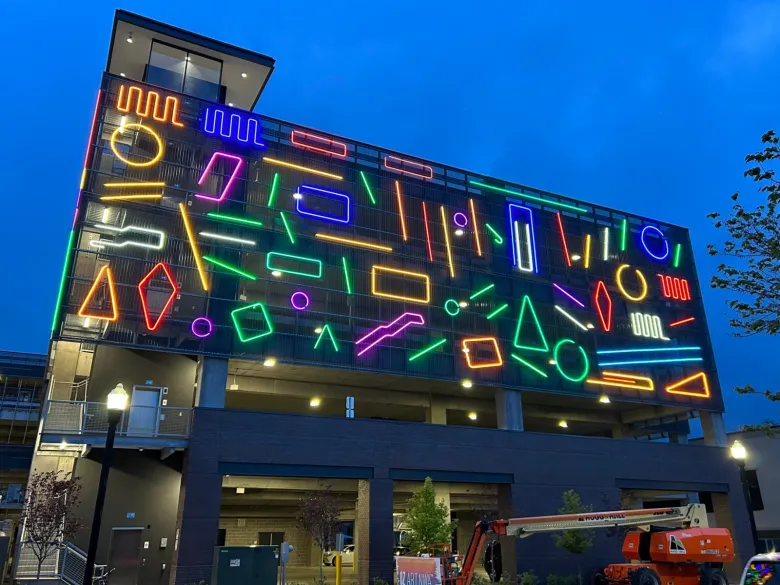
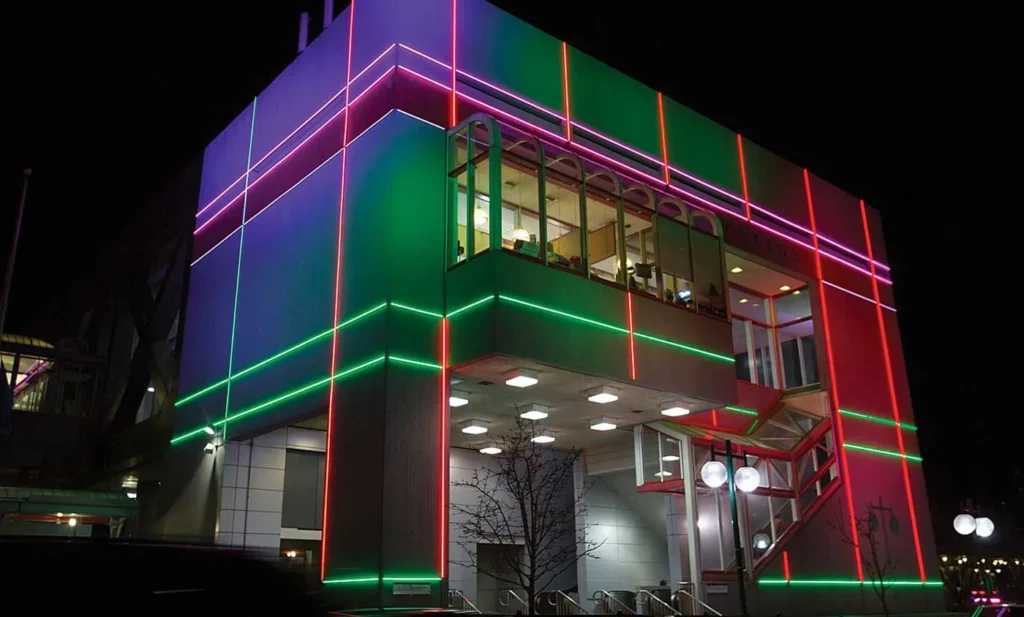
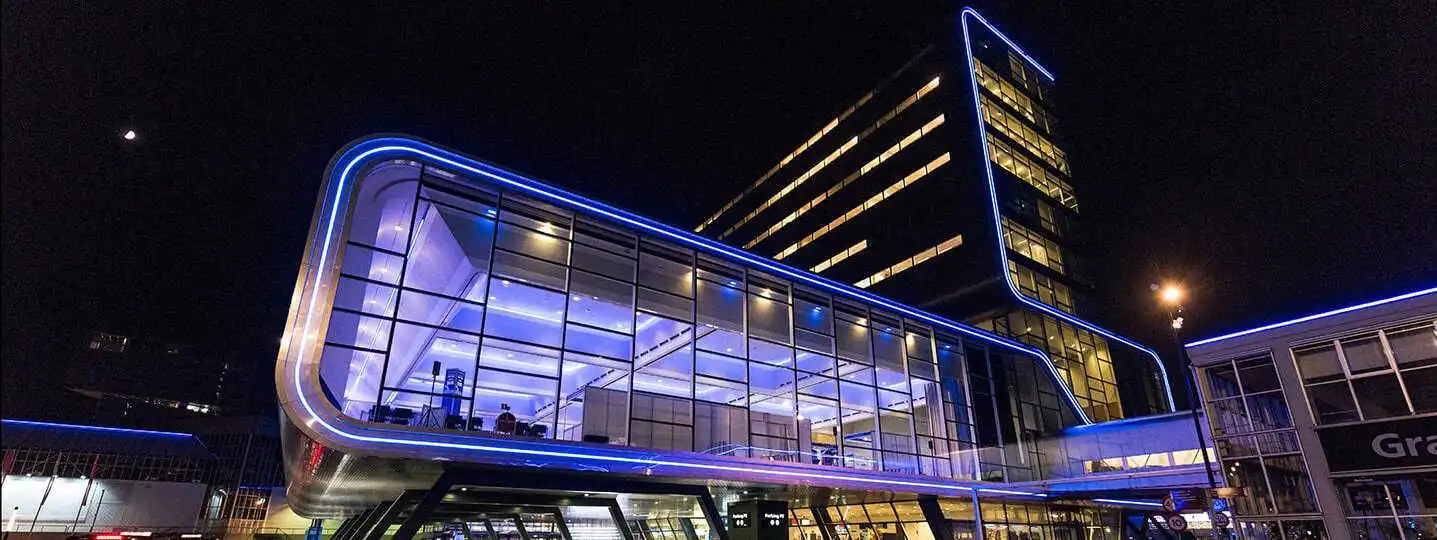
Outdoor LED neon flex for facade lighting is one of the most practical ways to turn a building outline into a clear visual landmark. For hotels, malls, storefronts, bridges, and restaurants, a continuous line of light makes the structure recognizable at night and reinforces the brand.
Compared with traditional glass neon, LED neon flex is easier to shape, safer to handle, more energy efficient, and better suited to project customization. But for facades, buyers care about more than brightness. They need a product that survives outdoor exposure, follows the building contour, keeps a uniform dot-free look, and stays serviceable for years.
This guide explains how to choose silicone LED neon flex for building facade lighting — from IP rating and bending direction to voltage, color, accessories, and purchasing details.
What Is Outdoor LED Neon Flex for Facade Lighting?
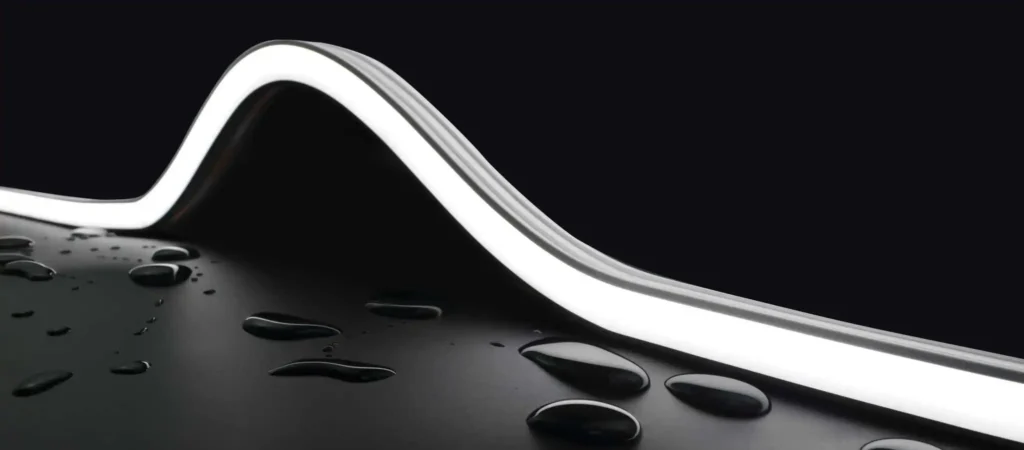
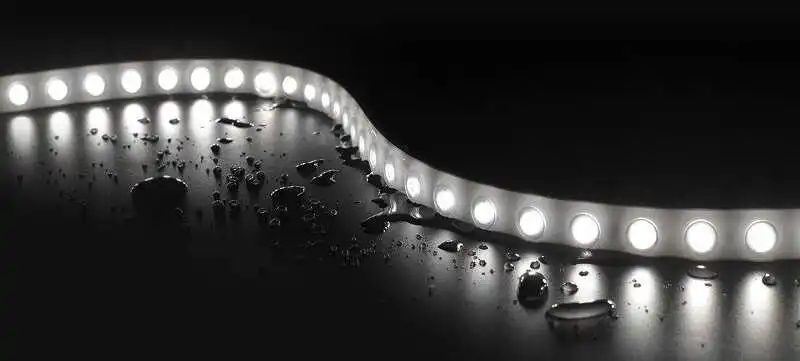
Outdoor LED neon flex is a flexible linear lighting product made with LED chips, a flexible circuit board, and a diffused silicone or polymer housing. The housing softens the light so the finished line looks smooth instead of dotted.
For building facade lighting, it is normally used on:
- Exterior wall outlines
- Roofline and skyline contours
- Storefront and restaurant borders
- Hotel and shopping mall facades
- Commercial complex entrances
- Signage edges and brand logos
- Bridges, corridors, and landscape structures
Project-grade outdoor neon flex must be treated differently from simple indoor decorative strips. It has to handle water, dust, UV, temperature swings, bending stress, and real installation conditions on the building surface. (Our IP67 silicone LED neon flex guide explains why material choice matters more than the chip here.)
Why LED Neon Flex Works Well on Building Facades
LED neon flex is popular in architectural lighting because it combines visual impact with installation flexibility. For project buyers, the advantages are practical, not just decorative.
Continuous Dot-Free Linear Light
A facade needs clean visual lines. Silicone LED neon flex uses a diffused outer body to create a smooth light surface — ideal for outlining edges, windows, rooflines, and entrances.
Flexible Shape for Architectural Contours
Many facades are not perfectly straight. They include curves, columns, arches, and irregular sections. Neon flex follows these contours far more easily than rigid fixtures — when the correct bending type is selected.
Outdoor Protection for Commercial Projects
For exterior walls, waterproof performance is essential. Watch the IP rating, sealed ends, waterproof connectors, and cable outlet design. A high IP rating alone won’t protect a project if the cuts, joints, and end caps aren’t sealed correctly.
Multiple Color and Control Options
Facades may use static warm/neutral/cool white, single color, RGB, RGBW, SPI, or DMX-controlled neon flex. Static white suits premium architectural outlines; RGB/RGBW and DMX suit malls and entertainment venues.
Lower Maintenance Than Traditional Neon
LED neon flex is lighter and easier to transport than glass neon. It’s also easier to cut, install, replace, and customize — which reduces installation difficulty and future maintenance pressure.
Key Specifications Buyers Should Check
The right product depends on the building environment and the lighting effect. Before ordering, confirm these specs.
| Specification | What to Check | Why It Matters for Facade Projects |
|---|---|---|
| IP rating | IP65, IP67, or IP68 | Walls face rain, dust, and moisture |
| Material | Silicone or PVC | Silicone preferred for outdoor durability |
| UV resistance | Outdoor-rated housing | Reduces yellowing and cracking |
| Voltage | 12V / 24V / 110V / 220V | Affects safety and wiring distance |
| Power per meter | Wattage and lumen output | Helps size the power supply |
| Bending type | Side / top / 3D bend | Must match the facade contour |
| Min. bending radius | Manufacturer spec | Prevents PCB damage and dark spots |
| Cut length | Cut interval / custom length | Fits exact building dimensions |
| Color option | CCT / single / RGB / RGBW / SPI / DMX | Determines style and control |
| Operating temp. | Rated temperature range | Key for hot, cold, or coastal sites |
| Accessories | Channel, clips, end caps, connectors | Affects waterproof performance |
| Warranty | Product & project terms | Useful for importers & distributors |
For NPHIS buyers, the best starting point is the project drawing. A drawing lets us recommend bending direction, length, power layout, controller type, and accessories far more accurately.
Silicone vs PVC for Outdoor Facade Lighting
For outdoor facades, silicone LED neon flex is usually the stronger choice. PVC can work in some cases, but silicone generally offers better flexibility, weather resistance, and stability outdoors. According to LED industry technical resources, UV exposure breaks down PVC plasticizers over time, leading to yellowing and cracking — exactly the failure pattern we see in returned samples.— exactly the failure pattern we see in returned samples. To learn how UV resistance is actually tested and how to verify a supplier’s UV claims before you order, read our UV resistant LED neon flex for outdoor signage buying guide.
| Item | Silicone LED Neon Flex | PVC LED Neon Flex |
|---|---|---|
| Flexibility | Better for curves & custom shapes | Usually less flexible |
| Outdoor durability | Better UV & weather resistance | Ages faster under harsh exposure |
| Temperature | Wider outdoor range | Hardens in cold conditions |
| Appearance | Smooth, premium diffused light | Depends on extrusion quality |
| Best use | Facade, signage, hotel, mall | Budget or low-demand jobs |
For facade projects exposed to direct sun, rain, or long operating hours, we recommend silicone.
How to Choose the Right Bending Type
Bending direction is one of the most common mistakes in facade orders. The same line can need a different structure depending on whether the light bends left/right, up/down, or around complex shapes.
| Bending Type | Best For | Typical Facade Use |
|---|---|---|
| Side bend | Horizontal curves viewed from front | Storefront outlines, logo borders, curved wall lines |
| Top bend | Up-and-down bending on flat surface | Straight wall lines, roofline accents |
| 3D bend | Complex multi-directional shapes | Arches, columns, curved features |
If the project has many curves, send drawings or photos before ordering. This avoids receiving a product that is bright and waterproof but bends the wrong way. For a deeper breakdown, see our side bend silicone LED neon flex guide.
Voltage Selection: 24V vs High Voltage Neon Flex
Voltage affects wiring design, safety, voltage drop, and installation cost.
24V LED neon flex is common for commercial lighting — safer for low-voltage installs and well matched to power supplies and controllers. It suits storefronts, hotels, signage, and custom facade sections.
High voltage (110V / 220V) may be considered for long runs needing fewer power injection points, but it requires stricter installation and must follow local electrical standards.
| Project Situation | Recommended Direction |
|---|---|
| Short to medium custom sections | 24V silicone LED neon flex |
| RGB/RGBW or controller-based | 24V with suitable controller & PSU |
| Long straight outlines | 24V power injection or high voltage |
| Public commercial areas | Prioritize safety & local code |
| Export / distributor projects | Confirm destination market rules |
Confirm total length, installation height, power supply location, and local requirements before choosing voltage.
Color Temperature and Control Options
The best color depends on building type and brand image.
| Application | Recommended Color / Control | Why |
|---|---|---|
| Luxury hotel exterior | Warm / tunable white | Premium, comfortable look |
| Shopping mall facade | RGBW / DMX | Seasonal & dynamic effects |
| Restaurant / storefront | Warm white / brand color / RGB | Attracts street-view attention |
| Office building outline | Neutral / cool white | Clean architectural look |
| Entertainment venue | RGB / RGBW / SPI / DMX | Dynamic visual identity |
| Bridge / landscape | Static white / programmable | Depends on city lighting plan |
Don’t choose by maximum brightness alone. Uniformity, color consistency, glare control, and position often matter more than raw lumen output.
Outdoor Installation Considerations
Good outdoor performance depends on both product quality and installation quality. A waterproof neon flex can still fail early if the install is wrong.
Use the Correct Mounting Accessories
Aluminum channels, clips, screws, and brackets keep the neon flex stable, reduce stress on the body, and maintain a straight, professional line.
Seal All Cutting and Connection Points
End caps, cable outlets, and connectors are common weak points. For outdoor projects, seal these properly. Confirm whether the supplier provides factory-sealed custom lengths or field-installable waterproof accessories.
Plan Power Supply and Cable Distance
Long runs cause voltage drop, uneven brightness, or color shift. Calculate total wattage, PSU capacity, wire gauge, and power injection points first.
Avoid Over-Bending
Every neon flex has a minimum bending radius. Bending below it can damage the circuit or create dark areas — especially around corners, logos, and tight curves.
Leave Space for Maintenance
Facade lighting is often installed at height. Place PSUs, controllers, and junction boxes where technicians can reach them safely.
Common Failure Risks in Facade Lighting Projects
Most facade problems come from specification or installation errors — not the LED chips themselves.
| Risk | What Happens | How to Prevent It |
|---|---|---|
| Wrong bending direction | Can't follow the building line | Confirm side/top/3D bend first |
| Poor end sealing | Water enters from cut points | Use end caps, glue, factory-sealed lengths |
| Excessive run length | Uneven brightness / color shift | Add power injection, calc voltage drop |
| Low-quality PSU | Flicker or early failure | Use reliable outdoor-rated PSUs |
| No drainage planning | Water collects at connectors | Avoid low-point connector placement |
| Over-bending | Dark spots or broken circuit | Follow min. bending radius |
| Wrong IP rating | Fails in rain or dust | Match IP rating to environment |
| Risk | What Happens | How to Prevent It |
|---|---|---|
| Wrong bending direction | Can't follow the building line | Confirm side/top/3D bend first |
| Poor end sealing | Water enters from cut points | Use end caps, glue, factory-sealed lengths |
| Excessive run length | Uneven brightness / color shift | Add power injection, calc voltage drop |
| Low-quality PSU | Flicker or early failure | Use reliable outdoor-rated PSUs |
| No drainage planning | Water collects at connectors | Avoid low-point connector placement |
| Over-bending | Dark spots or broken circuit | Follow min. bending radius |
| Wrong IP rating | Fails in rain or dust | Match IP rating to environment |
Application Scenarios for Building Facades
Shopping Mall Facade
Malls need strong visual identity and flexible campaign lighting. RGBW or DMX-controlled neon flex works around entrances, upper facade lines, and brand zones.
Hotel Exterior
Hotels prefer a premium, comfortable look. Warm or tunable white silicone neon flex outlines rooflines, balconies, and entrance canopies.
Restaurant and Storefront Outline
Restaurants and retail use neon flex to improve street visibility. Brand colors, warm white, or RGB suit different styles.
Commercial Complex
Combine static white architectural lines with dynamic color accents — balancing brand impact, energy use, and maintenance access.
Bridge and Landscape Architecture
Bridges, railings, and pathways need careful waterproofing, corrosion resistance, and cable management.
Rooftop and Skyline Outline
Highly visible but heavily exposed to wind, rain, and UV. Use outdoor-rated silicone neon flex and secure mounting.
Buying Checklist for Importers and Project Contractors
Prepare these details before requesting a quote. It helps us recommend the right product and avoid ordering mistakes.
| Information to Provide | Example |
|---|---|
| Project type | Hotel, mall, storefront, bridge |
| Installation location | Outdoor wall, roofline, sign edge, column |
| Total length | 200m, 500m, or drawing-based |
| Bending direction | Side / top bend / uncertain |
| Color | 3000K, 4000K, RGB, RGBW, DMX |
| Voltage | 24V, 110V, 220V, or advice |
| Waterproof requirement | IP67 or IP68 outdoor use |
| Control method | Static, dimming, RGB, DMX, SPI |
| Accessories | Channel, clips, connectors, end caps |
| Certification | CE, RoHS, UL, market-specific |
| Packaging | Bulk, project-labeled, distributor |
| Timeline | Sample & mass production dates |
If drawings are available, send the facade drawing, marked installation lines, expected color, and project photos. We can then estimate length, power layout, accessories, and production details.
Why Work with a Silicone LED Neon Flex Manufacturer
For facade projects, direct factory support reduces communication gaps between design, sampling, production, and installation.
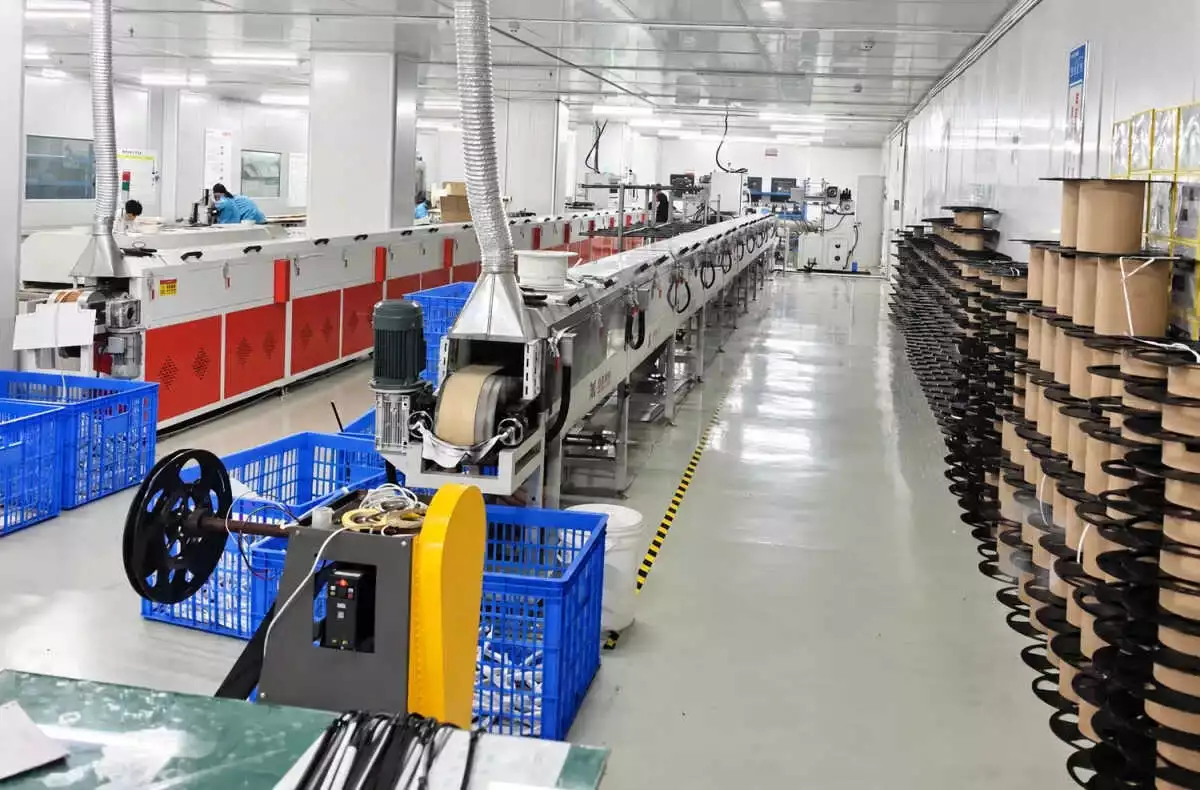
NPHIS is a China-based (Shanghai) LED strip light and silicone neon flex manufacturer offering custom LED strip lights, neon flex, rigid strips, shelf lighting, and OEM/ODM solutions for global projects. We use a tri-color silicone co-extrusion process for a seamless, hotspot-free glow, with IP67 waterproofing and UV-resistant housing for outdoor use.
Instead of choosing only from a standard catalog, project buyers can share drawings and requirements so we match the neon flex structure to the actual building design.
CTA: Send your facade drawing or project lighting plan to NPHIS for a custom silicone LED neon flex recommendation. 👉 Get a free project quote
FAQs for buyer
❓️ Can LED neon flex be used for outdoor building facades?
Yes. Outdoor-rated LED neon flex works on facades when it has the correct IP rating, UV-resistant housing, suitable accessories, and properly sealed connections. For commercial facades, silicone LED neon flex is usually preferred.
❓️ What IP rating is best for outdoor LED neon flex facade lighting?
IP67 is commonly used for outdoor commercial lighting that must resist dust and rain. IP68 may be considered for more demanding wet environments. The final choice depends on location and exposure level.
❓️ Is silicone neon flex better than PVC for outdoor facade lighting?
For most professional outdoor facades, yes — silicone offers stronger flexibility, weather resistance, and long-term durability than standard PVC.
❓️ How long can LED neon flex run from one power supply?
It depends on voltage, wattage per meter, cable distance, and voltage drop. Don’t estimate by length alone — calculate total power and confirm the recommended run length with the manufacturer.
❓️ What voltage is better for facade lighting projects?
24V is common because it supports safe low-voltage installation and controller compatibility. High voltage may suit long straight runs but requires stricter installation and local compliance.
❓️ Can LED neon flex be cut on site?
Many products can be cut at marked intervals, but outdoor projects require careful sealing after cutting. For better reliability, request factory-cut and factory-sealed custom lengths.
❓️ How do you prevent water ingress in outdoor neon flex?
Use outdoor-rated neon flex, waterproof connectors, proper end caps, sealing glue, and correct cable outlet design. Avoid placing connectors where water collects, and follow the supplier’s instructions.
❓️ What should buyers check before ordering LED neon flex for facade lighting?
Confirm installation drawings, total length, bending direction, voltage, color, IP rating, control method, accessories, certification needs, sample requirements, and delivery timeline.
❓️ What color temperature is best for building facade lighting?
Warm white for hotels and premium buildings, neutral white for modern offices, and RGB/RGBW for malls or entertainment venues. The best choice depends on building style and brand image.
❓️ Do facade lighting projects need custom LED neon flex?
Many do. Custom lengths, cable exits, color options, bending direction, and accessory planning reduce installation waste and improve the final effect.
Sources & References
- Signify (Philips Lighting) – Architectural & facade lighting solutions: https://www.signify.com/global
- U.S. Department of Energy – Solid-State Lighting (LED) technical resources: https://www.energy.gov/eere/ssl/solid-state-lighting
WHY I WRITE THIS
About my business
Our company’s main products include LED flexible light strips, rigid light strips, and linear light fixtures, all of which are manufactured in our own factory or in factories we have been cooperating with for many years.
Our services
Our products are primarily mid-to-high-end, exported to Europe and America. We accept OEM & ODM small-batch orders, and also provide sourcing services in China to help our international clients solve problems. Please contact us if you need our assistance with sourcing.
Contact Profile
Name Ted Lau
Brand Name NPHIS
Country China
Model B2B Wholesale only
Email ted@nphis-led.com
Related Posts
Explore essential insights on material durability, IP ratings, and installation for our Silicone LED Neon Flex. Designed for lighting professionals, this guide helps you make informed purchasing decisions for commercial and architectural applications.
Request a free quote
If you have questions or suggestions,please leave us a message,we will reply you as soon as we can!