

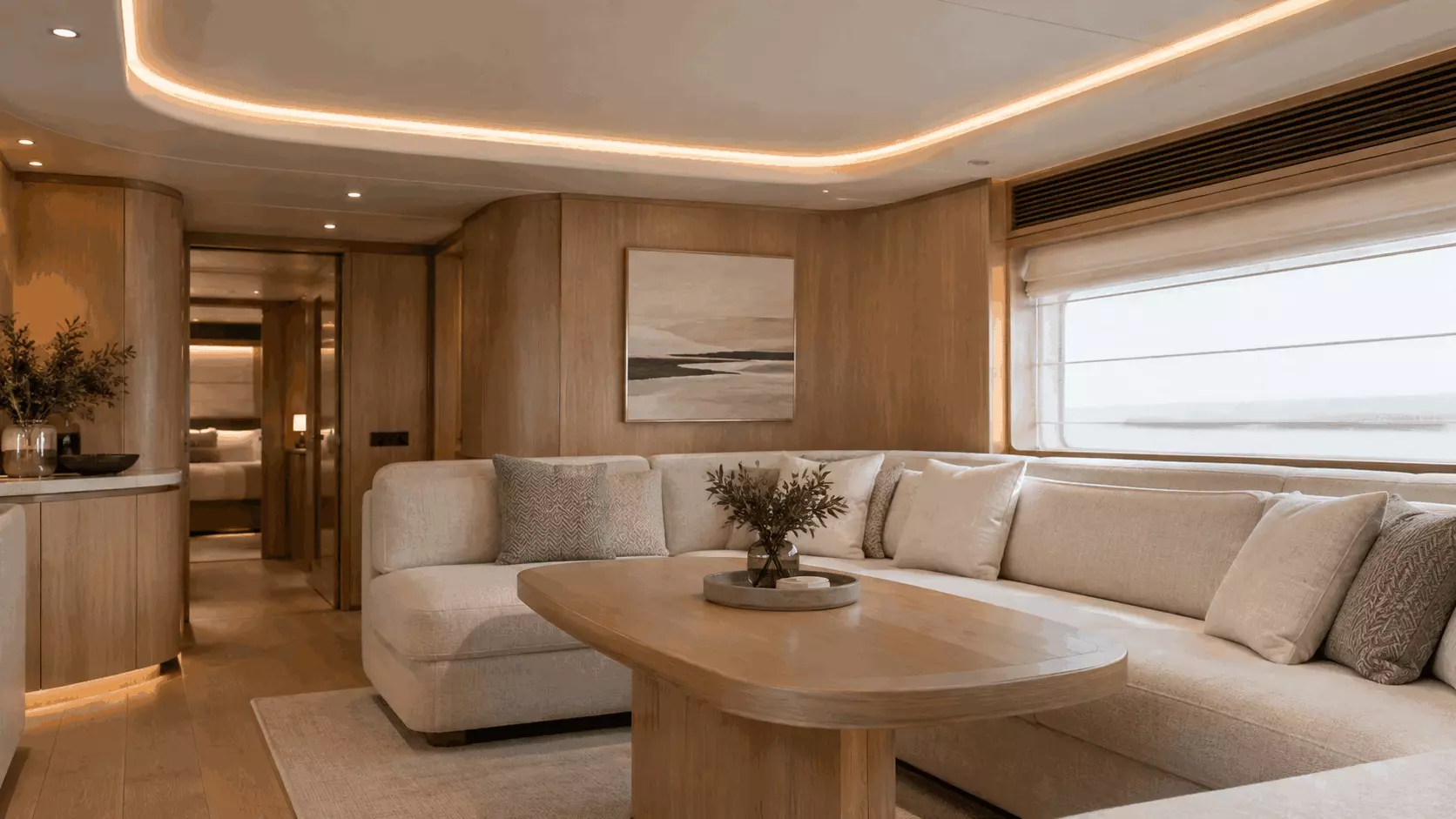
The modern kitchen is no longer just a place to cook — it’s the heart of the home, a stage for culinary creativity, and a showcase of design. And nothing transforms a kitchen faster (or more affordably) than under-cabinet LED lighting.
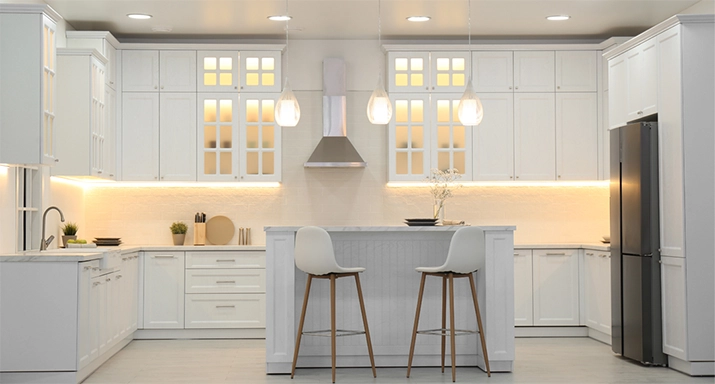
Whether you’re slicing vegetables on a granite countertop or staging a Sunday brunch, the right LED strip for kitchen cabinets eliminates harsh shadows, enriches color accuracy, and adds that high-end, custom feel buyers love. In this guide, NPHIS LED — a professional manufacturer with 12+ years of LED strip expertise — walks you through everything you need to know to choose, install, and hide the perfect strip lights under your cabinets.
Table of Contents
Why LED Strips Are the Ultimate Choice for Modern Kitchens
LED strips have rapidly displaced fluorescent and halogen puck lights as the modern kitchen lighting solution of choice. Here’s why:
- Ultra-thin profile (as slim as 4–8mm) — invisible when installed correctly.
- Energy efficient — up to 80% less power than halogen, per the U.S. Department of Energy.
- Long lifespan — 30,000–50,000 hours = ~15+ years of typical use.
- Even, glare-free task lighting for safe food prep.
- Customizable color & brightness — from warm 2700K dinner ambience to crisp 5000K daylight.
💡 According to a 2026 Houzz kitchen trends report, layered LED lighting is now requested in over 78% of new kitchen remodels.
Top LED Strip Technologies for Under-Cabinet Lighting
Not all LED strips are created equal. The two technologies dominating modern kitchens in 2026 are COB and Tunable White / RGBW.
COB LED Strips: The Dotless Lighting Experience
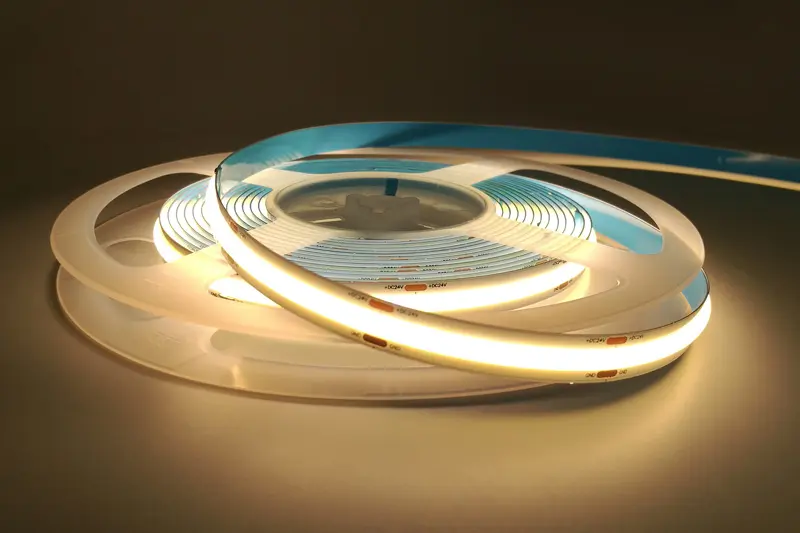
COB (Chip-on-Board) strips pack hundreds of tiny LED chips under a single phosphor layer, producing a continuous, dotless line of light — perfect for reflective countertops and glass cabinets.
Why COB wins for kitchens:
| Feature | Traditional SMD 2835 | Nphis COB LED Strip |
|---|---|---|
| Light Appearance | Visible dots / spots | 100% dotless, uniform |
| LED Density | 60–120 LEDs/m | 480–840 chips/m |
| Beam Angle | 120° | 180° (wider coverage) |
| Best For | General ambience | Under-cabinet, showcase, reflective surfaces |
| Glare on Countertops | Moderate | Minimal |
For details, please refer to our article: COB VS SMD LED Strip
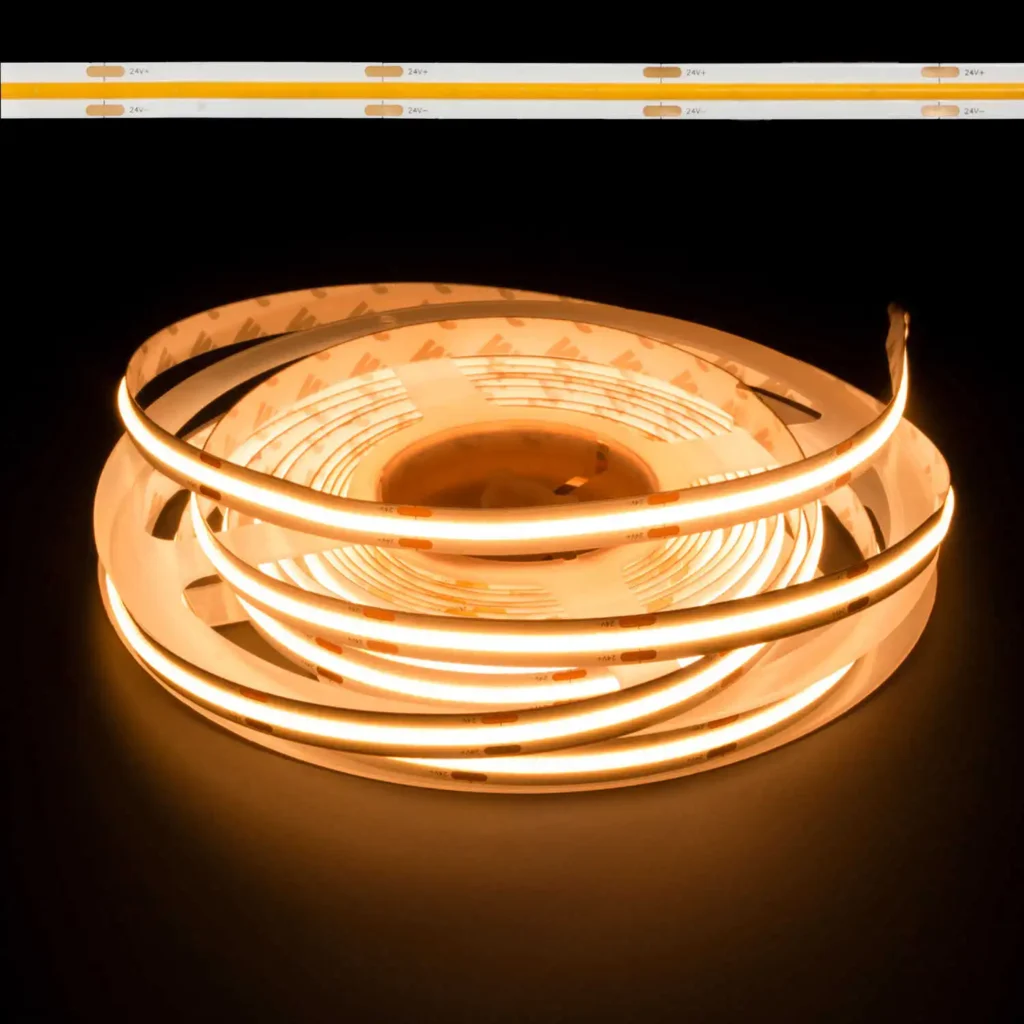
👉 Explore our COB LED Strip Light Series for ultra-uniform under-cabinet illumination.
Tunable White & RGBW: Setting the Right Mood
A tunable white (CCT) strip lets you dial color temperature from 2700K (warm) to 6500K (cool) with a remote or smart app. This single feature replaces multiple fixtures.
- Morning coffee: 5000K for energizing daylight
- Family dinner: 3000K for warm, inviting glow
- Late-night snack: 2700K dimmed to 10% — no eye strain
RGBW strips add full-color accent options (great for kickboards or open shelving) while keeping a dedicated true-white channel for task lighting. Browse our Tunable White & RGBW Series for the latest options.
Key Factors to Consider When Choosing Kitchen LED Strips
Color Temperature (CCT) & CRI — Why CRI >90 Matters for Food
Color Temperature dictates mood. CRI (Color Rendering Index) dictates how true food and finishes look under your light.
| Kitchen Zone | Recommended CCT | Minimum CRI |
|---|---|---|
| Prep Counters | 3500K – 4000K | CRI ≥ 90 |
| Eating Areas | 2700K – 3000K | CRI ≥ 90 |
| Display Cabinets | 3000K – 4000K | CRI ≥ 95 |
A CRI below 80 makes tomatoes look brown and meat look gray. Nphis LED strips are standard CRI 90+ (Ra95 optional) — so a ripe red apple actually looks ripe and red. This aligns with the IES (Illuminating Engineering Society) recommendation for residential task lighting.
Brightness (Lumens) and Density
For under-cabinet task lighting, target 300–500 lumens per linear foot (≈ 1,000–1,600 lm/m).
- Light prep / accent only: 400–700 lm/m
- Primary task lighting: 1,000–1,600 lm/m
- Bright workshop-style: 1,800+ lm/m
Higher chip density (e.g., 480 chips/m COB vs. 60 LEDs/m SMD) = smoother light + better heat dissipation = longer strip life.
12V vs. 24V LED Strips — Voltage Drop Explained
This is the #1 mistake DIY installers make. Voltage drop causes the far end of a strip to look dimmer or yellow-tinted.
| Specification | 12V Strip | 24V Strip (Recommended) |
|---|---|---|
| Max Single Run | ~5m (16 ft) | 10m (32 ft) |
| Voltage Drop | Noticeable after 3m | Minimal up to 10m |
| Cuttable Length | Every 2.5–5 cm | Every 5–10 cm |
| Best for Kitchens | Short single cabinets | Full kitchen runs, L-shaped layouts |
Verdict: For 90% of modern kitchens, 24V is the better choice. See SuperBrightLEDs’ technical breakdown for deeper analysis.
How to Hide LED Strips Under Cabinets for a Seamless Look
The secret to seamless under-cabinet lighting is two-fold: aluminum profiles and frosted diffusers.
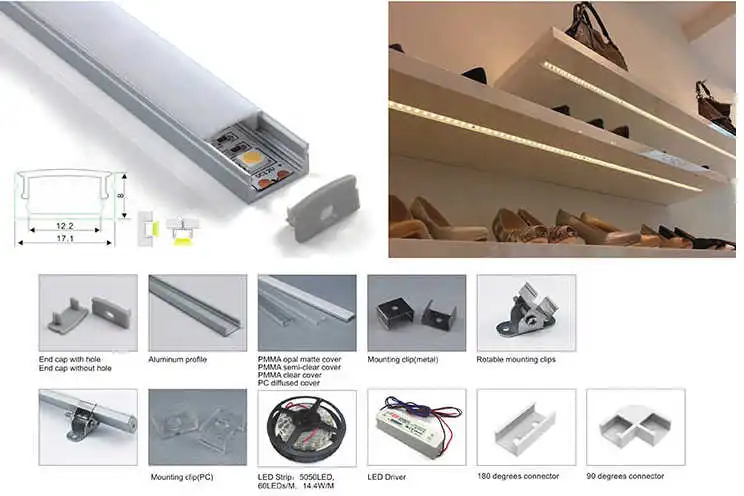
Step-by-Step: Hide LED Strips Like a Pro
- Recess or surface-mount an aluminum channel along the front interior lip of the upper cabinet base.
- Choose the right profile shape:
- U-shape: Surface mount, easiest install
- V-shape (corner): 45° angle, throws light forward onto backsplash
- Recessed: Flush-mounted for ultra-clean look
- Add a frosted (opal) diffuser — softens light, hides any chip dots, protects from grease/steam.
- Position the channel 1–2 inches back from the cabinet front edge to prevent glare into your eyes.
- Use IP65-rated strips near sinks or cooktops (we recommend our Silicone Wall Washer / IP67 Series).
Pro tip: A frosted diffuser reduces light output by ~15% but increases visual comfort by ~80%. Always worth it.
Why Choose Nphis LED for Your Kitchen Cabinetry?
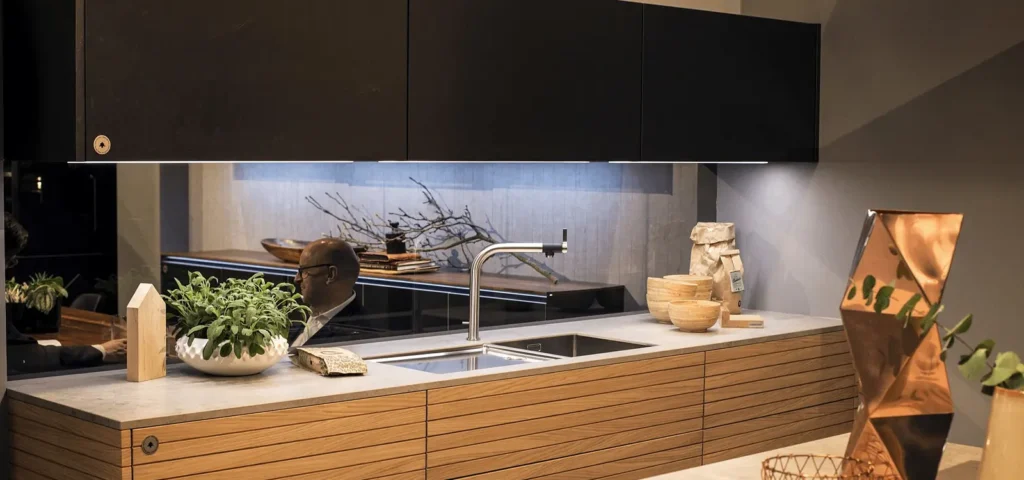
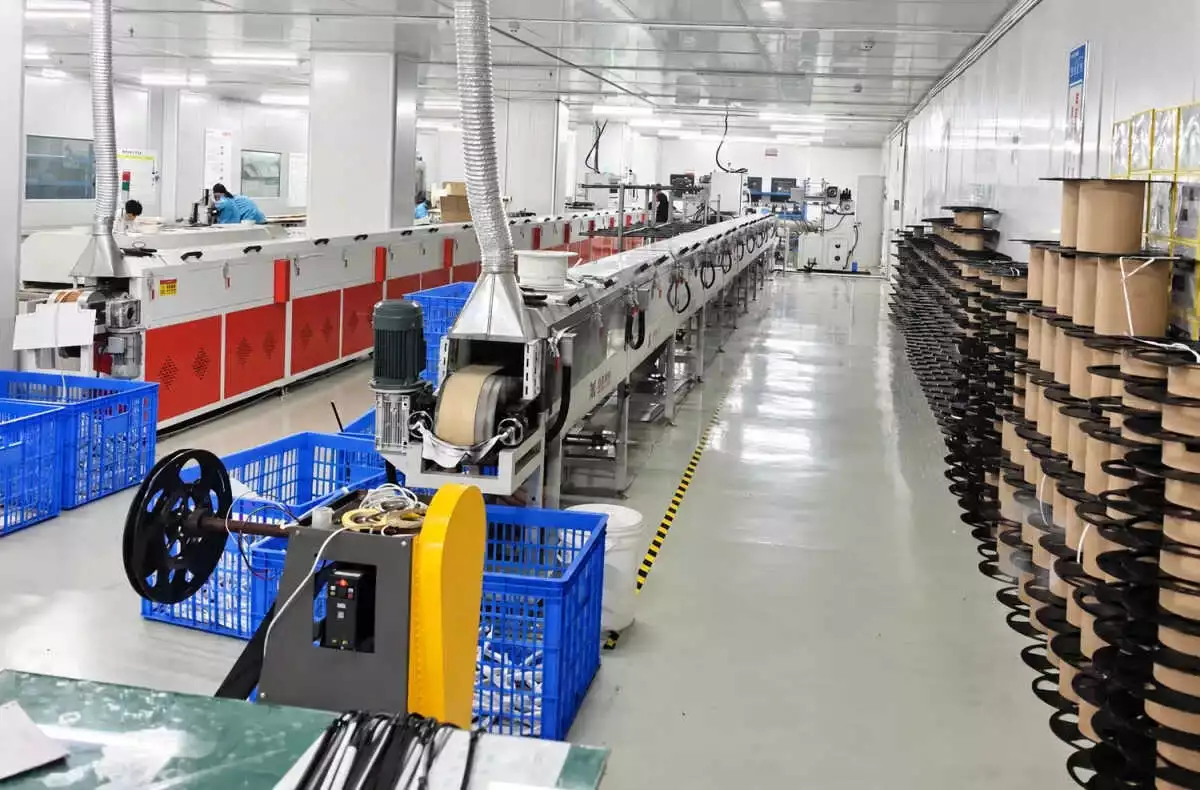
As a vertically integrated LED strip manufacturer, Nphis LED supplies distributors, contractors, and design-build firms in 40+ countries.
✅ High Quality — CRI 90+ standard, 3-year warranty, LM-80 tested chips (Epistar / Bridgelux).
✅ Customization — Custom CCT, length, density, PCB color, connector style — MOQ as low as 50m for project orders.
✅ Reliability — ISO9001-certified factory, full CE / RoHS / FCC / UL component compliance.
✅ Full Product Range — COB Strips, Silicone Neon Flex, DMX512 Addressable Strips, Rigid Bar Lights, and Custom Non-Standard Strips.
✅ Engineering Support — Free lighting design assistance, voltage drop calculations, and wiring diagrams.
🔥 Ready to upgrade your kitchen — or supply your next project?
👉 Request a Free Quote & Free Samples at nphis-led.com → Email our engineers directly for project pricing within 12 hours.
FAQs
❓️What is the best color temperature for under kitchen cabinets?
3000K to 4000K is the sweet spot. 3000K offers a warm, inviting glow that flatters wood and stone; 4000K delivers crisp, neutral white ideal for food prep and reading recipes. Always match the CCT to your overhead kitchen lights to avoid a “mismatched” look.
❓️ Do I need a diffuser for under cabinet LED strips?
Yes — a frosted diffuser is highly recommended. It eliminates LED hot-spots, reduces glare reflecting off countertops, and protects the strip from kitchen grease, steam, and dust. It also makes the lighting look professional rather than DIY.
❓️ Can I cut and connect Nphis LED strips myself?
Yes. All NPHIS LED strips feature clearly marked cut lines (every 25–100mm depending on model). You can join sections using solderless connectors or solder for permanent joints. Each reel includes installation instructions, and our support team provides free wiring diagrams on request.
❓️ How many lumens do I need per foot for under-cabinet lighting?
Aim for 300–500 lumens per linear foot (1,000–1,600 lm/m) for task lighting. Lower (150–300 lm/ft) is fine for accent-only purposes, such as glass cabinet display lighting.
❓️ Is 24V better than 12V for kitchen LED strips?
Yes, for most kitchens. 24V strips can run up to 10m (32 ft) without noticeable voltage drop, draw lower current (thinner wires, less heat), and offer more dimming stability. Choose 12V only for very short single-cabinet installations.
❓️ Are COB LED strips better than SMD for under cabinets?
Yes, in most cases. COB strips provide a 100% dotless line of light, a wider 180° beam angle, and superior uniformity on reflective countertops — making them the premium choice for modern kitchens.
❓️ Do under-cabinet LED strips get hot?
Quality LED strips run warm (around 35–45 °C / 95–113 °F), never hot enough to damage cabinets. Installing them inside an aluminum profile actually doubles heat dissipation and extends lifespan by up to 30%.
❓️ Should I choose IP20, IP65, or IP67 strips for the kitchen?
- IP20: Open shelves, far from sinks
- IP65: Most under-cabinet locations (recommended baseline)
- IP67/IP68: Near sinks, dishwashers, or outdoor kitchens
❓️ Can LED strips be dimmed?
Yes. Nphis LED strips are fully compatible with PWM dimmers, 0-10V dimmers, TRIAC (mains) dimmers, and smart systems like Tuya, Zigbee, and Casambi. Specify your control system when ordering.
❓️ What's the lifespan of Nphis LED kitchen strips?
Up to 50,000 hours — that’s about 17 years at 8 hours of daily use. Backed by our 3-year manufacturer warranty.
WHY I WRITE THIS
About my business
Our company’s main products include LED flexible light strips, rigid light strips, and linear light fixtures, all of which are manufactured in our own factory or in factories we have been cooperating with for many years.
Our services
Our products are primarily mid-to-high-end, exported to Europe and America. We accept OEM & ODM small-batch orders, and also provide sourcing services in China to help our international clients solve problems. Please contact us if you need our assistance with sourcing.
Contact Profile
Name Ted Lau
Brand Name NPHIS
Country China
Model B2B Wholesale only
Email ted@nphis-led.com
Related Posts
Client Endorsements
Here,we proudly display the brands we have partnered with.






Request a free quote
If you have questions or suggestions,please leave us a message,we will reply you as soon as we can!