


Sourcing LED strip lights from China can unlock significant cost savings, unmatched product variety, and world-class customization capabilities — but only if you know how to identify the right manufacturing partner. This comprehensive guide walks you through every stage of the supplier selection process, from initial research to final order confirmation, so you can make confident, well-informed procurement decisions.
Why China Dominates the Global LED Strip Light Market
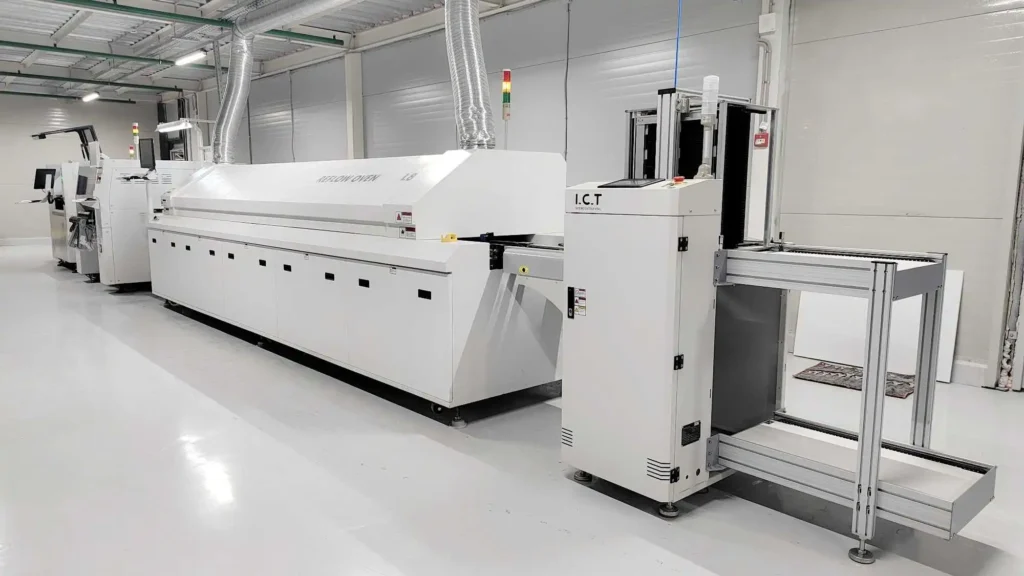
China accounts for more than 70% of global LED strip light production, a dominance built on decades of supply chain development, manufacturing scale, and continuous R&D investment. For international buyers, sourcing from China is not simply a cost decision — it is a strategic choice that unlocks access to the world’s most complete LED manufacturing ecosystem.
The cost advantage is real and substantial. Thanks to vertically integrated supply chains — from LED chip packaging and PCB fabrication to finished strip assembly — Chinese factories can produce high-quality LED strips at prices 30–60% below equivalent European or North American alternatives. For distributors, lighting contractors, and OEM brands, this margin difference is transformative.
Beyond price, Chinese manufacturers offer a level of customization flexibility that is difficult to replicate elsewhere. Whether you need a specific PCB width, a custom color temperature, a proprietary silicone neon profile, or your own brand printed directly on the PCB, the manufacturing infrastructure to deliver it exists in China. Most factories support full OEM and ODM services with relatively low minimum order quantities.
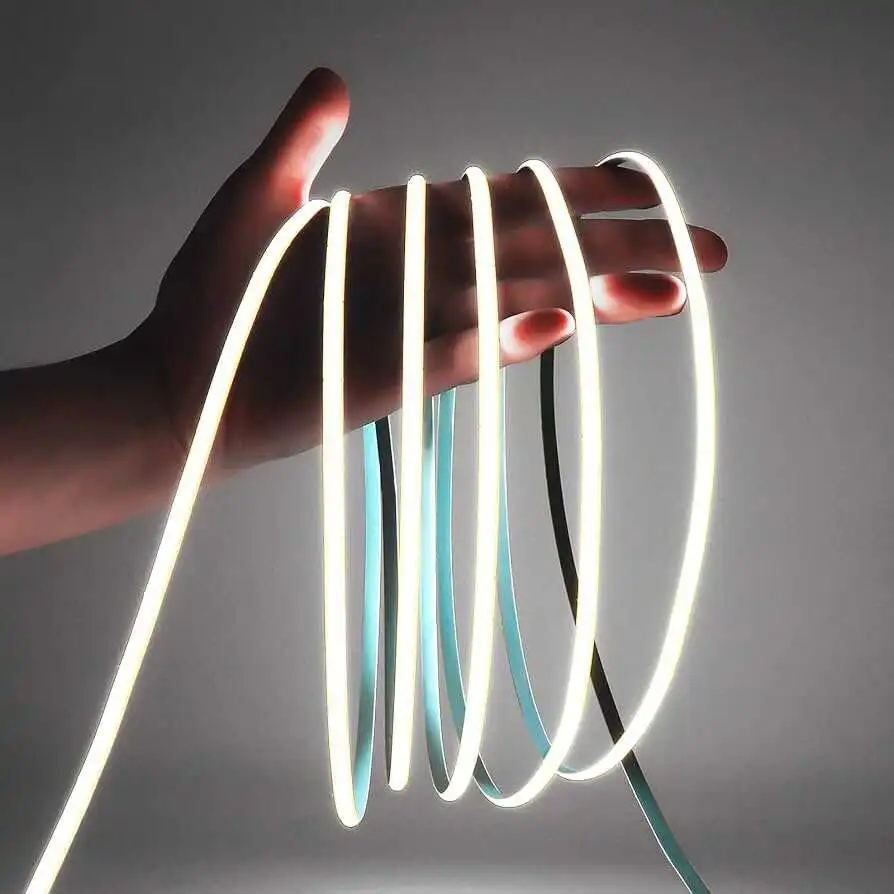
The technology pipeline is equally compelling. Chinese LED manufacturers have been among the first to commercialize COB (Chip-on-Board) strip lights, high-density silicone neon flex, and 48V constant-current LED strips at scale. Buyers sourcing from China often gain access to the latest product innovations before they become available through Western distributors.
Advantage | What It Means for Buyers |
Cost Competitiveness | Factory prices 30–60% below Western equivalents |
Customization Depth | Full OEM/ODM: PCB width, color temp, IP rating, branding |
Product Breadth | SMD flex, COB strips, silicone neon, rigid bars, shelf strips, light box sources |
Certification Coverage | CE, RoHS, ETL, UL, UKCA, CB — all available from qualified suppliers |
Production Scale | High-volume capacity with fast turnaround on repeat orders |
Innovation Speed | First-to-market on COB, high-density, and specialty strip technologies |
Define Your Requirements Before You Search
The single most common reason LED strip procurement fails is not a bad supplier — it is an under-defined brief. Before reaching out to a single manufacturer, invest time in documenting your exact requirements across three dimensions.
Product Specifications form the technical foundation of your brief. You need to define: the strip type (SMD flexible, COB flexible, silicone neon flex, rigid bar, shelf strip, or light box source), working voltage (12V, 24V, 48V, or 220V AC), color temperature (2700K warm white through 6500K cool white, or RGB/RGBW/tunable white), LED density (LEDs per meter), PCB width, IP protection rating (IP20 for dry indoor through IP68 for full submersion), and minimum CRI requirement.
Commercial Parameters define the business framework of the relationship. Confirm your target order volume and how it compares to the supplier’s minimum order quantity (MOQ), your required lead time, preferred payment terms (T/T, L/C, or platform escrow), and the certification requirements of your target market.
Application Context is the dimension most buyers overlook. Telling a supplier exactly where and how the product will be used — retail shelf illumination, advertising light box backlighting, architectural neon outlining, under-cabinet kitchen lighting, or outdoor facade decoration — allows them to recommend the most appropriate product specification and flag any potential performance or compliance issues before production begins.
Five Proven Channels to Find LED Strip Suppliers
Channel 1: Google Search with Targeted Keywords
A well-constructed Google search remains the most direct route to discovering Chinese LED strip manufacturers who actively serve international markets. Use English-language search terms to surface suppliers with established export experience and professional web presences. Effective search queries include: LED strip light manufacturer China OEM, silicone neon flex supplier China factory, COB LED strip light wholesale China, and custom LED strip light factory direct. Prioritize suppliers whose websites are regularly updated, contain detailed technical documentation, and clearly display their product certifications.
Channel 2: B2B Trade Platforms
Alibaba International, Global Sources, and Made-in-China are the three primary B2B platforms for sourcing Chinese LED strip manufacturers. When filtering results, prioritize suppliers with verified business status, a strong transaction history, fast response rates, and multiple years of platform registration. The “Trade Assurance” feature on Alibaba provides an additional layer of financial protection for first-time transactions.
Channel 3: Industry Trade Shows
The Guangzhou International Lighting Exhibition (GILE), held annually in June, is the world’s largest professional lighting trade show and the single most efficient venue for evaluating Chinese LED manufacturers in person. The Hong Kong International Autumn Lighting Fair (October) offers a complementary opportunity to meet export-focused suppliers in a more compact setting. Trade shows deliver value that online research cannot replicate: you can physically inspect product samples, compare light output and build quality side by side, and establish the personal relationships that underpin reliable long-term supply partnerships.
Channel 4: Industry Publications and Directories
Trade media such as LEDinside, Lighting Global, and Lux Review regularly publish rankings and profiles of leading Chinese LED manufacturers. Import/export data platforms such as Panjiva and ImportGenius allow you to verify a supplier’s actual shipping history — including which countries they export to, how frequently, and in what volumes — providing an objective cross-check of their claimed capabilities.
Channel 5: Peer Referrals and Professional Networks
Within the lighting industry, direct referrals from trusted peers remain the highest-confidence sourcing channel. LinkedIn industry groups, trade association networks, and lighting design forums are all productive places to ask for supplier recommendations from buyers who have direct experience with Chinese manufacturers. A referral from a peer who has already navigated the qualification process can compress your own timeline significantly.
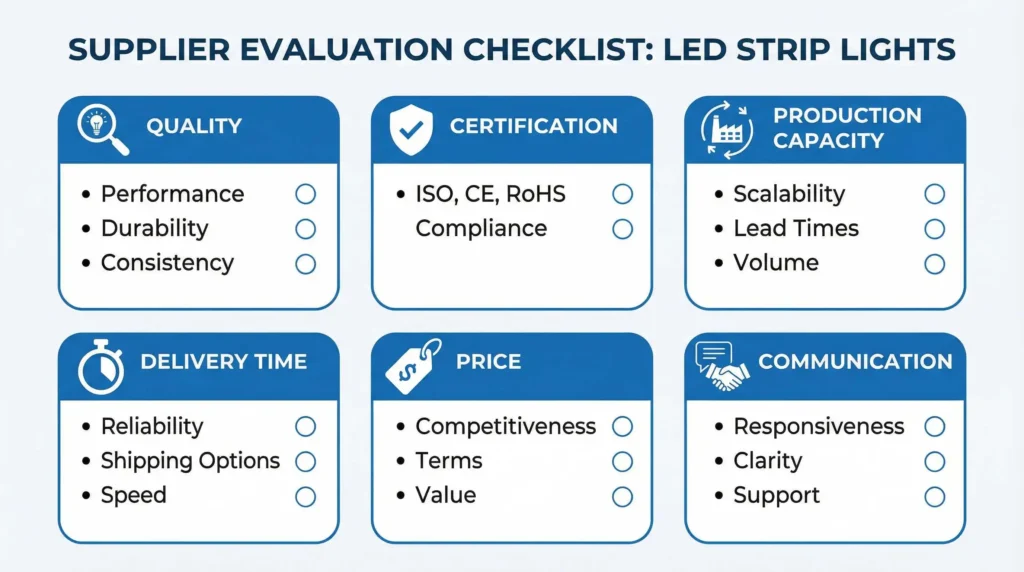
Key Criteria for Evaluating a Supplier
Company Background and Legal Standing
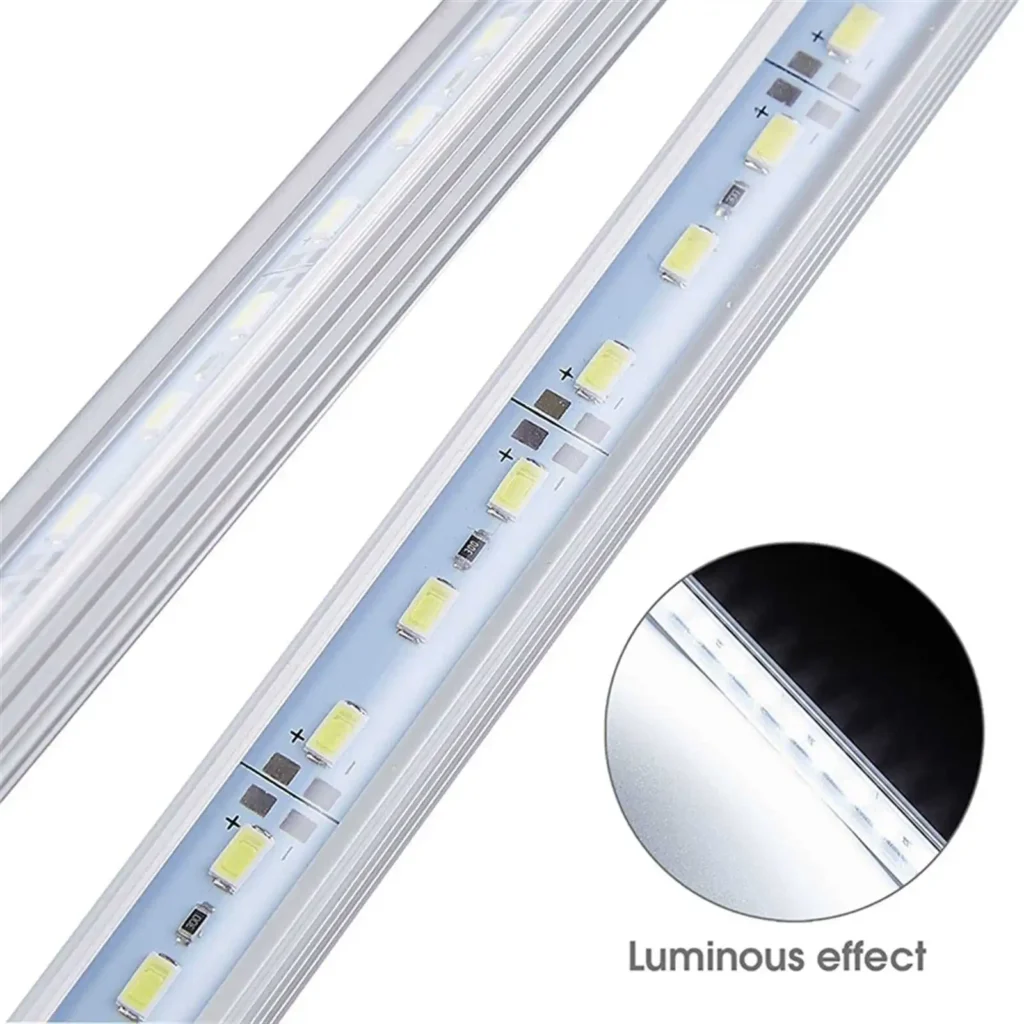
Verify the supplier’s business registration, years of operation, registered capital, and export license status through Chinese business intelligence platforms such as Qichacha or Tianyancha. Suppliers with more than five years of continuous operation and a documented export history to your target region are significantly lower risk than newly established entities.
Production Capacity and Equipment
A credible LED strip manufacturer should operate its own SMT production lines, reflow soldering equipment, aging test facilities, and dust-controlled assembly areas. Ask specifically about monthly production capacity — for buyers with meaningful volume requirements, the supplier’s capacity should comfortably exceed your order size by a factor of three or more to ensure delivery reliability during peak periods.
R&D and Customization Capability
Suppliers with dedicated R&D teams can deliver genuine customization — not just relabeling. Indicators of real R&D capability include registered product patents, an in-house optical design team, the ability to develop custom PCB layouts, and a track record of bringing new products to market. Ask about new product development lead times and whether they can provide custom silicone extrusion profiles for neon flex products.
Quality Management System
ISO 9001 certification is the baseline quality management credential. Beyond the certificate, request documentation of the supplier’s incoming quality control (IQC), in-process quality control (IPQC), and outgoing quality control (OQC) procedures. A supplier who can articulate their quality control process in detail — and back it up with inspection records — is demonstrably more reliable than one who simply presents a certificate.
After-Sales Responsiveness
Test the supplier’s responsiveness during the inquiry phase: a supplier who responds within 24 hours, answers technical questions accurately, and communicates proactively is far more likely to provide reliable after-sales support when issues arise. Response speed and technical depth during pre-sales are the best available predictors of post-sales service quality.
Essential Certifications You Must Verify
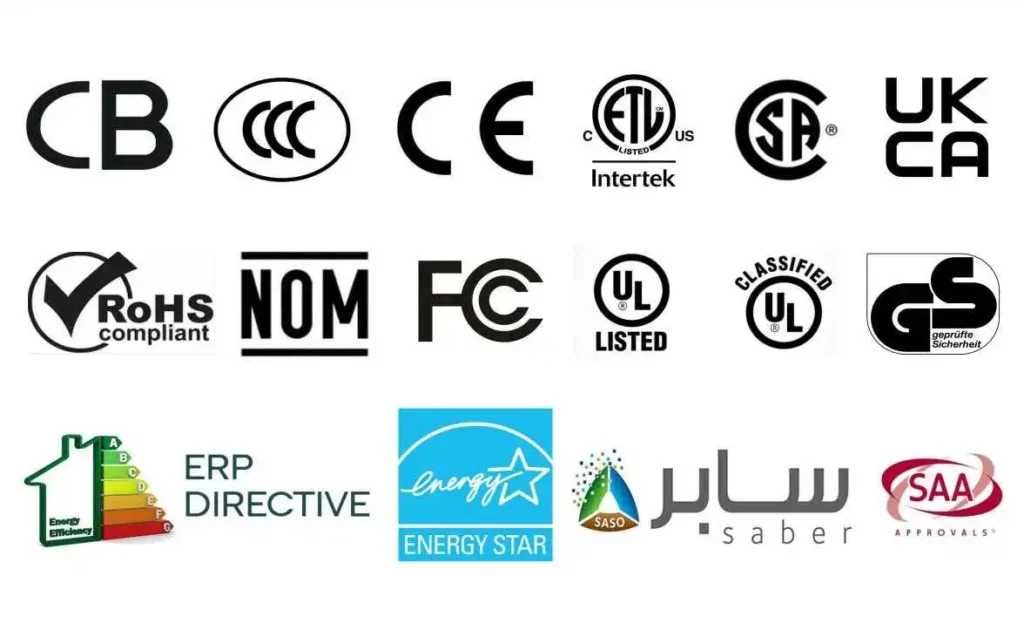
Certifications are the objective evidence of a product’s compliance with safety, electromagnetic, and environmental standards. The required certifications depend on your target market, and buyers should verify each certificate’s authenticity through the issuing body’s online database rather than relying solely on the document provided by the supplier.
Certification | Target Market | What It Confirms |
CE (EMC + LVD) | European Union & EEA | Electromagnetic compatibility and low-voltage electrical safety |
RoHS | EU & most global markets | Restriction of hazardous substances (lead, mercury, cadmium, etc.) |
ETL / UL | North America (US & Canada) | Electrical safety compliance for North American markets |
CB | International mutual recognition | International safety standard; facilitates multi-market entry |
UKCA | United Kingdom | Post-Brexit UK market access requirement |
LM-80 | Global (especially North America) | Standardized LED lumen maintenance testing methodology |
IP Rating Test Report | All markets | Independent verification of dust and water ingress protection |
ISO 9001 | All markets | Quality management system certification |
Verification tip: Cross-check certificate numbers against the issuing body’s online registry (Intertek, SGS, TÜV Rheinland, Bureau Veritas) to confirm authenticity, current validity, and that the specific product model is covered by the certificate scope.
Critical Questions to Ask Before Placing an Order
A structured pre-order conversation with your shortlisted suppliers will surface capability gaps and commercial risks before they become expensive problems.
On Product Technology:
What LED chip brand and model is used? What is the PCB copper foil thickness (thicker copper = lower voltage drop and better heat dissipation)? For silicone neon flex, does the silicone compound pass UL94 flame retardancy testing? What is the MacAdam Ellipse step rating for color consistency (3-step or better is the standard for quality products)?
On Production and Lead Times:
What is the current production schedule, and what is the realistic lead time for my order volume? What is the minimum order quantity for standard and custom products? How long does sample production take, and is there a sample fee?
On Quality Assurance:
What is the product warranty period, and what does it cover? What is the process for handling quality claims on delivered goods? Can you provide third-party test reports from accredited laboratories?
On Commercial Terms:
What payment methods do you accept? For a first order, is a 30% deposit with 70% balance against copy of Bill of Lading acceptable? What Incoterms do you support (FOB, CIF, EXW)? Are there volume-based price tiers?
Sample Testing: The Non-Negotiable Step
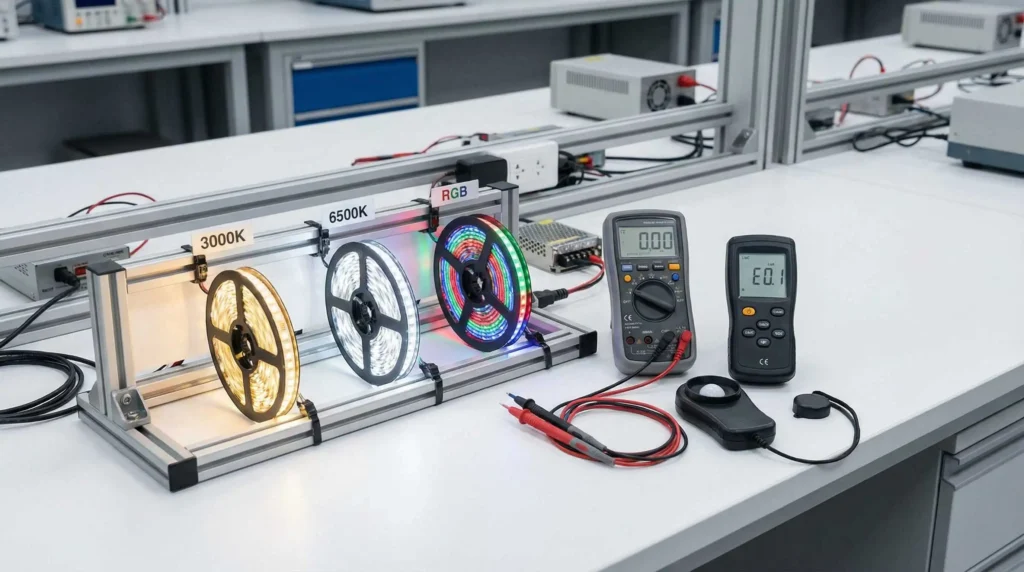
Regardless of how impressive a supplier’s credentials appear on paper, physical sample testing before bulk order commitment is non-negotiable. Request identical specifications from three to five shortlisted suppliers simultaneously to enable direct comparison.
Visual and Build Quality Inspection should be your first step. Examine solder joint quality (uniform, fully wetted, no cold joints), PCB surface condition (flat, no oxidation), silicone encapsulation uniformity (no air bubbles or voids), and LED alignment consistency. For silicone neon flex, assess the flexibility and elastic recovery of the silicone compound under repeated bending.
Optical Performance Measurement requires a lux meter and color temperature meter. Measure actual luminous output and compare against the supplier’s specification sheet — a variance of more than ±10% in lumen output or ±100K in color temperature indicates a quality control issue. CRI should be verified with a spectroradiometer; high-quality products should achieve Ra ≥ 90.
Electrical Performance Testing involves measuring the actual voltage at the tail end of the strip under load to assess voltage drop. Thicker PCB copper foil produces lower internal resistance and therefore less voltage drop — this directly affects brightness uniformity along the strip length.
Waterproofing Verification for IP65+ rated products should include a practical water exposure test. IP67-rated strips should survive immersion in 1 meter of water for 30 minutes; IP68-rated strips should withstand continuous submersion at greater depth.
Burn-In Testing — running samples at rated voltage for 72 to 168 continuous hours — is the most reliable indicator of long-term stability. Monitor for flickering, color shift, lumen depreciation, or abnormal heat generation during this period.
Factory Audit: Online and On-Site Verification
Remote Verification Methods
When a factory visit is not immediately feasible, several remote verification approaches can provide meaningful assurance. A live video factory tour — conducted via video call — should cover the SMT production floor, aging test racks, finished goods warehouse, and quality inspection station. The cleanliness of the production environment and the discipline of worker practices are reliable indicators of management quality.
Third-party factory audits conducted by SGS, Bureau Veritas, or Intertek provide independent, standardized assessments of a supplier’s manufacturing capabilities, quality systems, and social compliance. Customs export data verification through platforms such as Panjiva or ImportGenius allows you to confirm that a supplier’s claimed export history is real — including destination countries, shipment frequency, and product categories.
On-Site Factory Visit
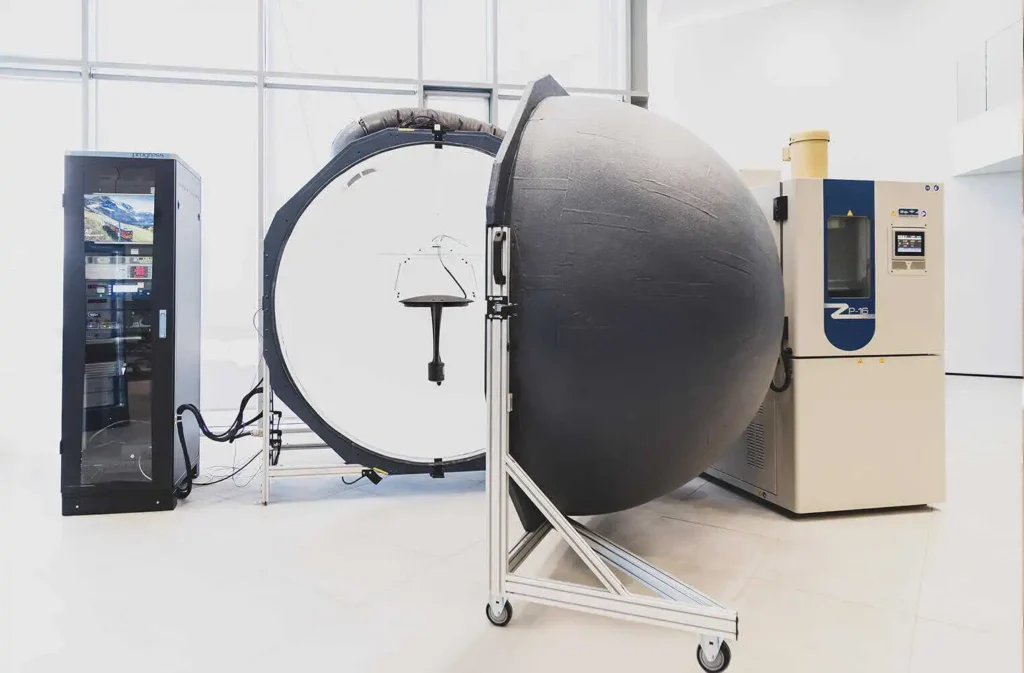
For strategic long-term supply partnerships, an in-person factory visit remains the gold standard for supplier qualification. Key areas to assess during a site visit include: the age and maintenance condition of production equipment, raw material storage practices (LED chip storage conditions are particularly important — chips are sensitive to humidity and electrostatic discharge), the configuration of quality testing equipment (integrating spheres, aging test racks, waterproof test chambers), the scale and equipment level of the R&D laboratory, and the overall culture and morale of the workforce.
Shipping & Delivery: What to Confirm Before You Sign
The choice of shipping method significantly affects both landed cost and delivery timeline. The right option depends on your order volume, urgency, and destination.
Shipping Method | Best For | Typical Transit Time | Relative Cost |
Sea Freight (FCL/LCL) | Large volume, non-urgent orders | 15–45 days (port-dependent) | Lowest |
Rail Freight (China-Europe) | European destinations, cost-time balance | 15–25 days | Medium |
Air Freight | Urgent replenishment, high-value small orders | 3–7 days | High |
Express Courier (DHL/FedEx/UPS) | Samples, very small quantities | 3–5 days | Highest |
Before finalizing any order, confirm the following with your supplier.
Incoterms: FOB (Free on Board) is the most common export term from China — the buyer assumes responsibility for freight and insurance from the port of loading. CIF (Cost, Insurance, Freight) transfers those responsibilities to the seller up to the destination port.
Packaging Specification: Request a detailed packaging plan. Anti-static bags, individual product boxes, and reinforced outer cartons are the minimum standard for LED strip shipments.
Export Documentation: Confirm that the supplier can provide a complete set of export documents: commercial invoice, packing list, certificate of origin (CO), and all market-specific certification documents required for customs clearance in your country.
Common Procurement Mistakes to Avoid
Mistake 1:
Selecting Suppliers on Price Alone. The price difference between a quality LED strip and a substandard one often reflects real differences in LED chip brand, PCB copper thickness, and silicone compound quality. Choosing the cheapest option frequently results in higher total cost of ownership through accelerated lumen depreciation, color inconsistency, and premature failure.
Mistake 2:
Ignoring Color Consistency Specifications. In any application where multiple strips are visible simultaneously, color consistency is critical. Specify MacAdam Ellipse step rating (3-step or better) and request batch-level binning data from the supplier. Inconsistent color temperature across a single installation is one of the most common and visible quality failures in LED strip projects.
Mistake 3:
Skipping Sample Testing. No amount of documentation review substitutes for physical sample testing. Specification sheets represent design intent; actual product performance must be independently verified.
Mistake 4:
Failing to Define After-Sales Terms in Writing. Verbal commitments on warranty coverage and defect handling are unenforceable. All after-sales terms — warranty duration, defect threshold for claims, claim submission window, and remedy options — must be documented in the purchase contract.
Mistake 5:
Not Confirming Target Market Certification Requirements in Advance. Importing LED products without the required market certifications can result in customs detention, mandatory product recall, or legal liability. Confirm the specific certification requirements for your distribution market before placing any order.
How to Find and Contact NPHIS LED Online
If you are looking for a professional, factory-direct LED strip light manufacturer in China with over a decade of export experience, NPHIS LED is a strong candidate for your shortlist. Here is exactly how to find us and evaluate our capabilities through publicly available online channels.
Step 1: Visit Our Official Website
Start at nphis-led.com — our official company website. The homepage gives you an immediate overview of our product range, manufacturing background, and key certifications. From there, navigate to the following pages:
About Us — https://nphis-led.com/about-us/
Learn about NPHIS’s founding history (established 2012 ), manufacturing base in Shanghai, R&D capabilities, and quality management philosophy.
All Products — https://nphis-led.com/led-lighting/
Browse our complete product catalog, organized by category.
Step 2: Explore Our Product Categories
NPHIS LED manufactures a comprehensive range of LED strip light products. Each category page contains detailed technical specifications, application guidance, and inquiry options:
LED Flexible Strip Lights → https://nphis-led.com/product-category/led-soft-light-strips/ Applications: Interior decoration, cove lighting, under-cabinet, hospitality
LED Rigid Strip / Bar Lights → https://nphis-led.com/product-category/led-hard-light-strip/ Applications: Display cases, signage, commercial shelving, task lighting
LED Shelf Light Strips → https://nphis-led.com/product-category/cabinet-light-bar/ Applications: Retail shelving, wine racks, wardrobe lighting, museum display
Light Box LED Sources → https://nphis-led.com/product-category/advertising-light-box-light-bar/ Applications: Advertising light boxes, backlit signage, edge-lit displays
Power Supplies → https://nphis-led.com/product-category/transformer/ Applications: Compatible drivers for all NPHIS LED strip products
Accessories → https://nphis-led.com/product-category/supplementary-materials/ Applications: Connectors, mounting hardware, conductive rails
Step 3: Review Our Featured Products
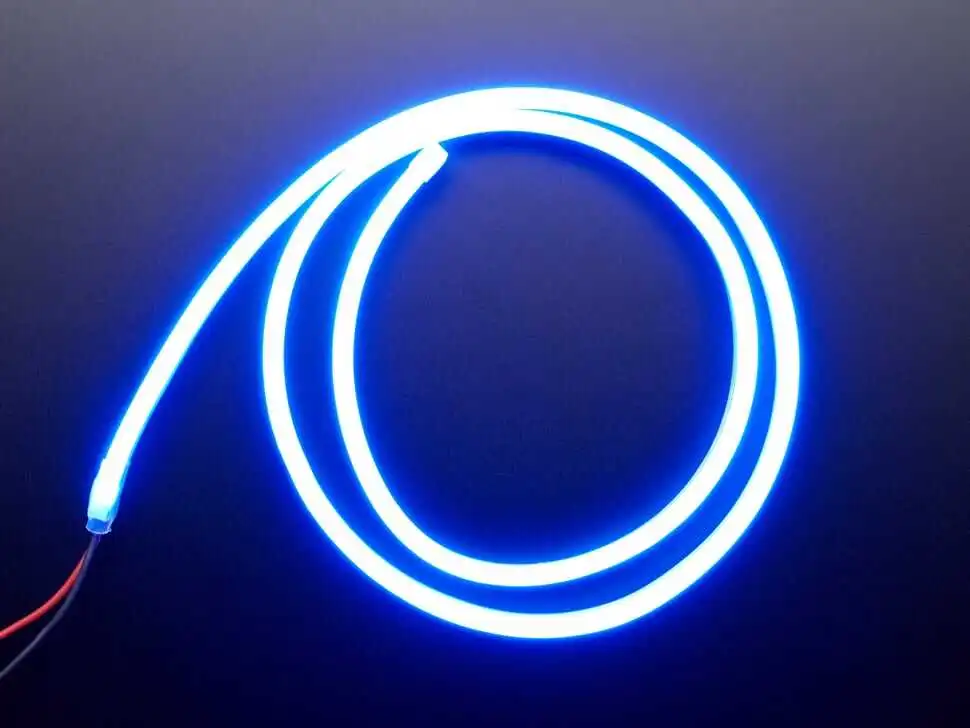
Several of our most popular products are available for direct review:
COB Flexible Strip Light → https://nphis-led.com/product/cob-flexible-strip-light/ High-density chip-on-board technology for seamless, dotless linear lighting. Ideal for cove lighting, display case illumination, and architectural accent applications.
180 LEDs 2835 SMD Flexible Strip → https://nphis-led.com/product/180-leds-2835-flexible-light-strip/ High-density SMD flexible strip with 180 LEDs per meter, delivering exceptional brightness uniformity for commercial and residential applications.
120 LEDs 2835 Flexible Strip Light → https://nphis-led.com/product/120-leds-2835-flexible-strip-light/ Versatile standard-density flexible strip suitable for a wide range of general lighting and decorative applications.
3030 RGB Rigid Light Strip/Bar → https://nphis-led.com/product/3030-rgb-rigid-light-strip-bar/ High-power RGB rigid bar light designed for commercial display lighting, color-changing signage, and entertainment applications.
Edge-Light Lens LED Strip → https://nphis-led.com/product/edge-light-lighting/ Precision-engineered edge-lit strip with integrated lens for uniform light box backlighting and slim-profile signage applications.
LED Shelf Lighting Strips with Magnet → https://nphis-led.com/product/magnetic-rigid-light-bar/ Magnetic mounting rigid strip lights purpose-built for retail shelf systems, offering tool-free installation and repositioning.
Step 4: Read Our Industry Blog
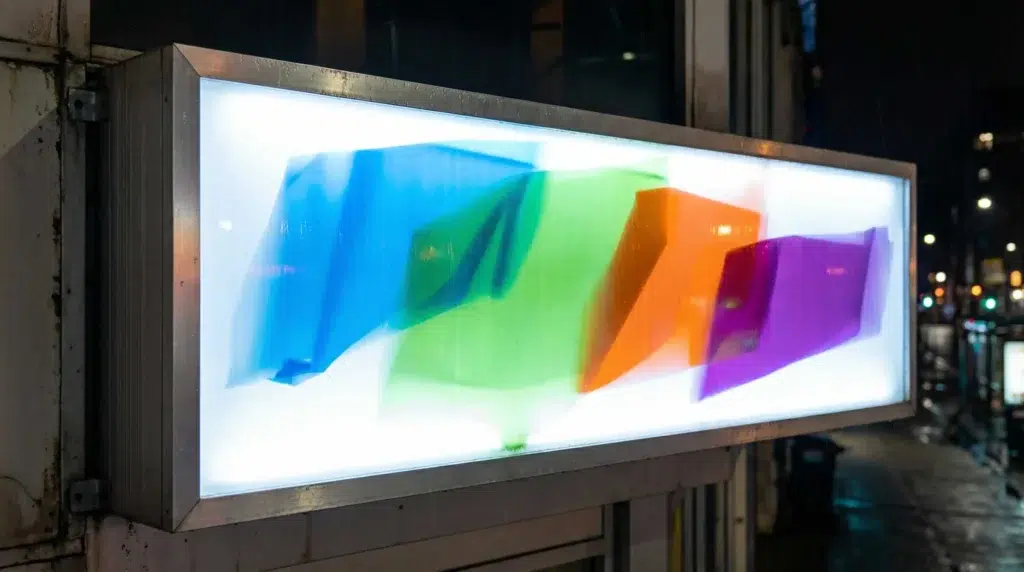
Our News/Blog section publishes practical guides and industry insights to help buyers make informed decisions:
Blog Home → https://nphis-led.com/news-blog/
LED Strip Lighting for Retail Displays: A Beginner’s Guide to Spotless Linear Strips and Silicone Neon → https://nphis-led.com/led-strip-lighting-for-retail-displays-a-beginners-guide-to-spotless-linear-strips-and-silicone-neon/
The Best Options to Convert Fluorescent Tubes to LEDs → https://nphis-led.com/the-best-options-to-convert-fluorescent-tubes-to-leds/
Step 5: Verify Us Through Third-Party Channels
Before making contact, you can independently verify NPHIS LED’s business standing and export history through the following channels:
Search “NPHIS LED strip light manufacturer” on Google to find independent references and reviews. Search for NPHIS LED on LinkedIn to view our company profile and professional network. Look us up on Alibaba or Global Sources to review platform ratings and transaction history. Use Panjiva or ImportGenius to verify our actual export shipping records to international markets.
Step 6: Contact Us Directly
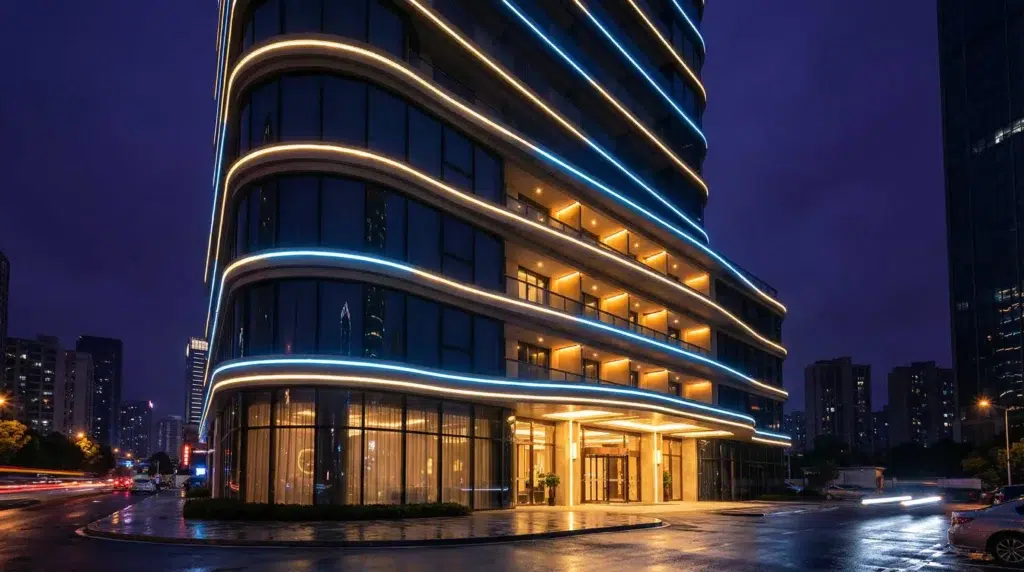
Once you have reviewed our website and verified our credentials, the fastest way to start a conversation is through our direct contact channels:
Contact Page: https://nphis-led.com/contact-us/ Submit your inquiry with product specifications and quantity requirements. Our team responds within 24 hours on business days.
WhatsApp: +86 182 1724 1063 For quick questions, sample requests, or urgent inquiries.
Email: info@nphis-led.com For detailed technical inquiries, RFQ submissions, or documentation requests.
When making first contact, we recommend including:
- The specific product type(s ) you are interested in
- Key technical specifications (voltage, color temperature, IP rating, LED density)
- Estimated order quantity and target delivery date
- Your target market and any specific certification requirements
- Whether you need OEM/ODM customization
FAQs
What is the typical MOQ for LED strip lights from Chinese manufacturers?
MOQ varies significantly by product type and supplier. Standard catalog products typically have MOQs of 100–500 meters, while custom products generally start at 500 meters or more. NPHIS LED offers flexible MOQ arrangements — contact us at https://nphis-led.com/contact-us/ to discuss your specific volume requirements.
How do I verify that a supplier's certifications are genuine?
Log in to the certification body’s official online registry (Intertek, SGS, TÜV, Bureau Veritas ) and search by certificate number. Confirm that the certificate is currently valid, that the issuing body matches what is shown on the document, and that the product model covered by the certificate matches the product you are purchasing.
What payment terms are standard for first-time orders?
The most common arrangement for first-time orders is 30% T/T deposit before production with 70% balance paid against a copy of the Bill of Lading. Alibaba Trade Assurance is an alternative that provides additional buyer protection for transactions conducted through the platform.
What is the typical lifespan of a quality LED strip light?
High-quality LED strip lights are rated for 50,000+ hours of operation under normal conditions — equivalent to approximately 17 years at 8 hours per day. Actual lifespan is influenced by operating temperature, driver quality, and installation heat dissipation.
What is the difference between silicone neon flex and standard SMD flexible strip?
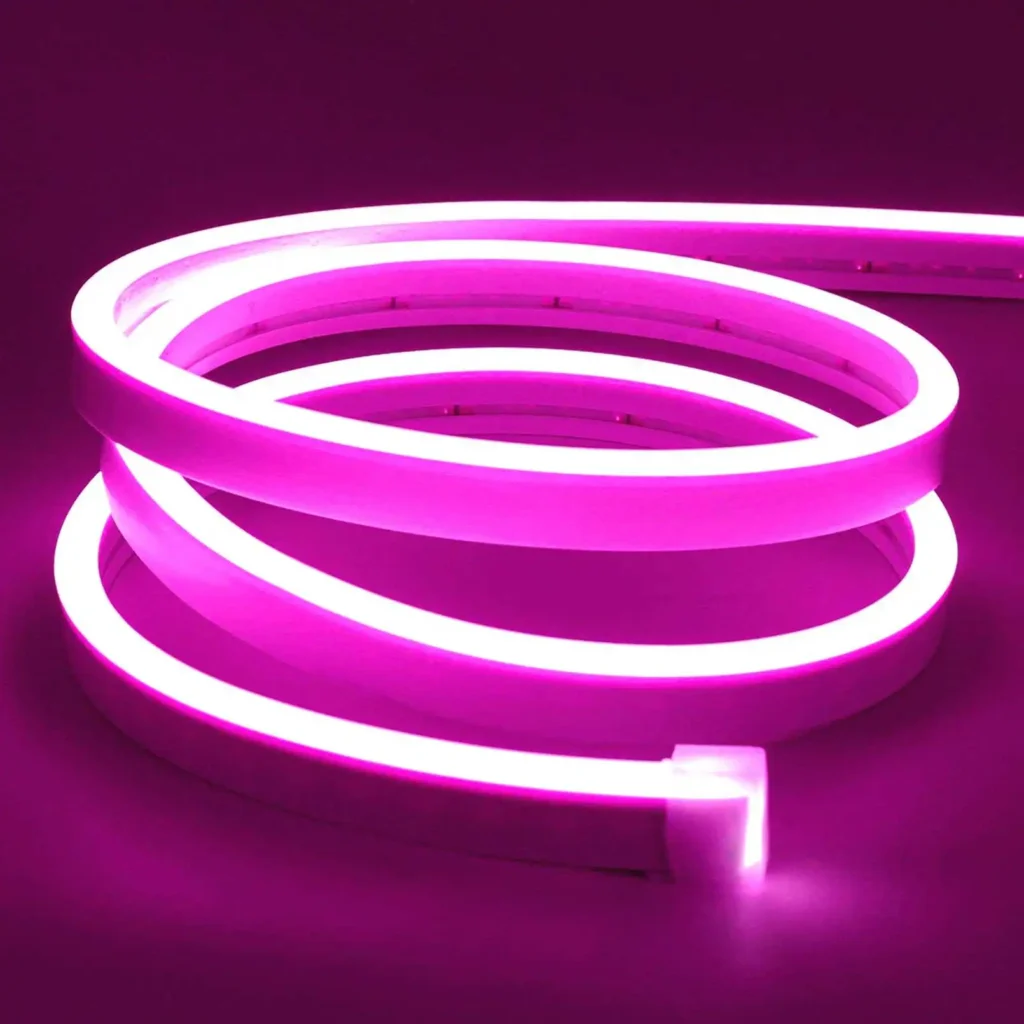
Silicone neon flex uses an extruded silicone housing to create a continuous, uniform light-emitting surface that eliminates the individual dot pattern visible in standard SMD strips. The result is a smooth, seamless line of light suitable for architectural outlines, decorative lettering, and premium interior design applications. Explore NPHIS silicone neon flex: https://nphis-led.com/product-category/led-soft-light-strips/
Does NPHIS LED support custom OEM/ODM orders?
Yes. NPHIS LED has supported OEM and ODM customers since our founding in 2012. We can customize PCB width, LED density, color temperature, IP rating, silicone profile shape, packaging design, and PCB branding. Contact us: https://nphis-led.com/contact-us/
Conclusion

Finding a reliable LED strip light supplier in China is a process that rewards systematic preparation and patient verification. The buyers who achieve the best outcomes are those who define their requirements precisely, evaluate multiple candidates against consistent criteria, verify credentials independently, and test physical samples rigorously before committing to bulk orders.
China’s LED manufacturing ecosystem offers genuinely world-class capabilities — but those capabilities are not uniformly distributed across all suppliers. The difference between a manufacturer who will become a trusted long-term partner and one who will create costly problems lies in the quality of your due diligence process.
NPHIS LED has been manufacturing and exporting LED strip lights from Shanghai since 2012. Our product range spans LED flexible strips, LED rigid bar lights, shelf lighting strips, light box LED sources, and custom silicone neon flex — all manufactured to CE, RoHS, and international quality standards. We welcome inquiries from distributors, lighting contractors, OEM brands, and project buyers worldwide.
WHY I WRITE THIS
About my business
Our company’s main products include LED flexible light strips, rigid light strips, and linear light fixtures, all of which are manufactured in our own factory or in factories we have been cooperating with for many years.
Our services
Our products are primarily mid-to-high-end, exported to Europe and America. We accept OEM & ODM small-batch orders, and also provide sourcing services in China to help our international clients solve problems. Please contact us if you need our assistance with sourcing.
Contact Profile
Name Ted Lau
Brand Name NPHIS
Country China
Model B2B Wholesale only
Email ted@nphis-led.com
Related Posts

Client Endorsements
Here,we proudly display the brands we have partnered with.






Request a free quote
If you have questions or suggestions,please leave us a message,we will reply you as soon as we can!

Ted.Lau