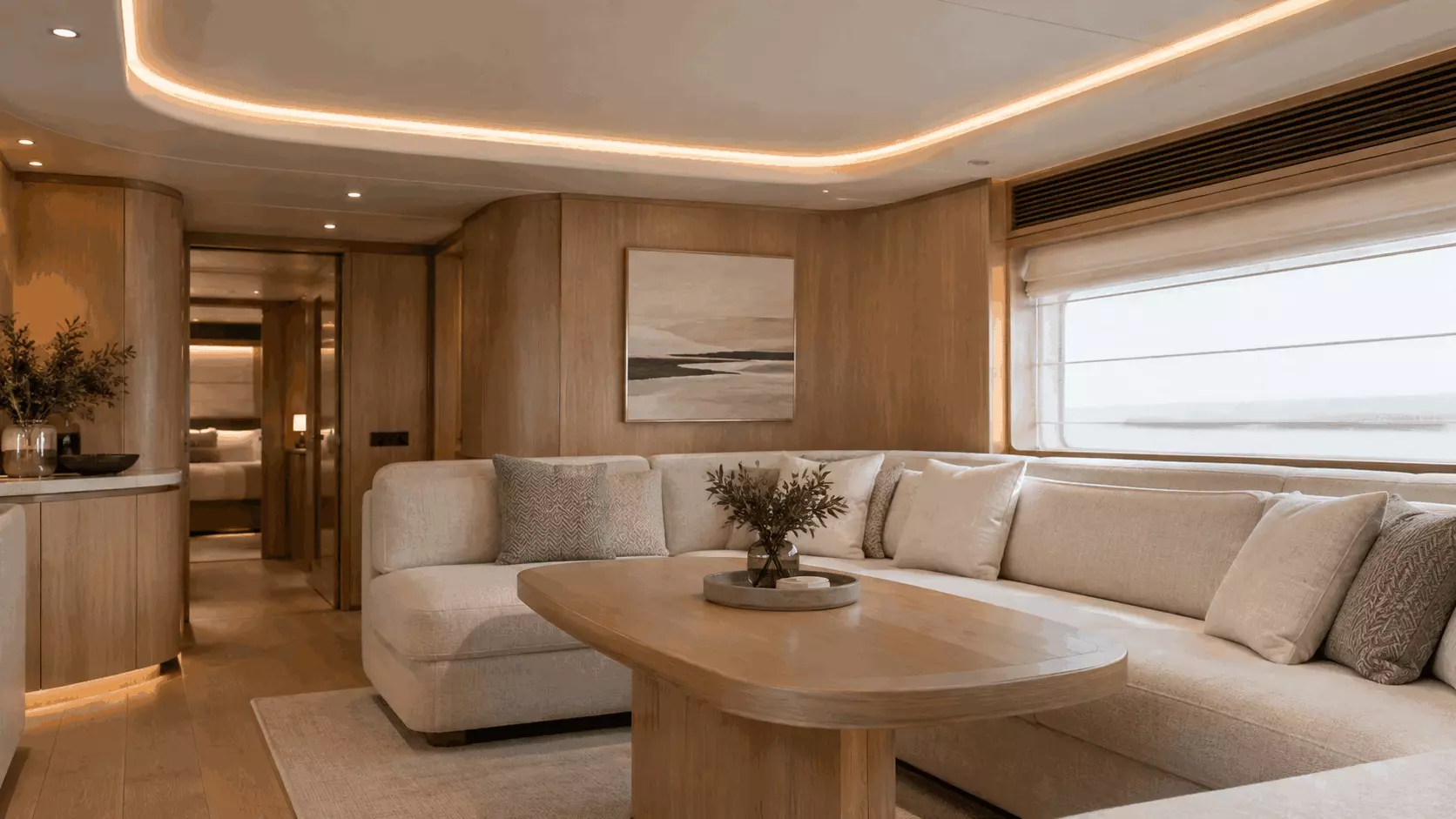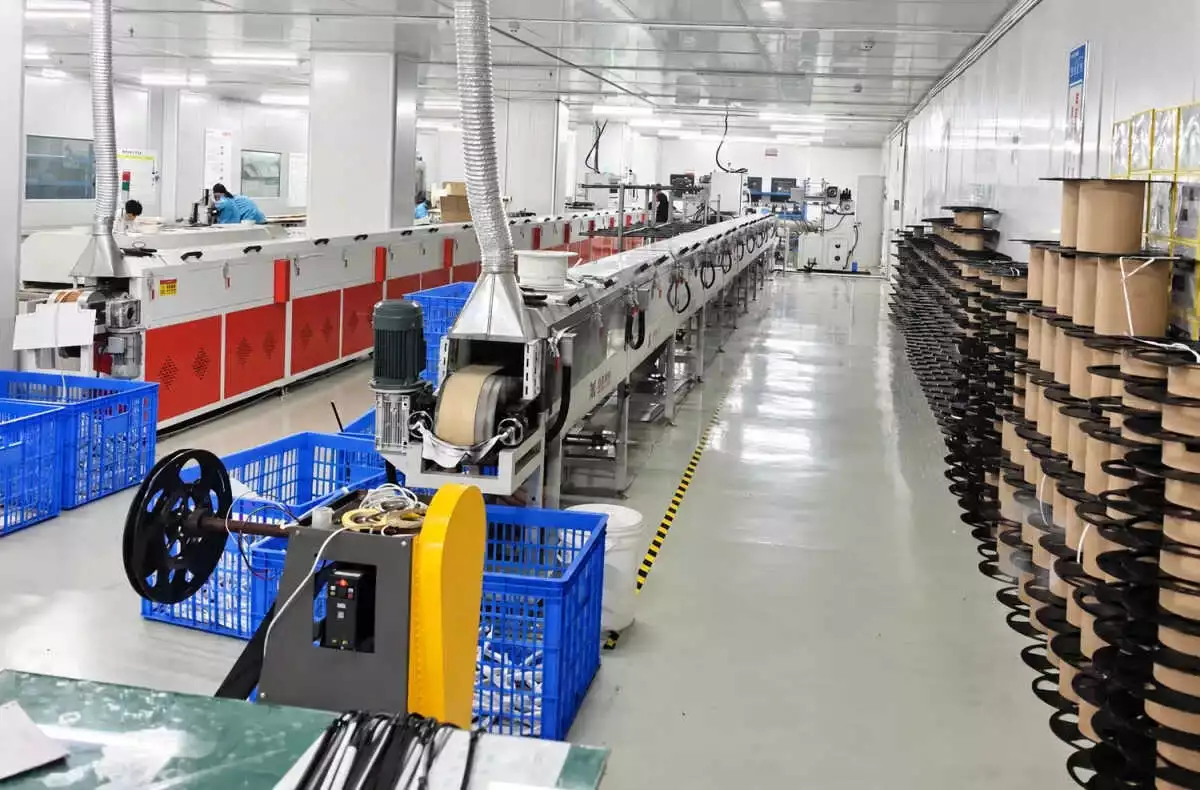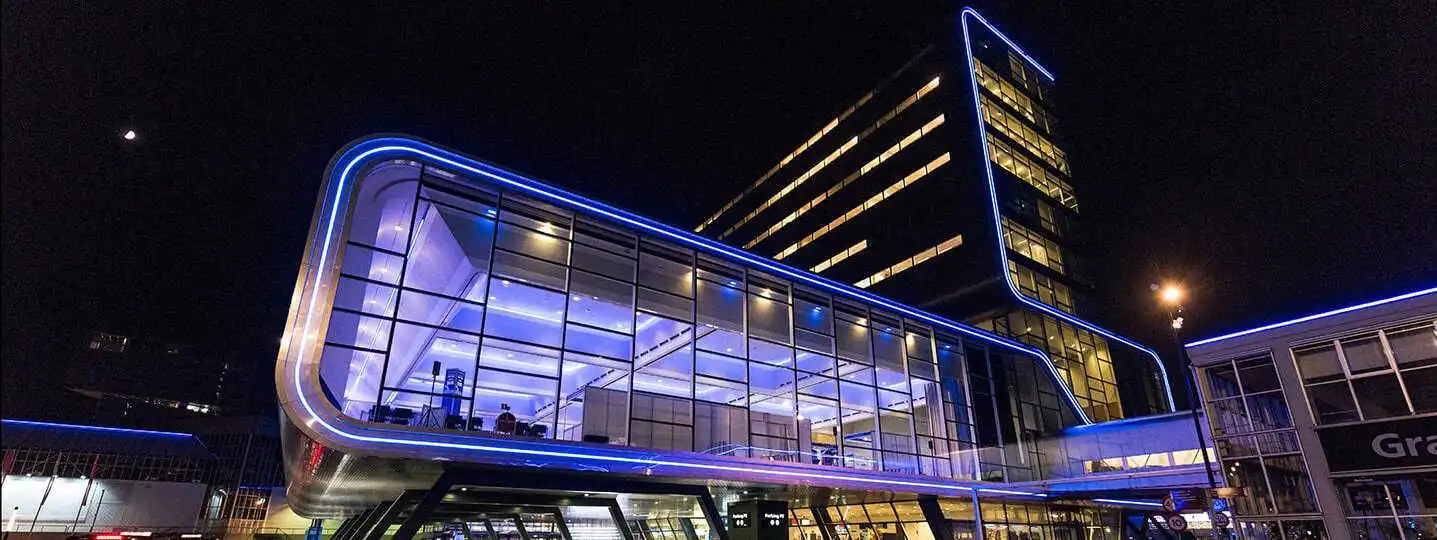

If you are planning yacht cabin LED neon flex, start with the cabin section drawing and the direction you want the light to face. A continuous neon flex profile can hide the light source and trace a headliner recess or a joinery detail. Its role is usually ambient or accent lighting. It does not automatically replace a reading light, galley task light or navigation light.
From a lighting supplier’s point of view, a section drawing with the profile, bend direction and service access is more useful than a product name alone. This guide shows what to define before requesting a quote, without assuming one profile or control system fits every yacht.
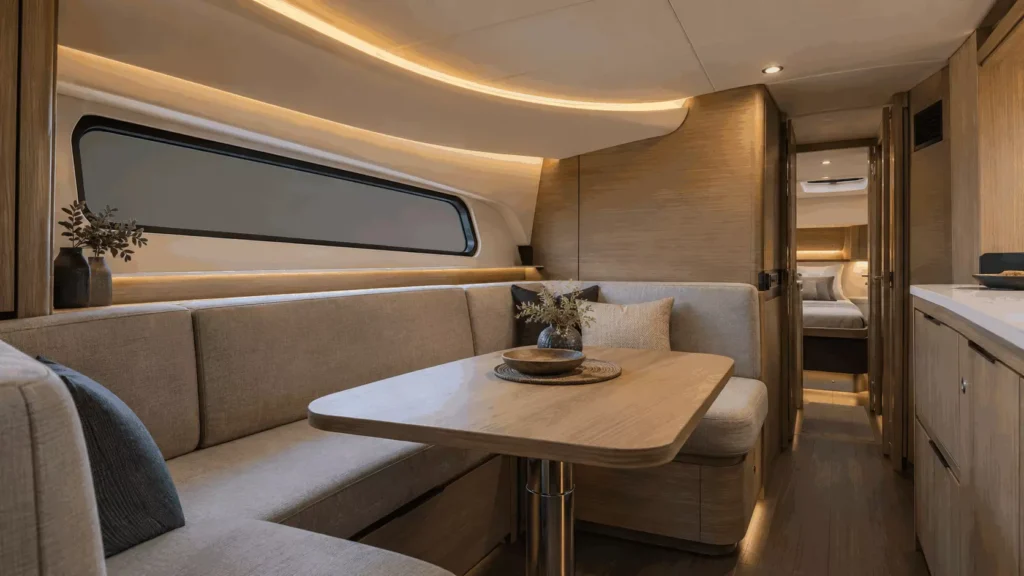
Table des matières
Where can continuous neon flex work in a yacht cabin?
The best location depends on the joinery, sight lines and lighting task. For a yacht cabin LED neon flex plan, review each route against the vessel drawing rather than assuming one layout fits every cabin.
| Cabin location | Possible lighting role | Check before specifying |
|---|---|---|
| Ceiling cove or headliner recess | Concealed, continuous ambient line | Clear recess dimensions, access for service, and where the light will be visible |
| Berth valance or shelf edge | Local accent along a joinery detail | Direct glare from the berth, trim that may block the beam, and cable exit |
| Curved joinery or bulkhead detail | Outline a curved surface | Bend plane, model-specific minimum radius, and space for the full profile |
| Low-level walkway or step edge | Low-level accent or visual cue | Possible distraction or obstruction, fixing method, and relation to required safety lighting |
| Locker or storage recess | Local light when opened | Service access, moving-door clearance, and switching method |
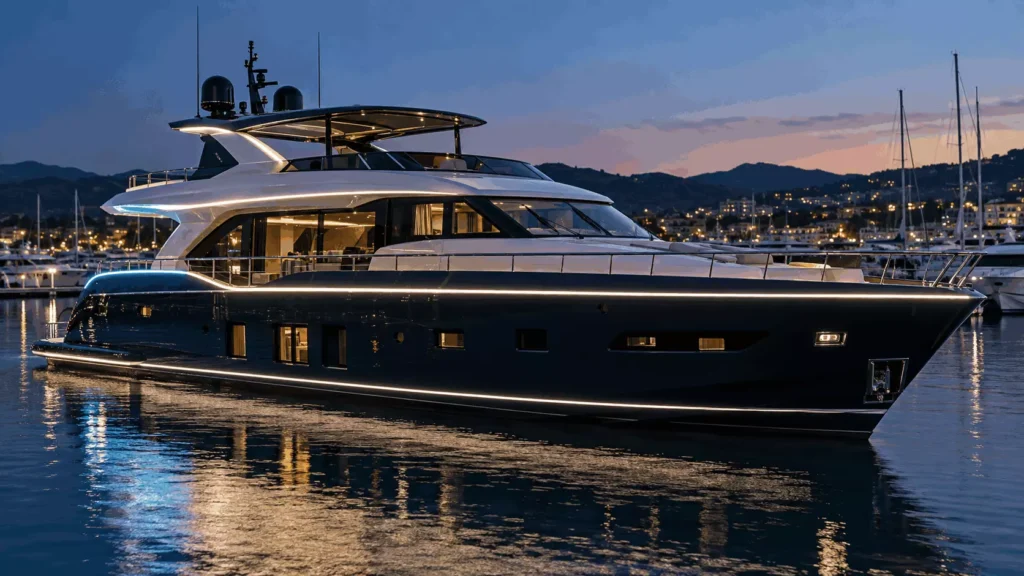
Give yacht cabin LED neon flex a clear lighting task
A concealed line is useful when the design calls for a soft glow along an edge or recess. That is different from lighting a page, a work surface or a navigation instrument.
❇️Ambient or accent: A recessed neon flex line can emphasize a ceiling, berth or joinery profile while keeping the source less visible.
❇️Task lighting: Reading and galley work need a fixture and position selected for the task. Do not assume a decorative line provides enough usable light.
❇️Navigation or safety lighting: Treat these as separate project requirements. The vessel designer or marine electrician should specify the appropriate equipment and placement.
Match the yacht cabin LED neon flex profile to the drawing
Confirm the viewing and bend directions
First mark the surface the light should illuminate. Then mark the face of the profile that emits light and the plane in which the route turns. “Flexible” does not mean a product can bend freely in every direction. Compare the intended route with the cross-section and installation drawing for the exact model.
Check dimensions, radius and clearance
Record the profile width and height, recess width and depth, corner radius, mounting space and access needed to remove or replace the light. Confirm the minimum bend radius and any cutting interval from the model’s own technical documents. Do not transfer a value from another profile in the same product family.
A few millimetres can decide whether a profile sits behind the trim, protrudes into view or leaves no room for its connector. Check the assembled space, including clips, channels, cable exits and end caps where those parts are part of the specification.
Draw each run before ordering
On the layout, mark the start and end of each run, its length, corners, joins, feed or connector positions, and the direction in which the trim can be removed. This helps the buyer, installer and supplier discuss the same line rather than interpret “one continuous strip” differently.
Mark service access on the section
Show how a technician can reach the connection after the headliner or panel is installed. If a join will sit behind fixed joinery, identify that early and ask the project team to review the detail before the profile is approved.
Confirm the visual effect and controls
Describe the intended appearance in plain terms: one fixed color, tunable white, or a color-changing effect. These are requirement categories; they do not mean that every profile is available in every version.
Also specify the desired dimming behavior and identify the driver, dimmer or controller if the project has already selected one. Ask the supplier to confirm compatibility for the exact light and control combination, using a wiring or control document where available. DMX512 belongs in the RFQ only when the project needs that control approach; its presence on a product page does not establish marine approval.
Coordinate segments, connections and project requirements
Before production, agree how the line is divided into lengths and where connectors, cable exits and end terminations will sit. Cutting, sealing, wiring and environmental ratings are model-specific. Use the product instructions and the project electrical design rather than a generic online wiring sequence.
The vessel-side circuit, protection and installation should be reviewed by a qualified marine electrical professional. For North American projects, the ABYC Electrical committee page lists E-11, AC & DC Electrical Systems on Boats. The project professional should check the current standard and determine which requirements apply.
If an IP rating is part of the discussion, check the documents for the exact assembled product and installation. IEC 60529 classifies degrees of protection provided by enclosures; a rating alone does not answer every project suitability question. For a general explanation, see our IP67 vs. IP68 LED strip guide.
Yacht cabin LED neon flex RFQ checklist
A clear request for quotation gives the supplier enough information to compare a profile with the actual cabin detail. Share what is already defined and mark open items as pending rather than guessing.
| RFQ item | Information to provide or confirm |
|---|---|
| Application location | Cabin, joinery or recess location; layout drawing and reference photos |
| Geometry | Section width and height, path, corners, clearance, and bend direction |
| Lighting runs | Length and start/end point of each segment; planned joins and connector space |
| Visual requirement | Intended color or color mode, visible face, and desired continuous-line appearance |
| Control | Single color, tunable white or RGB-family requirement; dimmer or controller model if known |
| System interface | Input and interface requirements from the vessel electrical design, reviewed by the project professional |
| Environment | Identify dry cabin areas, areas that may be splashed, and any deck locations separately |
| Documents | Exact model data sheet, cross-section, control compatibility and project-required test documents |
| Sample sign-off | Sample length, representative trim or recess, reviewer, and approval stage |
Send your cabin layout, profile dimensions and control requirements to
Validate a sample before bulk approval
A sample review can reveal fit and appearance issues before the final specification is released. Use the project’s actual trim or an equivalent recess where possible.
- Check the light’s appearance, visible seams and any direct glare from normal viewing positions.
- Compare the profile and bend with the drawing, including clearance, mounting and future service access.
- Test the selected driver, dimmer or controller with the proposed light.
- Confirm the final model, technical documents, run schedule, interface details and approved revision together.
FAQ
❓️ Where is yacht cabin LED neon flex most useful?
It is most useful where a project wants a concealed, continuous accent line, such as a headliner cove or a joinery edge. Check the sight line, recess and service access against the actual cabin drawing and selected profile.
❓️ Can LED neon flex replace a reading light or galley task light?
Do not assume that it can. A decorative line and a task fixture serve different purposes. Select reading and work lighting from the project’s lighting requirements and the specific fixture data.
❓️How do I choose a top-view or side-view profile?
Start with the direction the light must face and the plane of the bend. Compare those directions with the exact model’s cross-section and minimum-radius information before selecting a profile.
❓️ What drawings help with a yacht cabin LED neon flex quote?
Send a cabin layout and section showing the recess, profile dimensions, route, corners, clearances, run lengths, connection points and control requirements. Add reference photos when they clarify the finish or viewing angle.
❓️ Can neon flex be cut on site?
Only follow the cut marks and end-treatment instructions for the exact model. If the documents do not clearly describe field cutting, confirm the method with the supplier before cutting.
❓️ How can I confirm dimmer or controller compatibility?
Provide the exact light, driver, dimmer and controller models. Ask for written compatibility information or verify the proposed combination with a sample before approval.
❓️ Can one specification work in both the cabin and on deck?
Do not assume that it can. Describe the cabin and deck locations separately, including their exposure and installation conditions, then check each proposed product configuration against its documents and the vessel design.
❓️ What should I check on a sample before bulk ordering?
Check the appearance in the intended recess, fit around curves, clearance, mounting, connector access and control compatibility. Then confirm the sample matches the final model and document revision.
For general product navigation, see our silicone LED neon flex profiles.
Can’t find the asnwer you are looking for?
Write us a questionand we will be happy to answer it